The UK and EU bond and currency markets are behaving like emerging markets while markets in Mexico are not.

The word for the sticky
orange residue that
emits from Cheetos
is “Cheetle”.

The UK and EU bond and currency markets are behaving like emerging markets while markets in Mexico are not.

The word for the sticky
orange residue that
emits from Cheetos
is “Cheetle”.
Spot ref. 5.1850 on 10OCT22
Expires 11JAN23
October 11, 2022
Yesterday there was a headline:
*GERMANY BACKS JOINT EU DEBT FOR LOANS TO TACKLE ENERGY CRISIS
The reaction from EURUSD was:
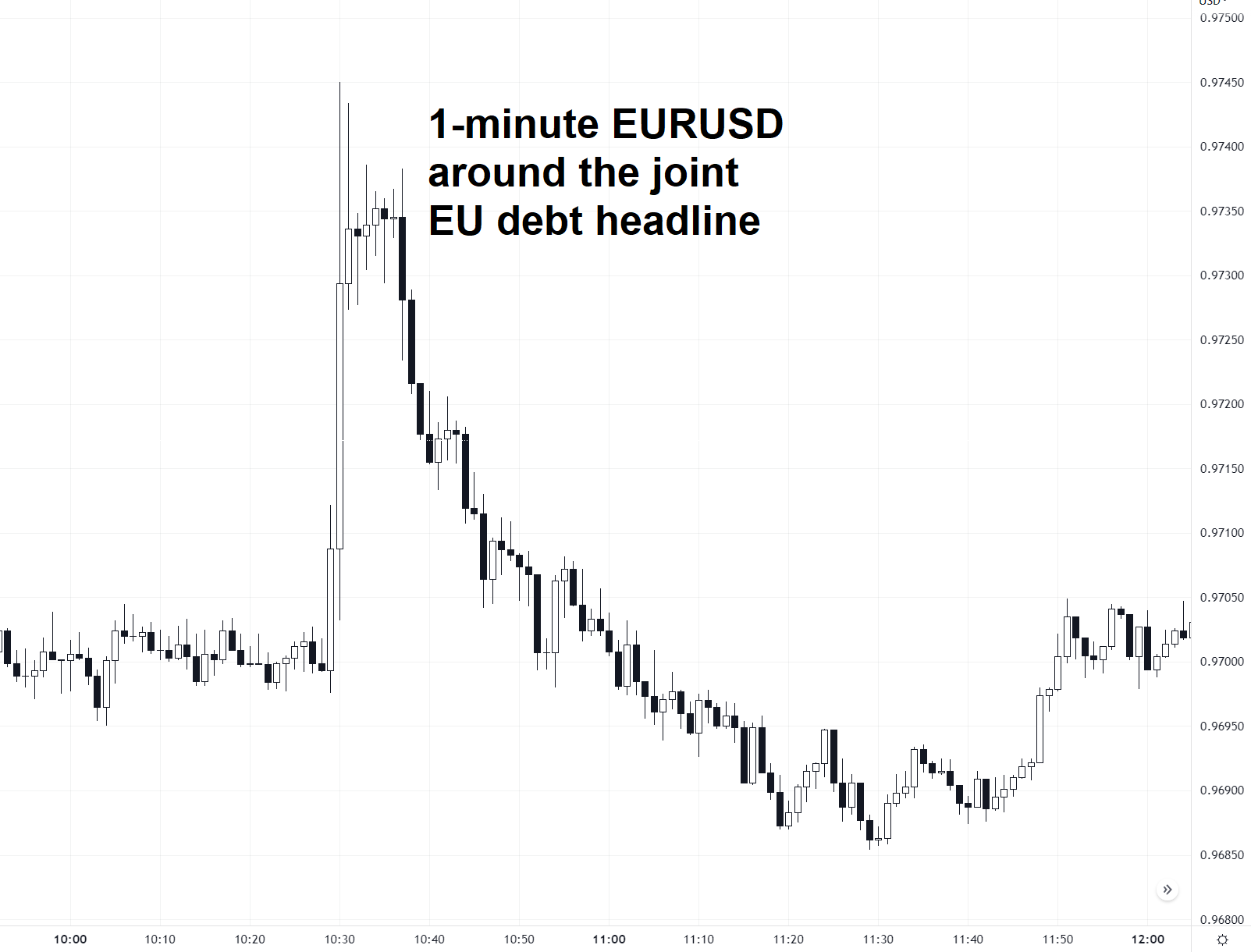
The chart shows price action from 10:30am to noon, and while the story was denied later (1:34pm), the EUR rally was rejected almost instantly. This is interesting because if the same headline came out in 2020 or 2021, EURUSD would have gone up 30 instantly and another 50 or 60 right after. But now, we are in a new world where fiscal stimulus is not necessarily good.
This makes sense! Free money is fun to spend but when you have to pay interest on your borrowings, there is a tradeoff and there are limits. That’s the inherent flaw with MMT, in my opinion: There is no free lunch. The idea that politicians will raise taxes to combat inflation is totally unrealistic as witnessed by the recent UK policy mix. The only limiting factor on fiscal is the bond market vigilantes. And they’re circling.
As the talk of late has been about how the UK is the new EM and Mexico trades like DM, I did a quick scan for EM-like moves to see what washes out. I looked at US, Germany, the UK, and Mexico weekly data back to 2000 and filtered for both a) two standard deviation (SD) move lower in the currency and b) 2SD move higher in that country’s 10-year yields. This is a typical blowup scenario in EM (i.e., sell the bonds, sell the currency). Here’s the result:
At far right there is both a purple and a red line overlapped, as UK yields moved 6 standard deviations higher that crazy week in September, while EU yields moved 2SD, and both currencies dropped around 2.5SD. Note zero occurrences for USA.
That chart is a fascinating history of crises and blowups and panics since 2008. The purple line in 2009 is the UK bank bailout and concerns over the fiscal implications of transferring all that corporate debt to the sovereign balance sheet. Now, we are worried about transferring consumer pain to the sovereign balance sheet, a process that began in 2017 with TCJA and accelerated massively with COVID rescues, the EU energy subsidies this year and tax cuts for the rich in the UK.
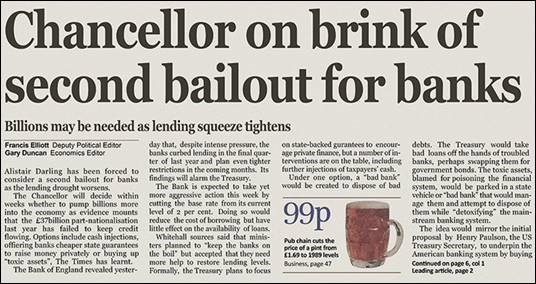
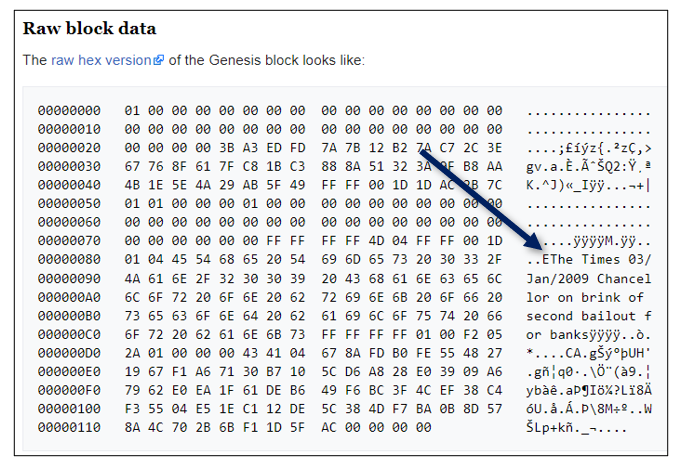
Above is the famous bank bailout headline from January 2009. Here’s a full online story about it. January 2009, not coincidentally, was also the birth of bitcoin and there is an Easter Egg text message in the Genesis Block (the first block of bitcoin ever mined). Here’s the Genesis Block:
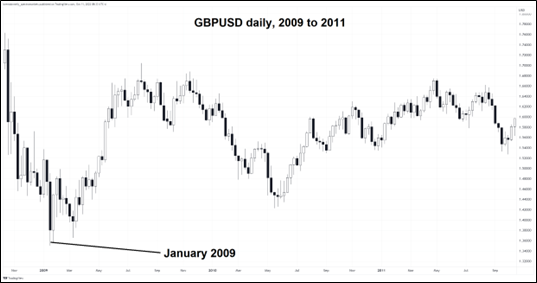
For what it’s worth, that was an amazing time to own GBP, though that was the end of the financial crisis and this feels more like the start of the sovereign debt reckoning fear trade.
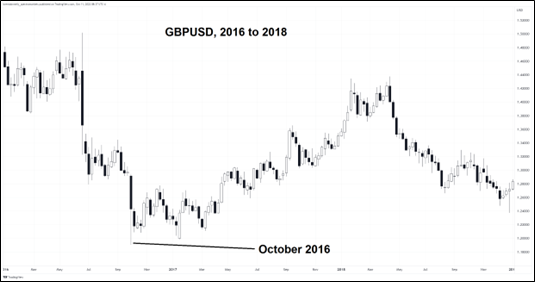
The other vertical purple line where UK bonds and GBP sold off at the same time was October 2016. Again, a great time to own cable. I’m not pitching a bullish GBP story here, but I suppose it’s interesting that these most harrowing times in 2009 and 2016 rhyme a great deal with the current setup. Something to think about.
The other interesting thing to note on the chart of colored vertical lines is that every green line, where MXN weakened >2SD and Mexican yields rose >2SD was a memorable crisis in markets. 2011 was eurozone crisis, 2013 was taper tantrum, 2015 was USD blowoff, 2016 was Trump elected, 2018 was the Christmas dirtnap after Powell mistakenly said the Fed was “a long way from neutral,” and 2020 was COVID.
It is notable that EUR and GBP are the vertical lines in 2022, not MXN. DM is the new EM.
There is a whole narrative developing out there around the recent, scary acceleration in the bursting of the sovereign bond bubble. Here’s a good piece from Global Macro Monitor, for example, or Lyn Alden’s latest (very long read). The hard question is whether the negative yield debt bubble has now burst, and everyone is freaking out at the apex, or… Is this early days and there is about to be some serious breakage in the system?
Betting against sovereign bond markets is always tough because ultimately the central banks will intervene. Short gilts is like long USDJPY right now. It makes sense but you gotta watch out for the visible fist of government as it appears sporadically to hammer down volatility and establish more correct market prices.
The cure for this sovereign debt fear will be falling inflation. We are not quite there yet, but it’s hard to believe we are not close. Even as inflation is sticky and widespread, the various blowups and pressures building throughout the system just as the Fed reaches restrictive territory should be enough, once the long and variable lags of past tightening elapse.
Two days until CPI. Are you long or short dollars going in?


HT CnD


This piece is mostly for people who are interested in backtesting