October 31, 2022
The message changed in 10 days?
The hawkish weekend sounds from Nick Timaraos, in contrast to dovish vibes 10 days ago, can be interpreted in a few ways:
- There are various views at the Fed, and depending on which is emphasized, the message is different.
- The rally in stocks (not to mention DOGE) has put pressure on the Fed to sound more hawkish and they sent a message through the WSJ because we are in the Fed blackout period. It is easy to violate the blackout period without repercussion by using private messengers to send signals.
- Random noise sometimes sounds like surreptitious signaling.
SPX with the two major Timaraos articles labelled
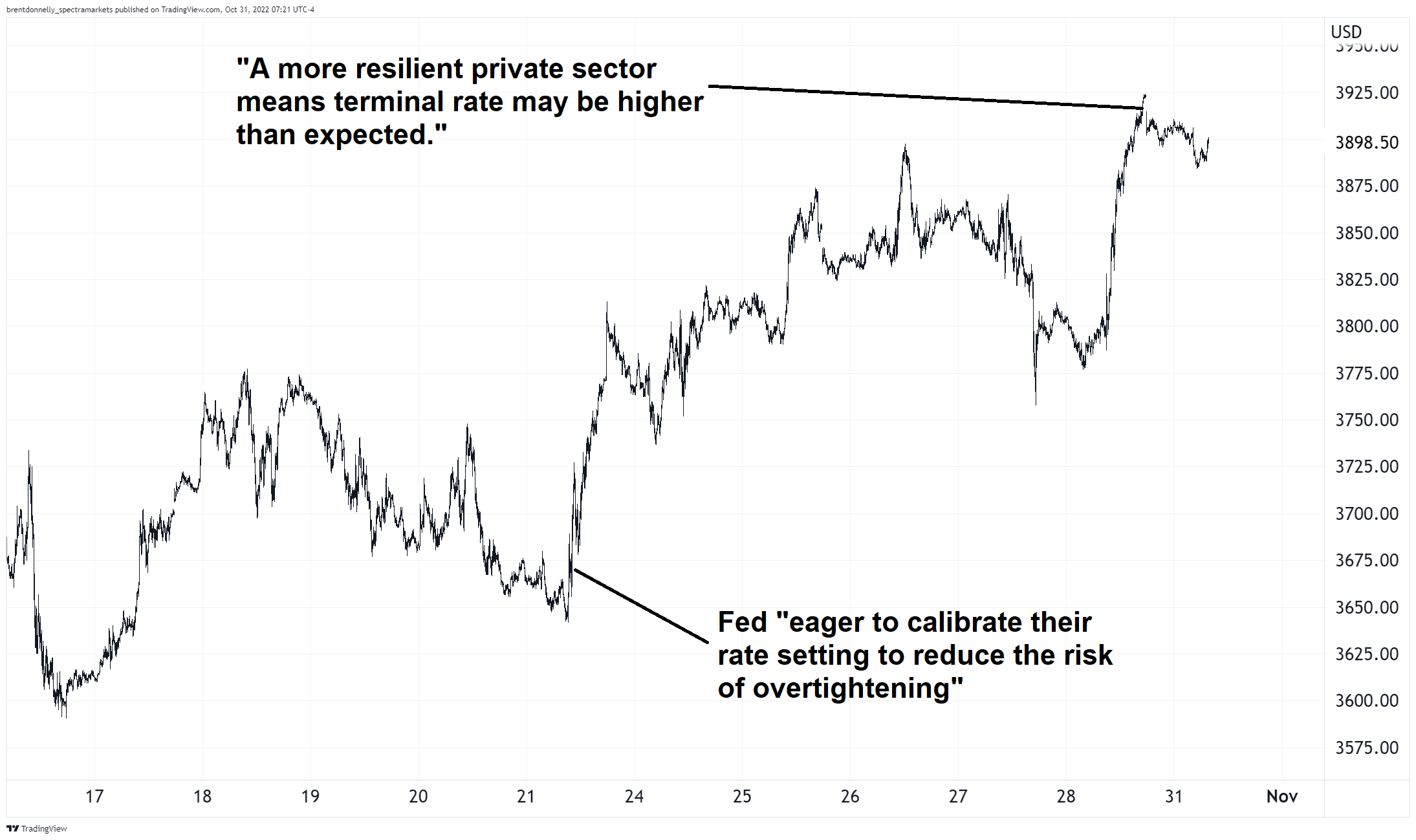
I hope it’s #1 or #3 because if it’s #2, the Fed is micromanaging stocks in a way that would only be useful if one were trading ahead of these leaks in a personal account. A rally from 3650 to 3900 should be noise for policymakers who are targeting slow moving economic factors like jobs and inflation while implementing policy known for long and variable lags. Also, presumably the Fed blackout exists for a reason, and this would now be the second time they have violated it by sending policy signals through a for-profit subscription-based private messenger during blackout.
I honestly don’t know how to factor this latest article in. I find it hard to believe the Fed is leaking a dovish article 10 days ago and a hawkish one today. Perhaps we overstate the cloak and dagger connection between the WSJ and the Fed. Or maybe I’m naive. I don’t know.
Speaking of the WSJ, this Brad DeLong takedown (“These People Have Jobs?”) of the only major article that predicted Elon would win his lawsuit against Twitter is good. I remember reading that WSJ article, which went directly against Matt Levine and other credible analysts who were all saying pretty much the exact opposite. Odd.
Anyway, let’s have a look at how the dollar has behaved around the FOMC meetings this year:
DXY into and after FOMC and Jackson hole, since 2020
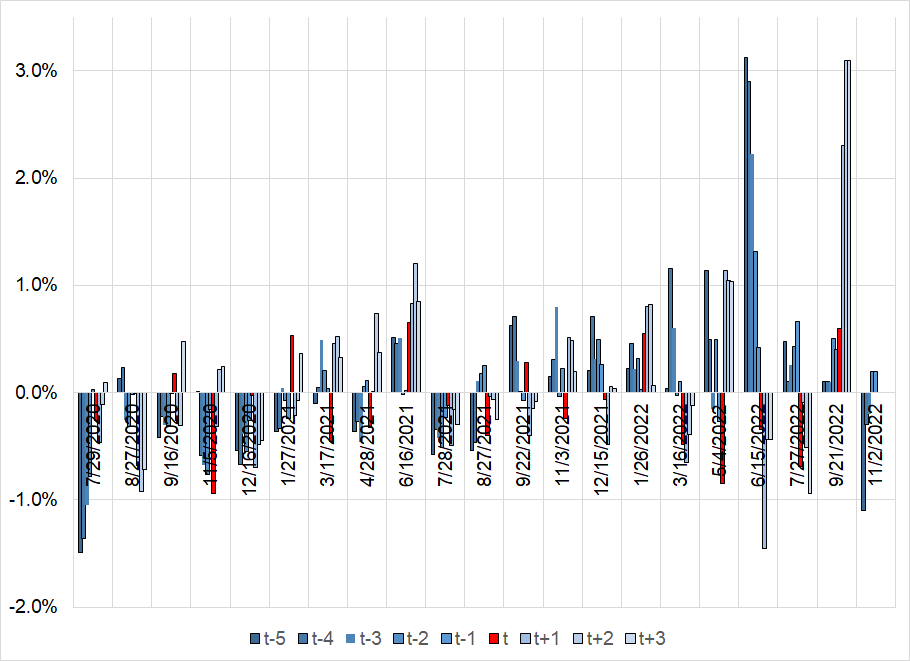
To read the chart, look at the blue bars before and after the red bar. The ones before are the DXY move INTO FOMC. The red bar is day of FOMC. The blue bars after the red bar are the DXY move AFTER FOMC day.
I have shown this chart before, and the takeaway has been that the market mostly sold USD into FOMC in 2020 and gradually moved to more and more USD buying into FOMC starting in 2021. March, May and June 2022 saw ravenous USD buying into the meeting.
You can see that in March, May, June, and July, the red bar is negative, which means the market got over its skis long USD into the meeting and bottled on the day of FOMC. In September 2022, the market bought USD into FOMC, the day of FOMC and the days after, as it realized that the Fed is not in control of yields, the data is.
Now, we are early in the transition away from the aggressive spot dependence of the Fed and back towards more of a forecast-oriented framework. As the Fed enters restrictive territory, they have the luxury of hoping for lower inflation again as they wait for rapid hikes to exert their influence on the economy. The question for trading is to figure out if the Fed will signal that they are already preparing to step down the pace in December, or that they remain data-dependent and will continue to focus on hopelessly lagging figures such as CPI and UR.
My lean for this meeting is that the Fed has a free opportunity to stay credible on inflation and avoid an inflationary meltup in risky assets into year end. As such, my guess is that they sound more hawkish than the recent price action would suggest. In other words, the read through from Bank of Canada and RBA and other central banks to Fed policy is a tad premature. The forward-looking reality is bleaker by the day, but the labor market remains tight, the US consumer is fine, and the US is not facing a mortgage reset wave like Canada or the UK. Spot beats forecast for at least one more meeting.
If we’re thinking about metagame, the optimal message for this FOMC to send on Wednesday is: The inflation fight is not yet won. I doubt this will destroy financial conditions, because the market will not believe the message for long and will quickly roll the Fed pause just one meeting out to February 2023 FOMC.
Bank for International Settlements
As mentioned on Friday, the BIS Triennial Report on FX is out. Full report here. I tried my best to summarize the whole thing in one table. Here it is:
Currencies ranked by trading volume, 1989 to now
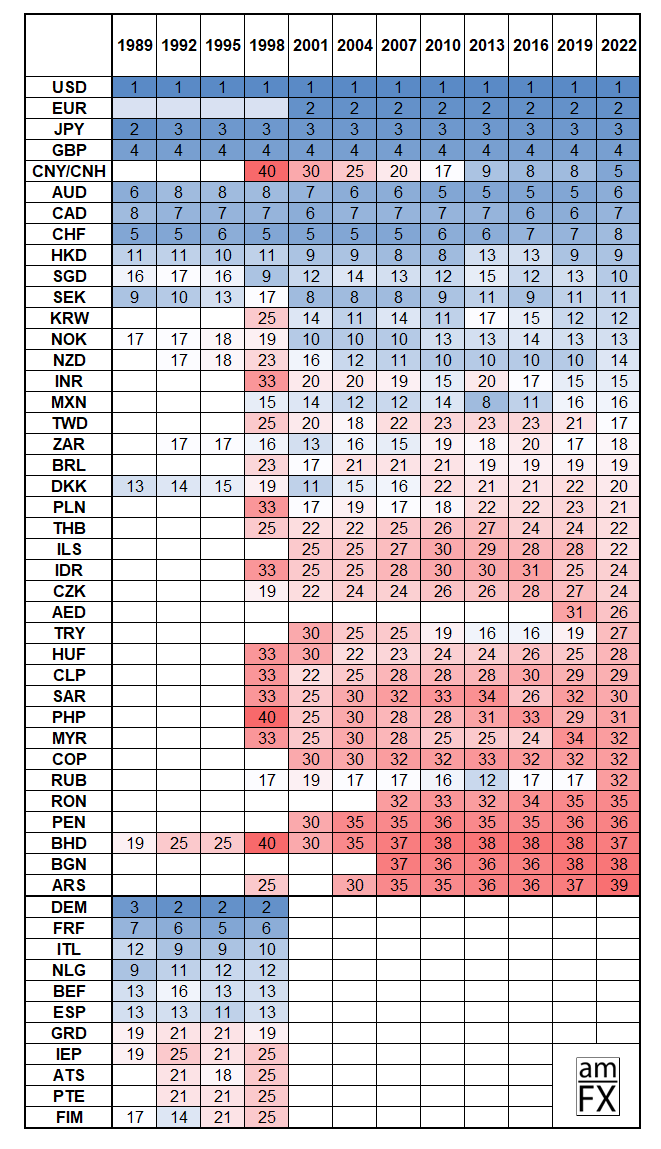
I left the European currencies in there as they help tell the complete story of FX over the past 33 years.
Winners: CNY/CNH, SGD, INR, IDR, ILS, THB.
Losers: RUB, MYR, MXN, NZD
Brazil
Lula won the election. Now let’s see if this “win-win” theory was correct and Brazilian assets can rally on the less obviously bullish outcome. The first key moment will be today’s price action. The second key will be the choice of finance minister.
Final thoughts
Today is month end. Note that flow normally crescendos at 11 a.m. NY time but the fix will be noon today in NY because it’s 4 p.m. London and the clocks changed in the UK, but not in the USA.
Finally, I strongly recommend this piece by Adam Tooze. There are so many useful concepts and ideas inside. Learning!
Have a Voorheesian day.
good luck ⇅ be nimble