I think it will be very hard for 2025 Bank of Canada pricing to come true.
Image source: Wikimedia Commons

I think it will be very hard for 2025 Bank of Canada pricing to come true.
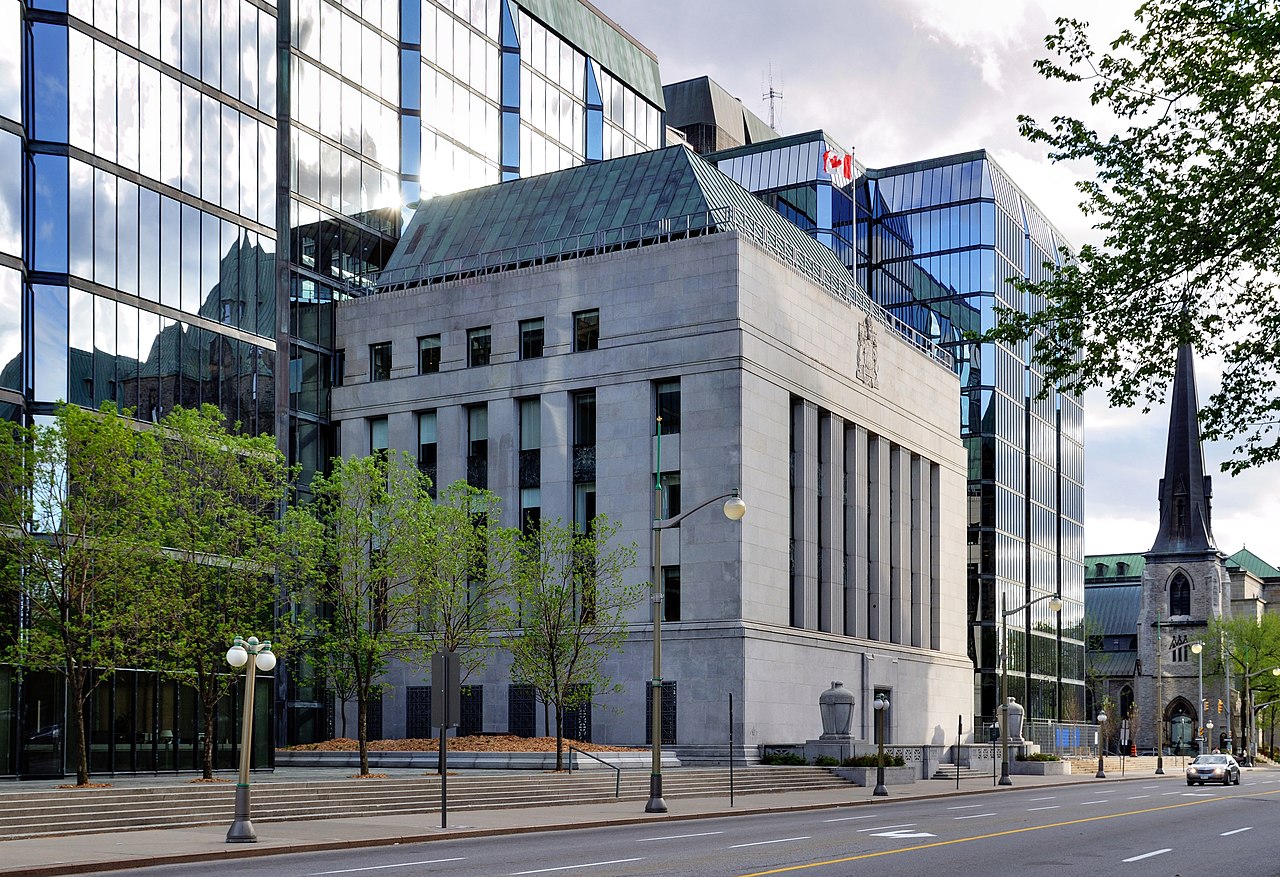
Image source: Wikimedia Commons
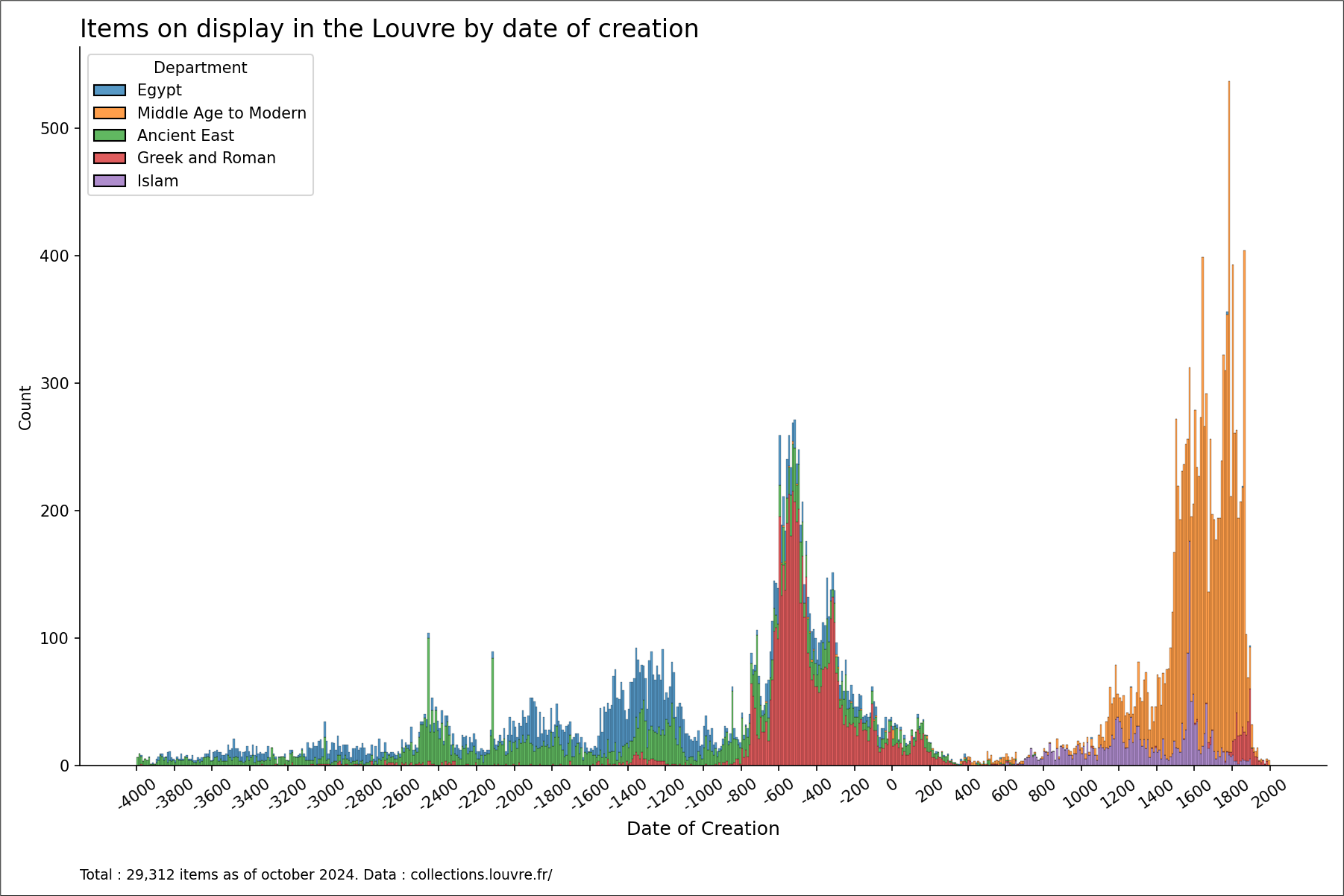
Items on display at the Louvre, by year of creation
24OCT24 GBPJPY put
193.00 strike off 194.57 spot (cost 32.5bps)
We get the Bank of Canada on Wednesday and a 50bp cut is all but guaranteed after the soft CPI reading on October 15, and Macklem’s comments at the last meeting:
“We will be assessing the data as it comes out, and (if) we need to take a bigger step, we’re prepared to take a bigger step,” he said.
This meeting is a bit more interesting than usual to me because the noise around CAD is picking up and the BoC is not THAT far from the top of the neutral range. They say that the current neutral range is 2.25% to 3.25% and uncertainty around that estimate is high and it was raised 25bps in April 2024 and so there is a possibility that they cut 50 and sound hawkish at this meeting.
When I say “sound hawkish,” I mean relative to market expectations. While I am never in agreement with the idea that the Bank of Canada is wholly dependent on the Fed, there is some natural limit to the divergence between the two countries’ policies given the high correlation of growth and inflation and the strong economic ties. Taking a look at the spread between market and policy rates, you rarely get more than 1%. The first chart today shows the market yield spreads.
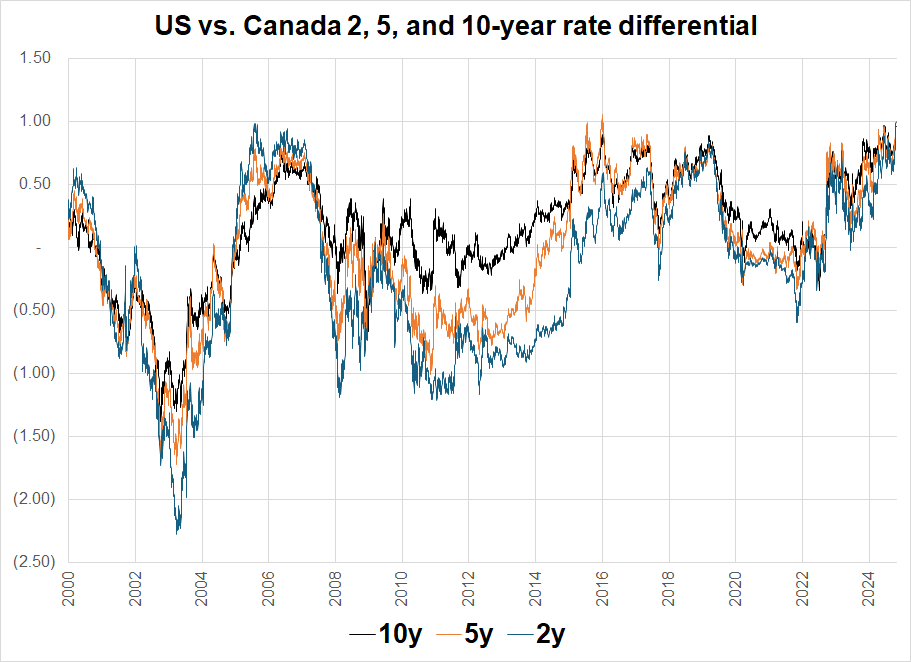
Note how 1% has capped on all tenors (approximately) and we saw peaks in that area in 2004, 2005, 2015, 2016, and 2018. If we are in a completely different regime here, where the Canadian consumer is weak and retreating while the US consumer continues to rage on strong, you could argue for a regime shift in yields, too. But I’m not sure we’re there yet. Here is all the important Canadian economic data released since the last BoC meeting.
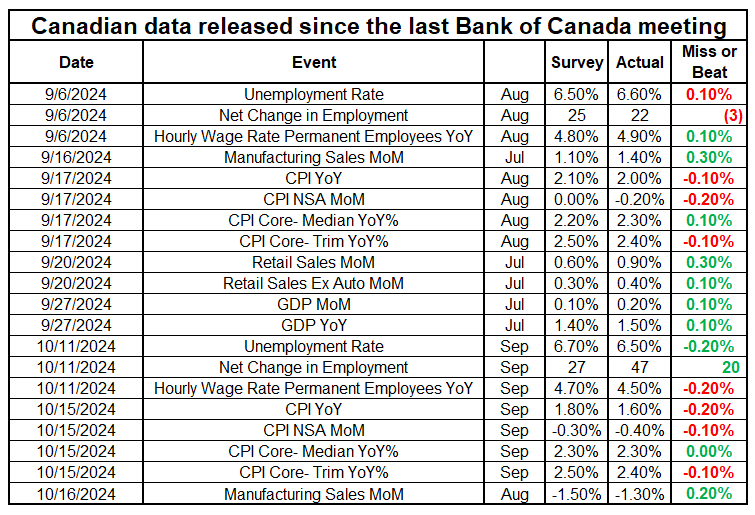
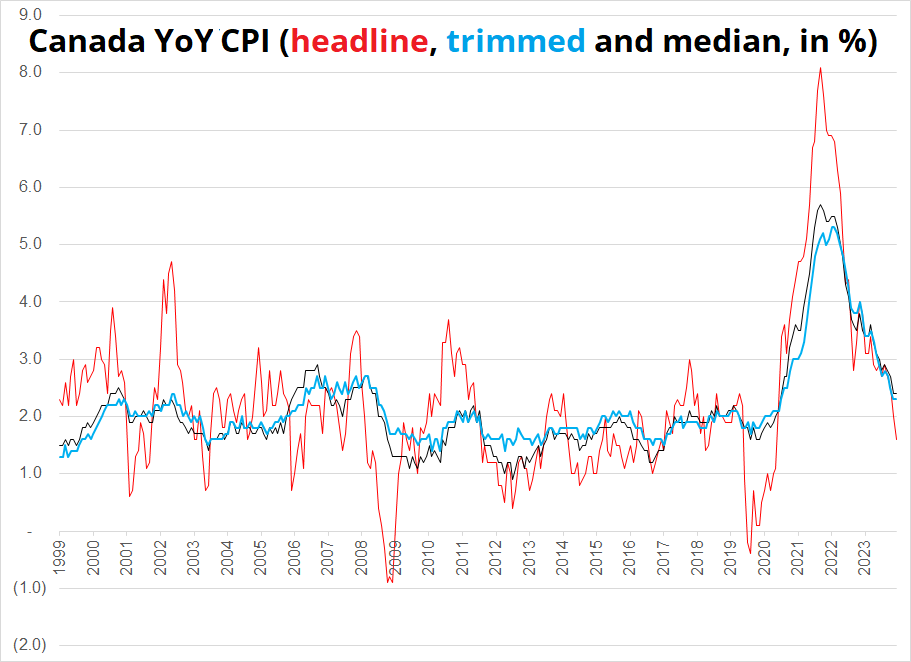
It’s a mixed bag. Yes, inflation has come in on the low side again, but it’s worth considering that it’s headline inflation that grabbed the attention last week, while the median and trimmed CPI figures have stabilized. Headline inflation is much more volatile and prone to temporary overshoots, as you can see here.
So you can certainly argue that based purely on domestic factors, the Bank of Canada should be headed towards neutral fairly quickly. But it’s far from an emergency. The labor market is holding in, the US economy is strong-to-very-strong, and the other indicators of Canadian economic health are mixed, not collapsing.
The Bank of Canada likes to watch its Business Outlook Survey and that has also stabilized at low levels.
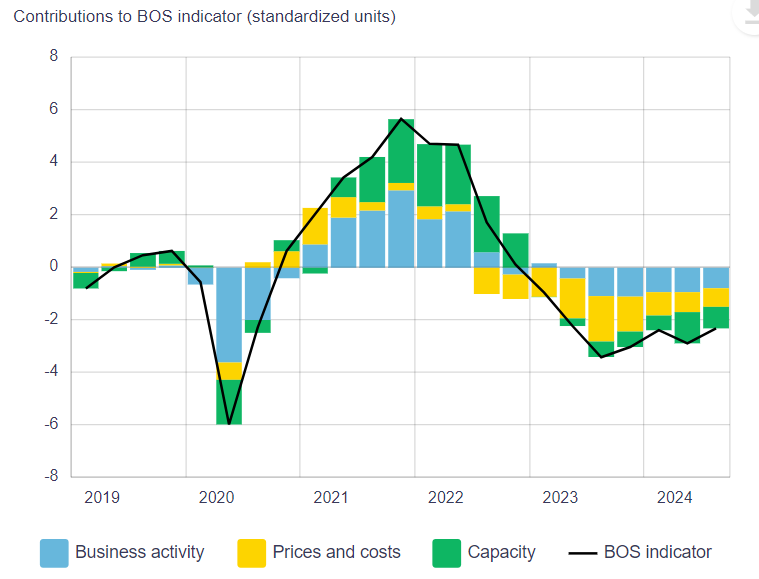
Not exactly rip roaring like the USA, but not horrendous, either. Future sales also ticked higher to +13 from +1 in the prior two quarters. There is enough positive news on asset prices, US growth, and Canadian jobs to argue that current pricing looks aggressive. The January 2025 meeting is priced for a BoC rate of 3.2% and the April 2025 meeting implied yield is 2.8%. That’s a lot of cutting (150bps in Canada vs. 100 in the US, off a lower starting point for Canada).
Again, I get why there is a lot priced in. Inflation is falling, etc. But I don’t think it’s going to be easy to price in more. I will consider going short EURCAD or USDCAD tomorrow and I believe paying the April 2025 meeting makes sense. I see a much higher chance that implied rate goes to 3.3% before 2.6%.
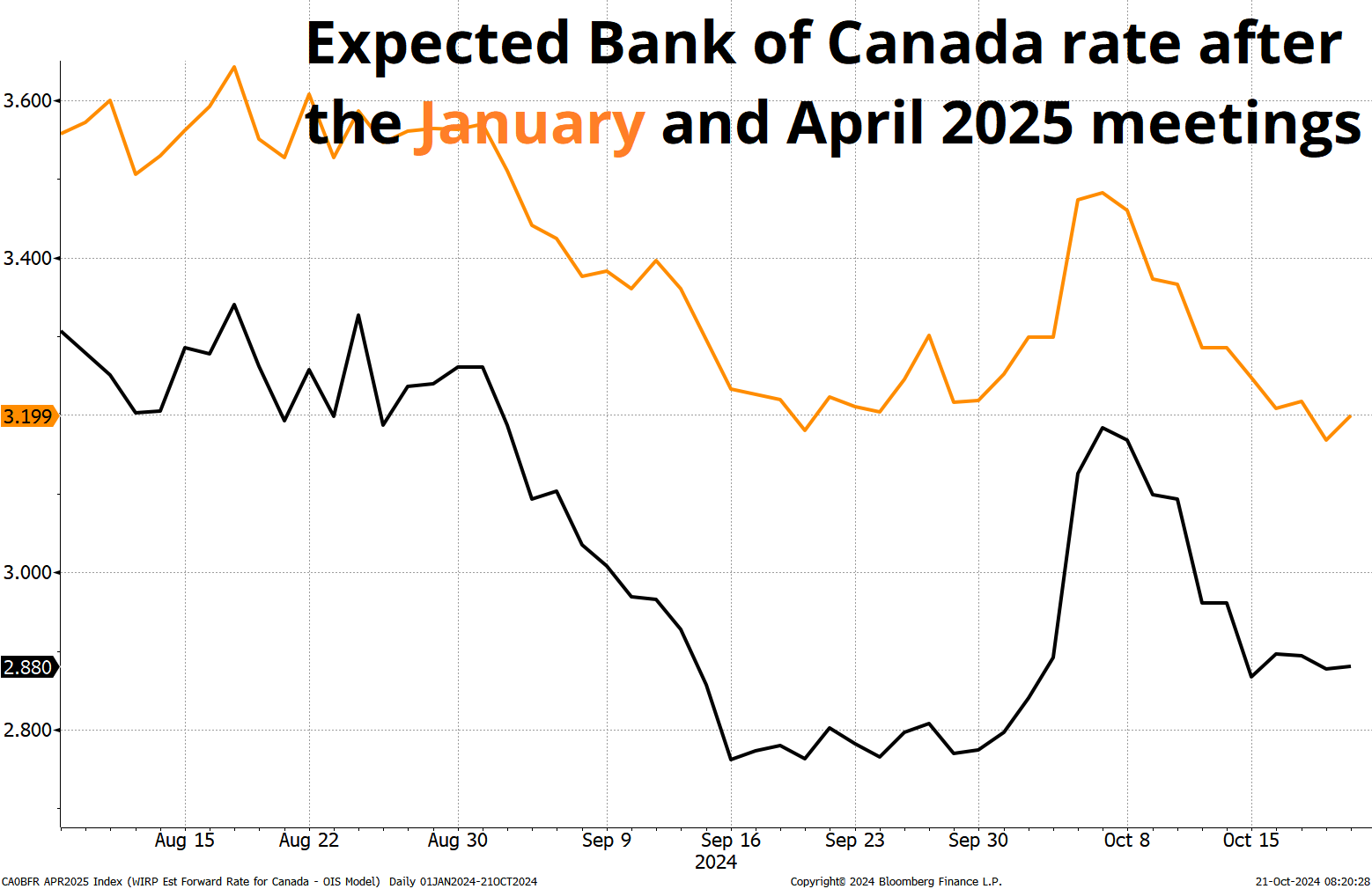
Maybe the move in Canada rates starts with the Bank of Canada announcing a hawkish 50bp cut on Wednesday, saying something like: Due to high levels of uncertainty and strong US growth, we remain data dependent and are not pre-committed to more large rate cuts in the future.
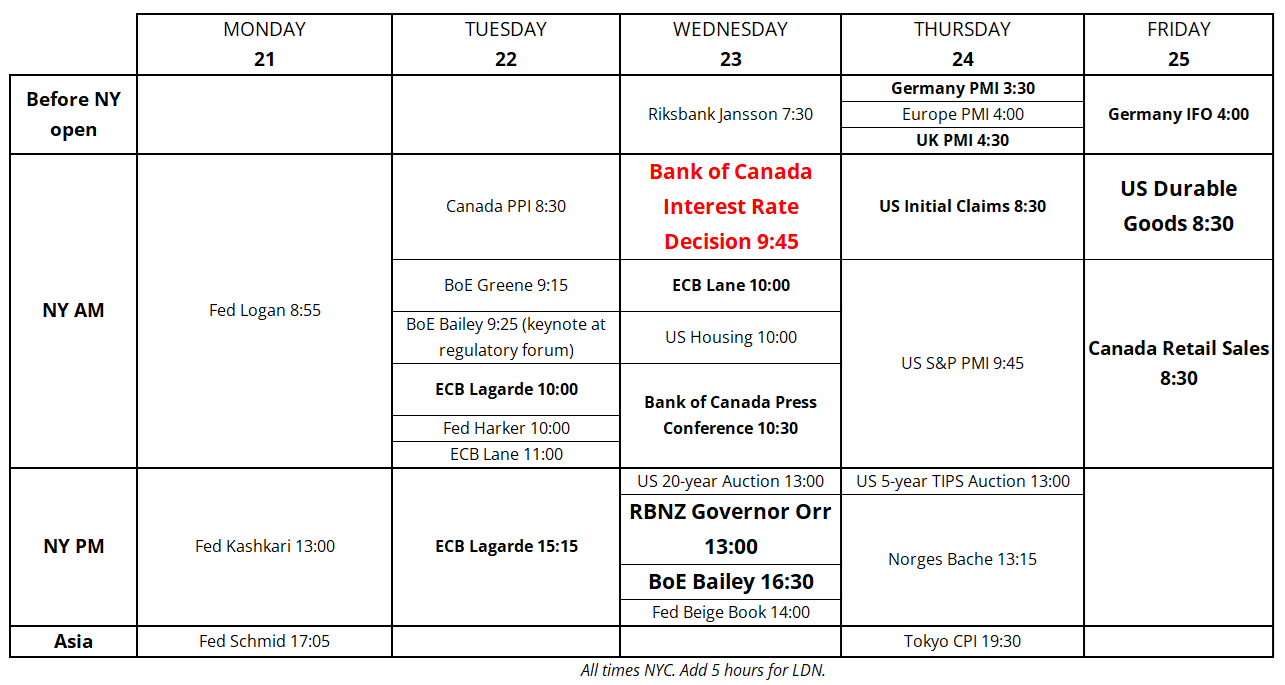
BoC is the highlight this week, with a bunch of probably-meaningless central bank speeches. Fed policy depends much on the election outcome and post-election policy moves. Orr and Bailey on Wednesday afternoon could be interesting so make sure you don’t schedule your personal trainer or pilot lessons in that window.
The Committee for a Responsible Federal Budget, which is a slightly right-leaning but fairly credible organization (according to Media Bias Fact Check) published their estimates of fiscal impact from the Trump and Harris policies. You can read it here.
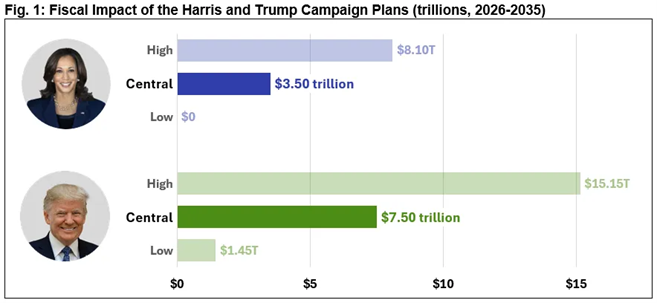
Spectra Markets is not allied with any political organization or philosophy and does not wish to engage in any controversy. I do not support or endorse any politician. In fact, I strongly dislike almost all of them and the way they operate! :]
Soy un museo, I’m a Louvre baby…
https://www.reddit.com/r/dataisbeautiful/comments/1g7gsi8/items_on_display_in_the_louvre_by_date_of/
A partial explanation for the lack of art in the Louvre from 500 to 1000 is the predominance of orfèvrerie (goldsmithing) in that era. The main form of art during this period was metalworking, particularly goldsmithing. Unlike in classical antiquity or the later Renaissance, there was less emphasis on large-scale sculpture or panel painting during this time. The fall of the Western Roman Empire led to significant cultural changes. The rise of Christianity influenced art, with a focus on portable and valuable objects for churches and monasteries.
Metalwork was highly prized by the new ruling elites, including Germanic tribes that settled in former Roman territories. Most of these metal artworks have been melted down. As a result, many examples of early medieval metalwork have not survived to the present day. Also: It was the dark ages.
(This information was provided by Claude.ai and cross-checked on the internet. I cannot guarantee its accuracy but it seems legit.)


This piece is mostly for people who are interested in backtesting