USD drives the bus
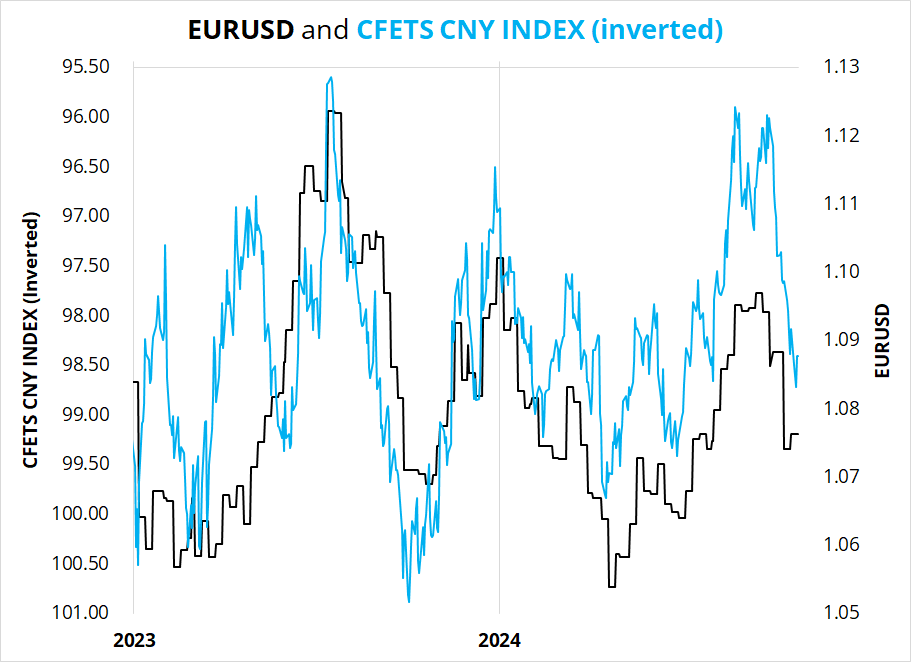
Mark called me yesterday to mention that I made a bit of a noob logic error in am/FX yesterday, as I said it’s interesting that CNY has appreciated despite the rising odds of a Trump win. This is simply a mechanical result of the fact that the USD is rallying and EURUSD is more volatile than USDCNH. Unless CNH is unhinged, lower EURUSD often leads to stronger CNY vs. the basket because let’s say EUR and other currencies move 1% vs. the USD, it’s unlikely that USDCNH moves that much.
You can see the effect here. I have inverted the CFETS CNY INDEX and plotted it against EURUSD. When EURUSD goes down, the CNY appreciates against the basket and vice versa. The chart covers the last two years. This would not be the case in, say, 2015 when CNH was driving the bus. But it’s true when USDCNH is barely moving (like now).
On its own, this isn’t all that important, since barely anyone trades the CFETS basket. But it’s a good lesson in knowing what drives a currency cross. For example, if you put on CADJPY because of a view on the Canadian dollar, you’re probably barking up the wrong tree.
The correlation of daily changes between CADJPY and its components looks like this (2022 to now):

So CADJPY is a USDJPY trade. In fact, higher USDCAD tends to coincide with higher CADJPY because the USD component completely dominates. That’s why my GBPJPY trade didn’t work. I was right about GBP going down on more dovish BoE, but USDJPY went up so much more on the repricing in US rates. That was an extreme example, but a good one. Note that I was aware of this going into that trade, I was just wrong on USDJPY.
The CAD crosses tend to be dominated by the other leg, most of the time. The exception would be if you zoom right in around Canadian data or the Bank of Canada meetings, etc. Here, for example, is the daily correlation of changes between AUDCAD and its components (2022 to now):

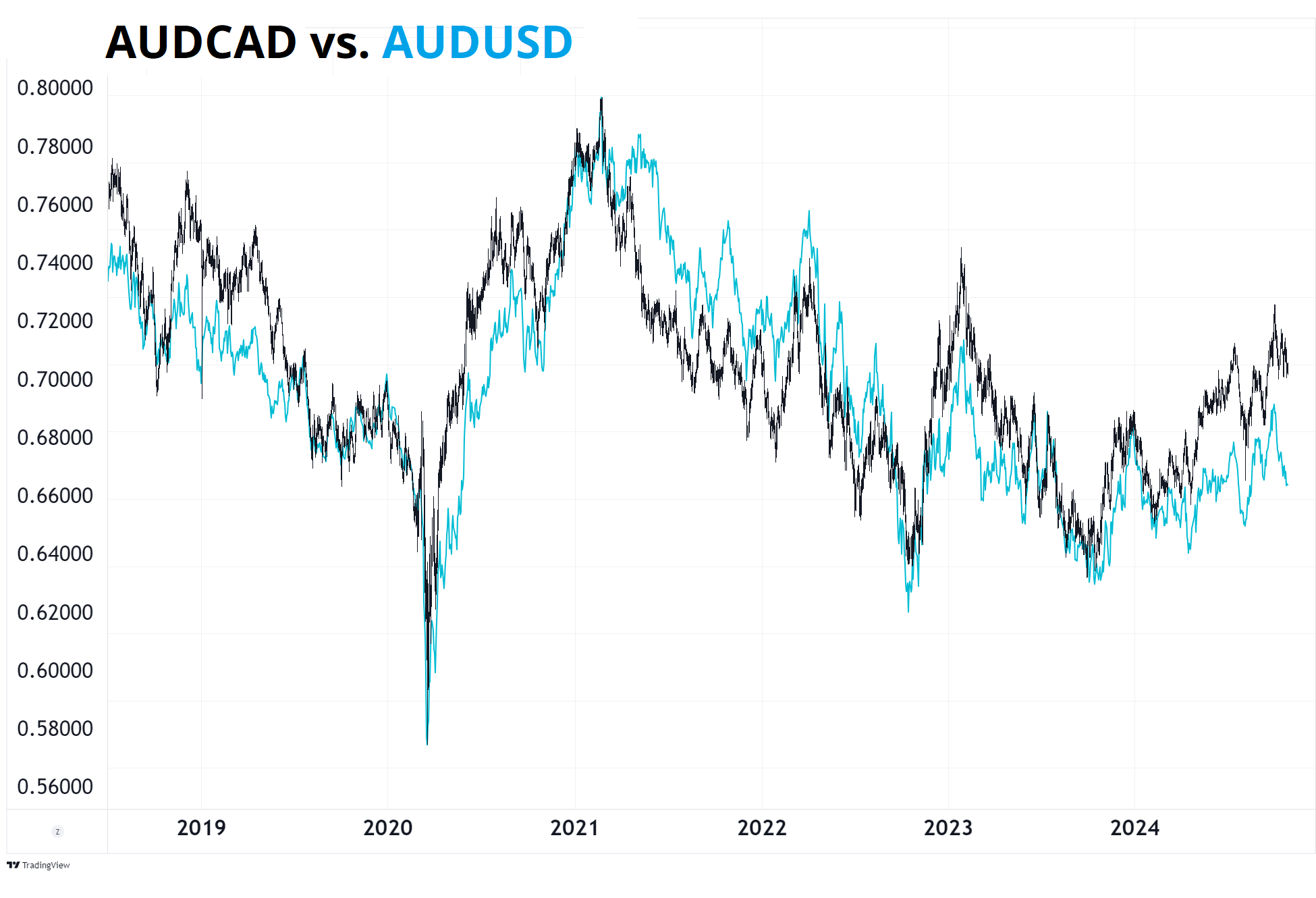
So short AUDCAD is basically short AUDUSD much of the time. The only way to get around this if you want to truly trade Canada vs. another currency because of macro fundamentals is to vol-weight the position and go bigger in USDCAD than AUDUSD (for example). Sometimes, if you are pairing two currencies with similar volatility, their cross rate will reflect the divergence of fundamentals. But when one currency is way more volatile than the other, the more volatile currency’s fundamentals (or just the broad direction of the USD) will dominate.
If you’re long AUDCAD, you’re basically short USD because you are relying on AUDUSD higher. Here’s the daily correlation of changes between AUDCAD and AUDUSD and the DXY.

Calendar
A pretty gigantic calendar coming over the next 10 days or so as we are now 277 hours away from 9:30 p.m. on election night. Before that, we have a chock-a-block calendar next week that includes BOJ, the UK Budget, Swiss CPI and the US Jobs Report. Early nights and afternoon naps this weekend to arrive at full strength on Monday.

Final Thoughts
Arstechnica: How government agencies follow your every move.
Victor meets the Bogleheads.
Have a letter perfect, high-scoring weekend.