Benchmarking past moves in FX can help you think about what might happen tomorrow.
Image source: Wikimedia Commons

Benchmarking past moves in FX can help you think about what might happen tomorrow.

Image source: Wikimedia Commons
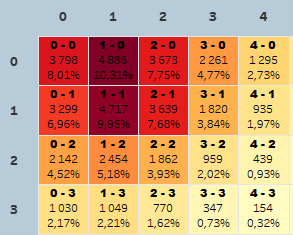
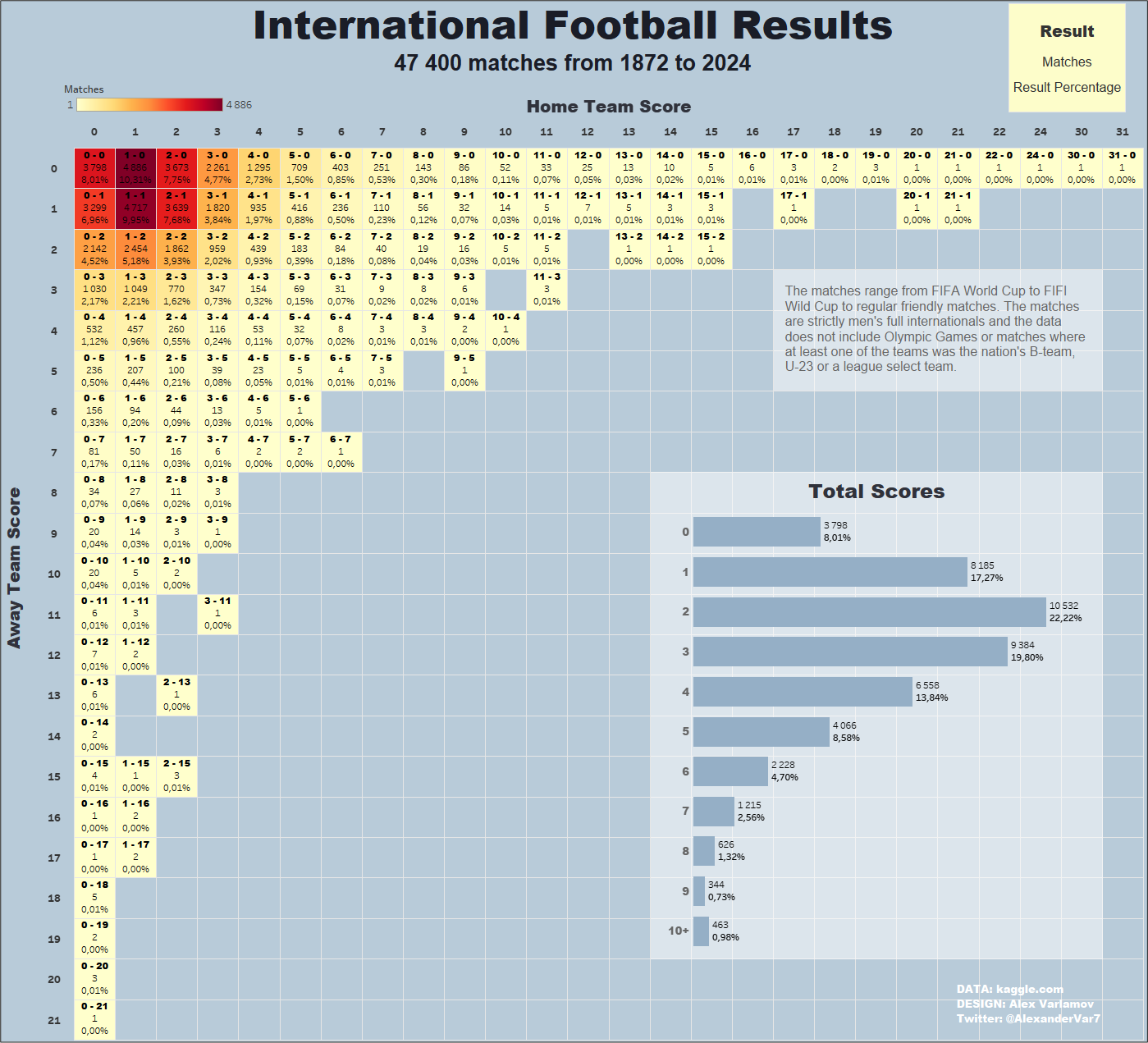
65% of international football matches end in a score of 0-0, 1-0, 1-1, 2-0, 2-1, or 2-2. See bottom of page for full matrix
Flat
The Fed story is a weird one this week as only 9 out of 118 economists in the Bloomberg survey have called for 50bps, and yet the market is pricing it as a 70% chance. Yes, many of those survey responses are stale, but still. Pretty weird! I would argue that most market participants (say, 80% of people I talk to) expect a cut of 50 basis points. CME FedWatch has it at 65%, Kalshi is trading 58%/62%, and WIRP has it somewhere in the 55/65 area. Exciting.
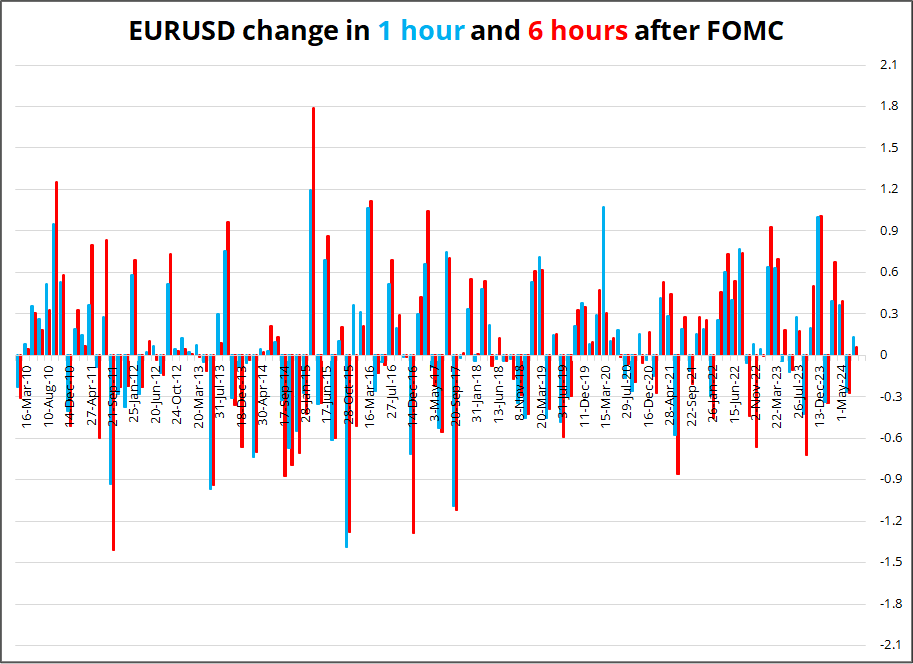
As a baseline for tomorrow’s moves, here are the 1- and 6-hour movements for USDJPY and EURUSD after Fed meetings since 2010. These can serve as a starting point, and I would assume that the moves tomorrow have the potential to be as large as ever given the unprecedented uncertainty surrounding the decision. 25bps is a huge surprise and 50bps is still kind of a… Surprise.
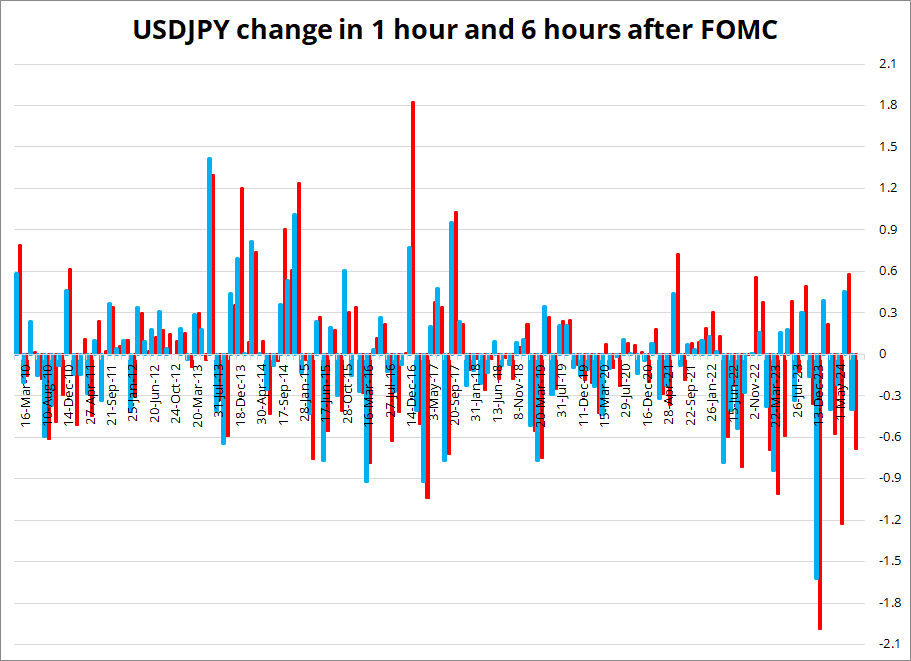
You can see there how the Fed decision volatility has come mostly to the downside in USDJPY. This is a bit surprising to me given USDJPY has mostly been in an up trend over this time. The reaction skew was the other way pre COVID. I don’t think it’s predictive, just mildly interesting.
EURUSD has been less spicy than USDJPY.
Two-day USDJPY volatility at 21% sounds expensive, but probably isn’t.
The table near the end of am/FX yesterday had a transposition error. Here is the correct chart. One reader made the logical point that a pretty good all-weather portfolio after the first Fed cut is to be long bonds and long USD in tandem. The USD seems to trade much more buy rumor/sell fact than bonds.

I have now been at Spectra for three years. Thanks to everyone who subscribes and to all the clients that trade with us every day. You are all appreciated!
Have a high-scoring day.
Putting the fun in funders
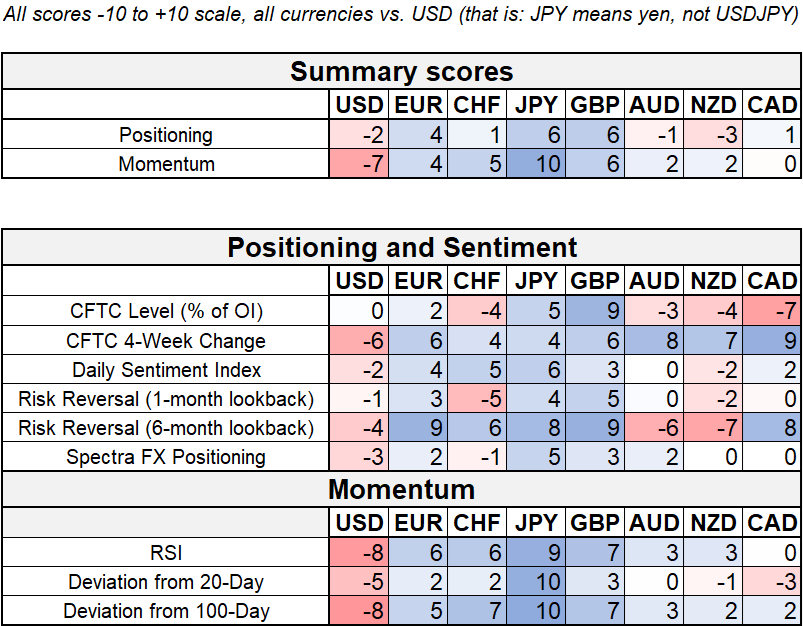
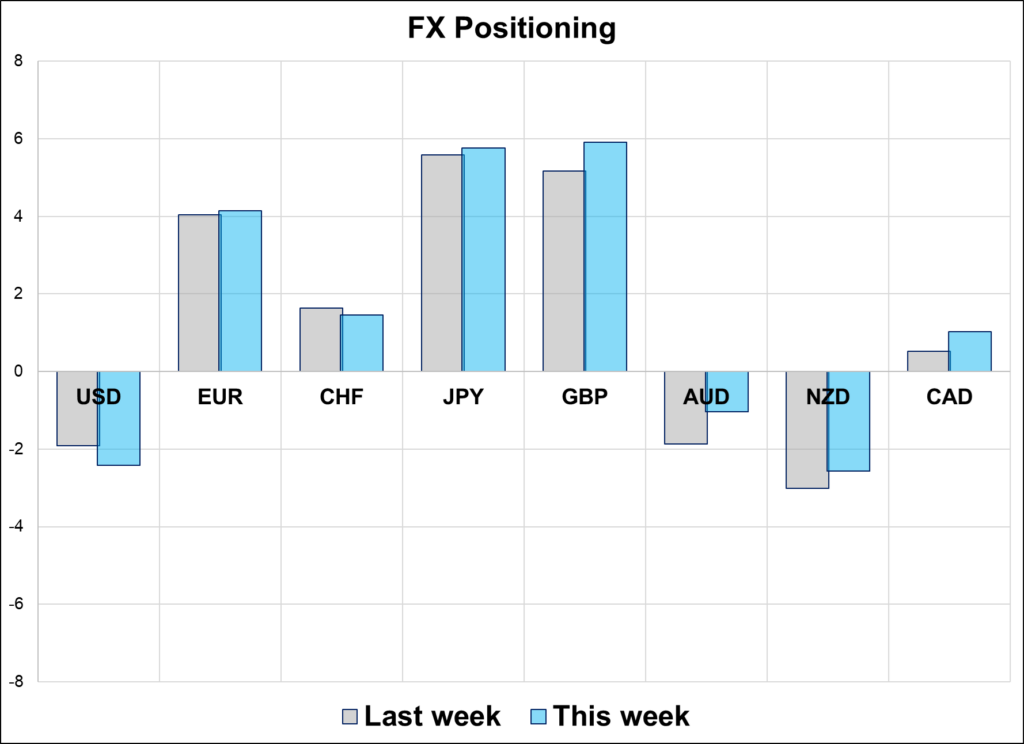
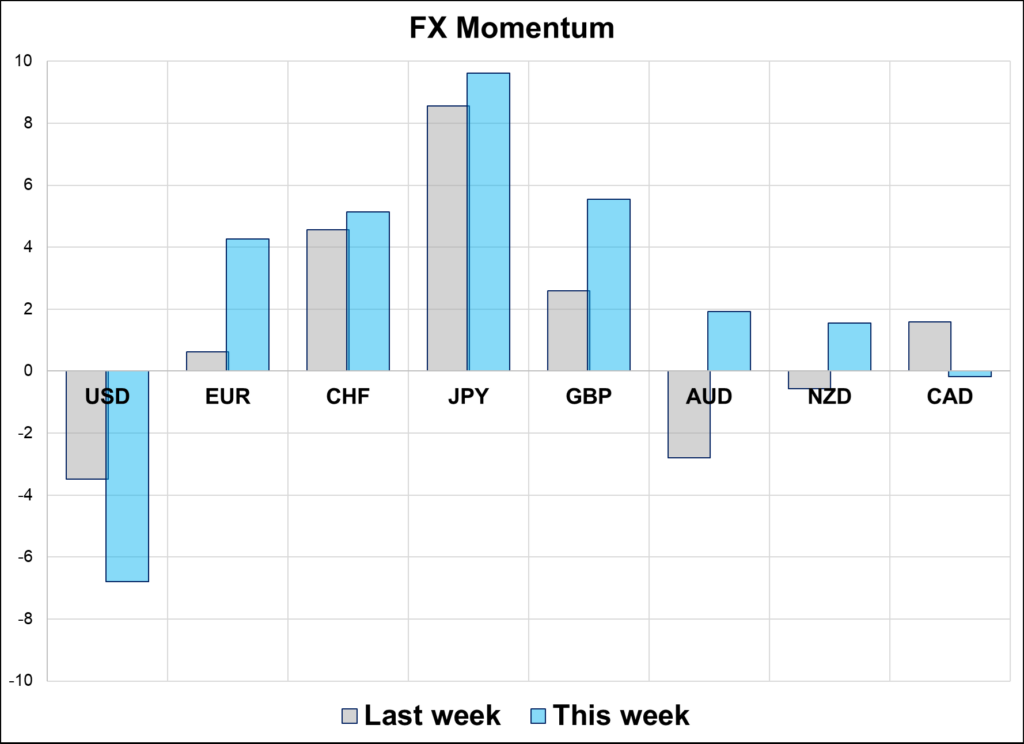
Hi. Welcome to this week’s report. The market has fully embraced the funding currencies and continues to ignore the commodity currencies as yields drop to multi-month lows and currency differentiation remains a key theme. While macro specs love a broad, directional USD theme, and the USD has been weak of late, there is still too much dispersion among currency pairs to really get excited about a big picture USD down theme. Furthermore, it’s hard to argue we are in the middle of the USD smile (where most good dollar selloffs reside) as the German export machine sputters, China continues to sag, and the US is softening, but AOK.
While there are many factors that impact the USD, the big dollar selloffs have tended to come in the middle of the dollar smile, when the US is OK, and the rest of the world is better. This can be simplistically represented by showing all the periods where global equities outperformed US stocks on a chart of the dollar index. For this chart, I used the average rolling 1-year return of Germany (DAX), Canada (TSX), UK (FTSE), China (Shanghai Comp), and Japan (Nikkei) and compared that to the rolling 1-year return of the United States. When the return was positive (the rest of world outperformed SPX, on average), the section of the chart is blue.
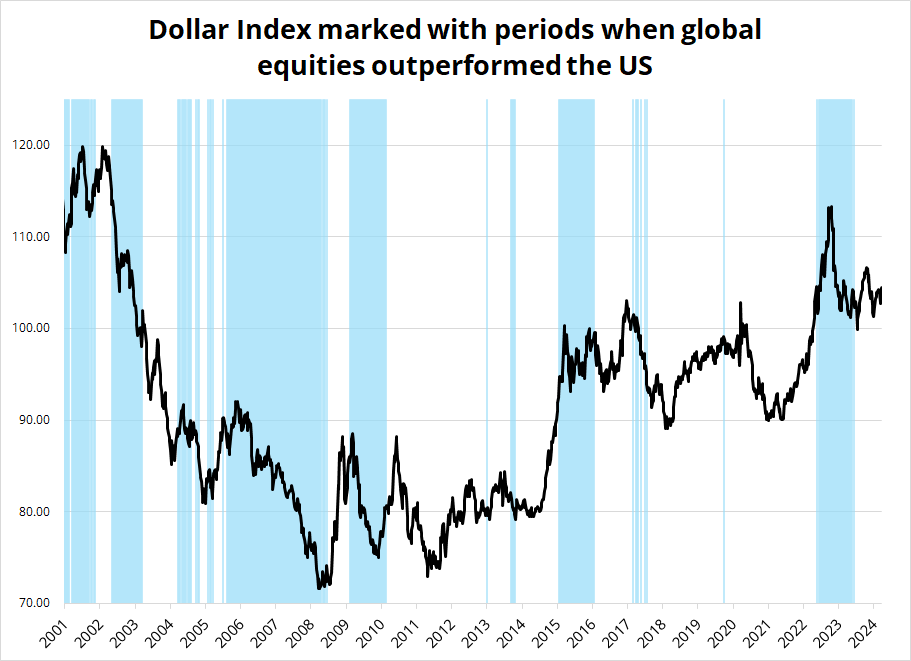
You can see that the juiciest USD selloffs happened when US equities underperformed the rest of the world. This was mostly the case during the structural rise of China trade after China joined the WTO (2001 to 2010), but you can see that even after that, the big USD rallies came during periods of US equity outperformance. We have not even considered interest rates here; this is just a simple exercise.
Could this time be different? US deficits are huge, and foreign borrowing of USD has slowed (and some has been repaid). So, it is possible a structural USD selloff can happen without US equity underperformance.
This section is just to show that life is much easier for USD shorts when US stocks trade worse than their global brethren. For this to happen, you probably need some signs of improvement in Germany and China. Given the low starting point, this too is possible.


This piece is mostly for people who are interested in backtesting