Economic data doesn’t matter because all that matters is China reopening. I am starting to wonder if this regime is sustainable.

Upper case and lower case
(see explanation in today’s non sequitur)

Economic data doesn’t matter because all that matters is China reopening. I am starting to wonder if this regime is sustainable.
Upper case and lower case
(see explanation in today’s non sequitur)
Long 07FEB EURGBP call
spread 0.8870/0.8920 risking
22 GBP bps to make 50
Spot ref. 0.8850
January 18, 2023
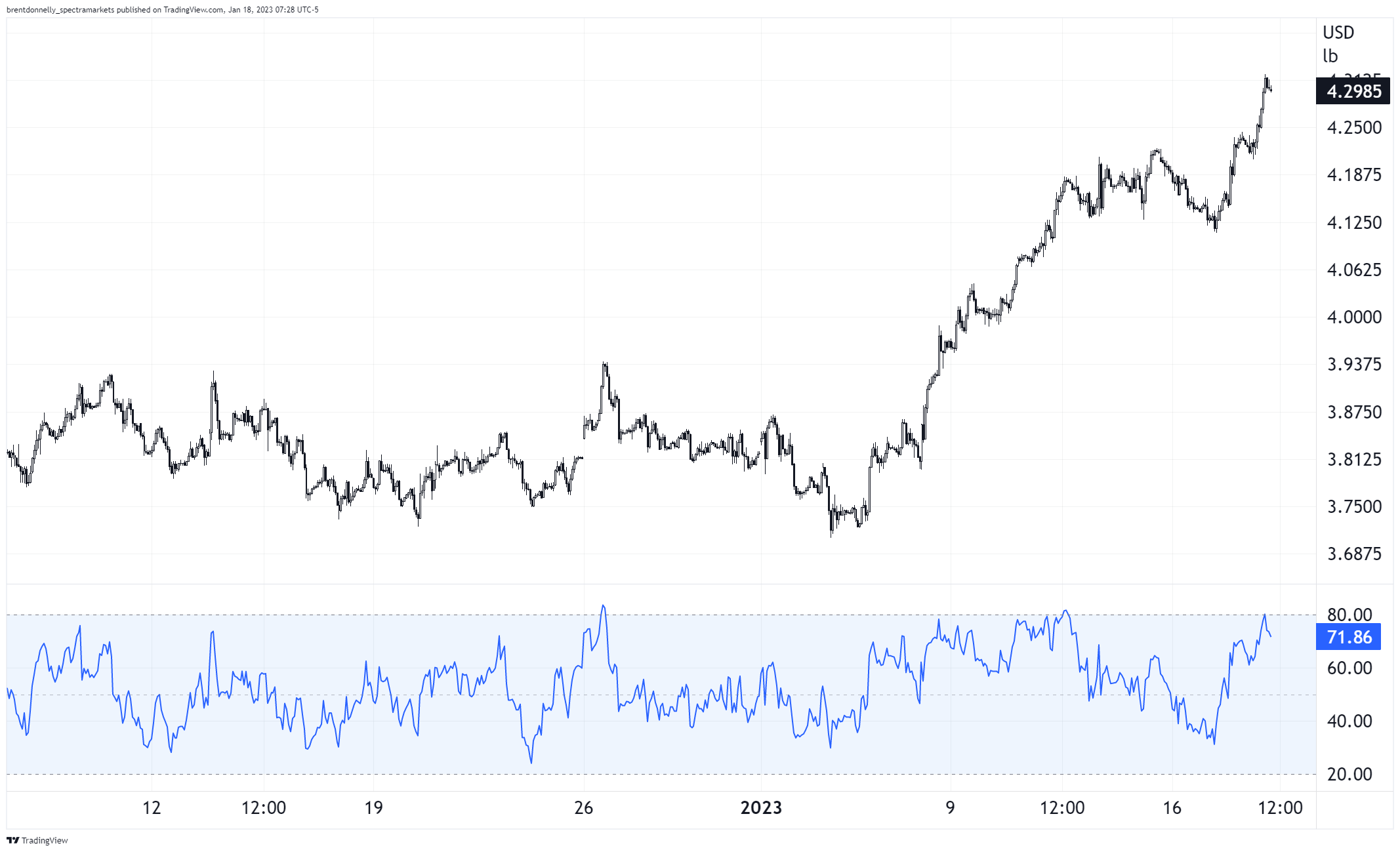
China reopening is driving the market, to the exclusion of all other information. Copper is now up 18% or so this year. Odd thing is, China reopening was supposed to be about consumption, not infrastructure, and copper is usually more of an infrastructure/capex play. Meanwhile oil, the more consumption-driven commodity, is up today but still closer to the lows than the highs. Wheat is on the lows while soybeans are bid. GBP ripping while the euro trades soft. It’s all kinda weird.
Furthermore, some abysmal economic data points hit this week, and nobody cares. The Empire State Manufacturing Index, the first US business sentiment number for January, was released yesterday. It was expected at -8.7 and printed -32.9. That’s a recessionary data point. The market shrugged. In the chart, you can see headline (cyan) printing down to COVID/GFC levels of badness while the six months ahead figure bounced a tad. So, there’s a tiny bit of hope, but the numbers are clearly bad.
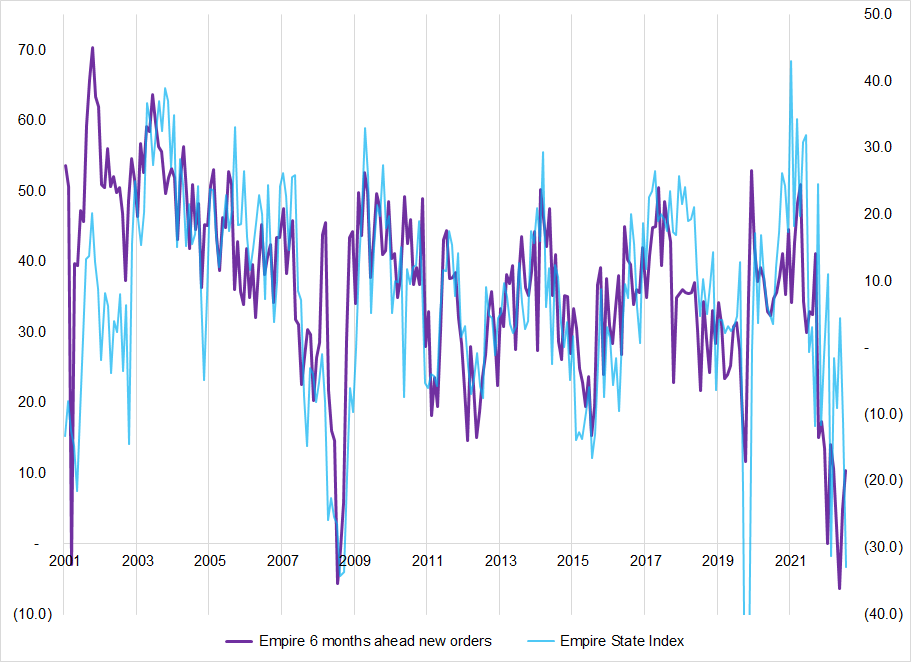
The market is fully locked into the soft landing narrative now and is ignoring all sentiment data as the hard data remains robust. I get it. In fact, since payrolls I have been feeling the soft landing vibes. But at this point, it seems stretched. Again, the market doesn’t care about economic data right now, but New Zealand Retail Sales came out on the apocalyptic side last night too.
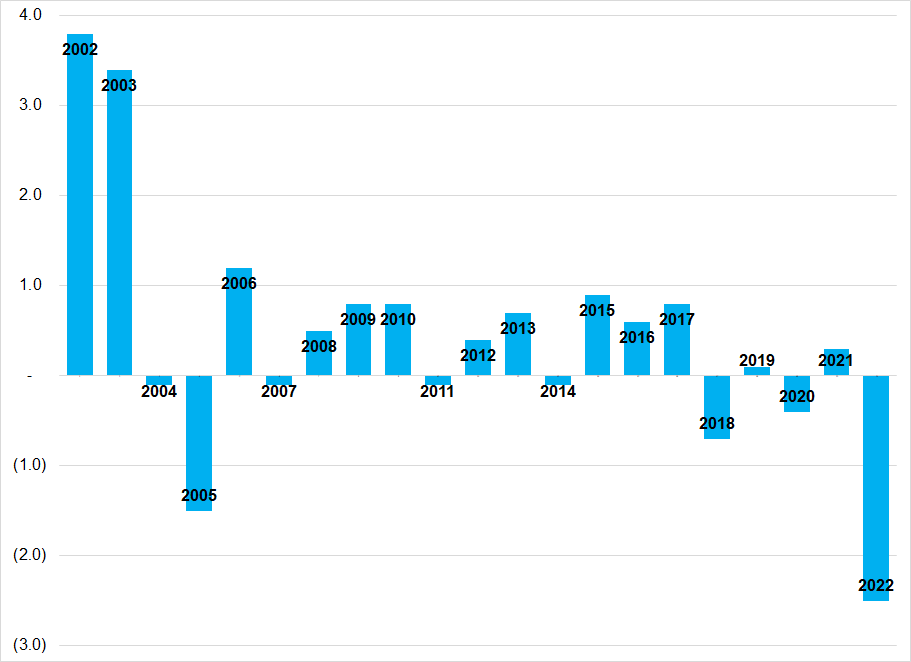
The explanation here could be simple: Markets are forward looking. Nobody cares about what happened in New Zealand in December 2022 because China is reopening and there’s about to be an explosion of economic awesomeness that will sweep the entire Eastern hemisphere and then the world in H2 2023. That is possible! But Retail Sales isn’t sentiment data or soft data. It’s hard data. It shows a consumer pulling back in NZ.
Here’s what Westpac had to say about the release:
Spending was down in all categories barring groceries. There were sizeable declines in discretionary areas. Spending on durable items, like furnishings and appliances, was down 5.7%. Hospitality spending was down 4.6%. And apparel spending was down 4.7%.
The softening in these areas is particularly notable. For most of 2022, households were continuing to dial up their spending on discretionary items despite large price increases. Spending was also boosted by the return of international tourists to our shores.
However, as we’ve been highlighting for some time, households’ finances are coming under increasing pressure on several big fronts. Continued rapid price increases are eroding their spending power. Falls in house prices have meant that many families have seen the value of their assets decline. And, perhaps most importantly, mortgage interest rates have increased sharply over the past year.
To date, many households have been insulated from the rise in interest costs due to mortgage rate fixing. However, increasing numbers of households now face refixing at substantially higher interest rates. And combined with the other aforementioned headwinds, that’s squeezing many households’ finances. Our recent report, “From squeeze to crush” looks at the pressure on household finances and is available here:
Putting all that together, along with warnings from the Reserve Bank about a weakening economic outlook, and it looks like the long forecast downturn in the New Zealand economy is now underway.
Stan Druckenmiller always makes the point that you can’t just trade the world as it is, or you will just be extrapolating. You will pay all the highs and hit all the lows. You need to imagine the world as it will be and forecast the path of how we get there. Here’s an excerpt from a worthwhile podcast he did recently.
“I learned this way back in the 70s from my mentor Speros Drelles. I was a chemical analyst. When should you buy chemical companies? Traditional Wall Street buys when earnings are great. Well, you don’t want to buy them when earnings are great, because what are they doing when their earnings are great? They go out and expand capacity. Three or four years later, there’s overcapacity and they’re losing money. What about when they’re losing money? Well, then they’ve stopped building capacity. So three or four years later, capacity will have shrunk and their profit margins will be way up.
So, you always have to sort of imagine the world the way it’s going to be in 18 to 24 months as opposed to now. If you buy it now, you’re buying into every single fad every single moment. Whereas if you envision the future, you’re trying to imagine how that might be reflected differently in security prices.”
Still, are we sure all this bad economic data is transitory? That question doesn’t matter right now. Kiwi is at the highs. But this economic weakness (particularly in NZ) could become important at some point. The mortgage reset squeeze is coming to economies like Canada, NZ, and the UK. For now, it’s all about soft landing and China reopening and copper to infinity and nothing else matters.
While I embraced the soft landing vibes for a while, I’m becoming suspicious of the bullish trade. Hat tip to NJ who originally coined the saying: “It’s a nothing matters market.”
Have an ALL CAPS day.
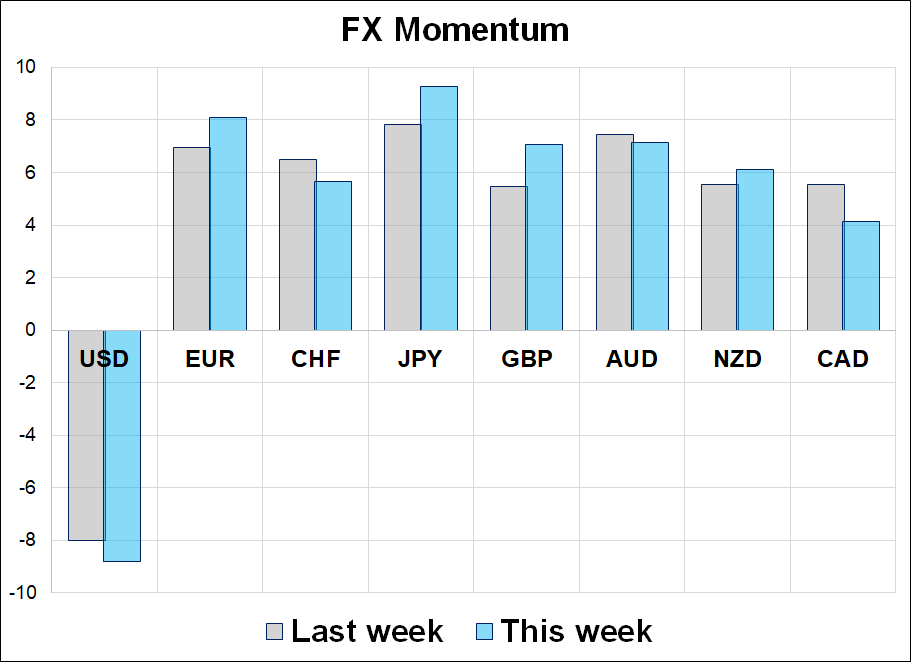
The past week has seen another uptick in USD-bearish sentiment and a significant, but still not yet worrisome increase in USD short positioning. Our franchise has been transacting EURUSD topside, longer-dated AUDUSD calls, and we have seen JPY bulls adding to short USDJPY trades. Soft landing vibes and China reopening continue to dominate as all those trades grind higher. Long copper, long gold, long silver, long European equities, paid ECB, long EM, “say no to US megatech”, and short USD are the popular trades. If you have one or more of these, keep an eye on all the others as possible coalmine canaries.
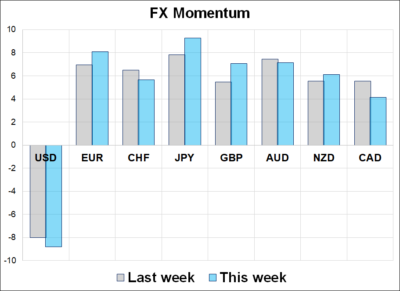
Here are this week’s positioning and momentum scores:
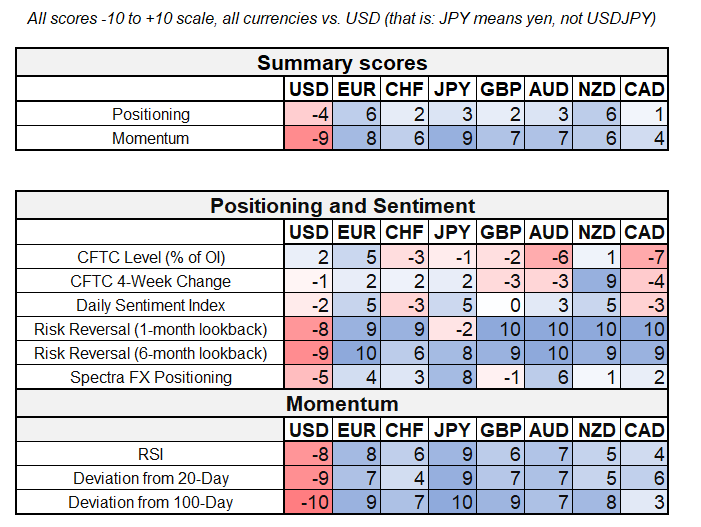
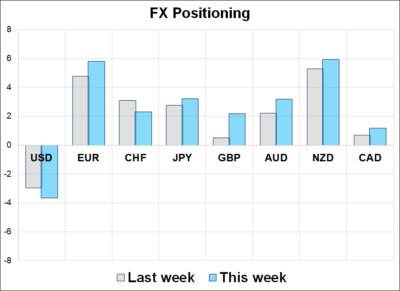
1. The obvious conclusion in USDJPY would be to think that the market is heavily short, but the data does not fully confirm this. Our client base is involved in USDJPY via downside but most of it is 3-months or 6-months and there do not seem to be a ton of shorts in spot. The entry point makes spot very difficult and there are other expressions of the trade (rates and Japanese banks) that people prefer to FX. So, the market is short but not scary short.
2. The 1-month risky in USDJPY has stabilized and the frenzy for USDJPY puts has subsided, a bit.
3. Momentum remains strong for short USD trades, but some of the markets that had been driving the USD lower are losing momentum and this could put crowded positions at risk if it continues. For example, ECB expectations have backed off a bit as sources today leaked a preference to hike 25bps in March.
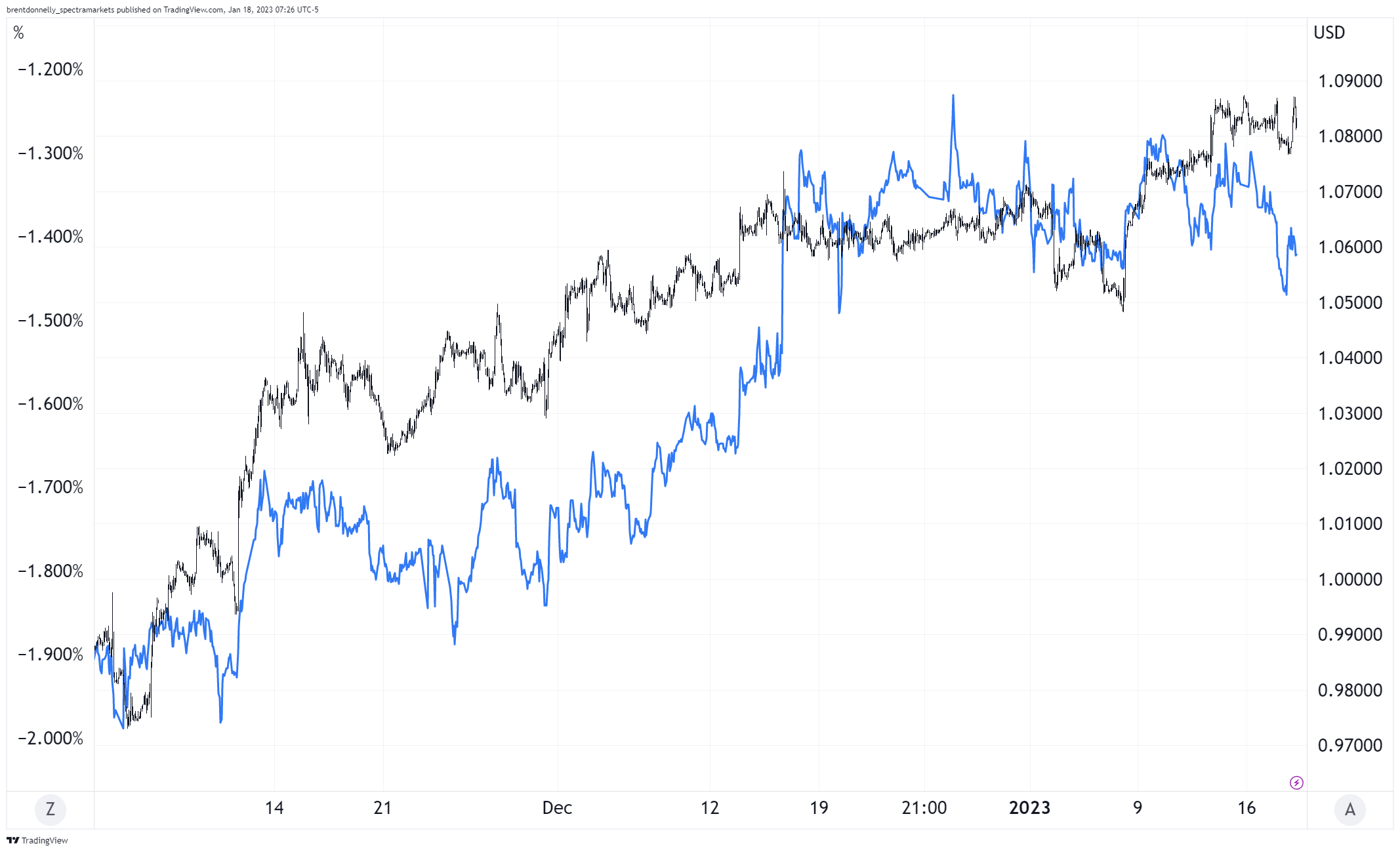
4. While FX is leaning short USD, equity investors have absolutely fled the US in 2023 as they are most underweight the USA since 2005. This is pretty much all one trade: Copper up, China reopening, EURUSD, ECB hawkish, Rest of World equities > USA equities, gold silver, etc. all rely to some extent on a lenient Fed, soft landing and avoidance of severe recession. Yesterday’s Empire State release, the first real data point for January, was abysmal and so it’s important to keep an eye on the real data as the market is now just about completely ignoring soft data and sentiment.
Thanks for reading.
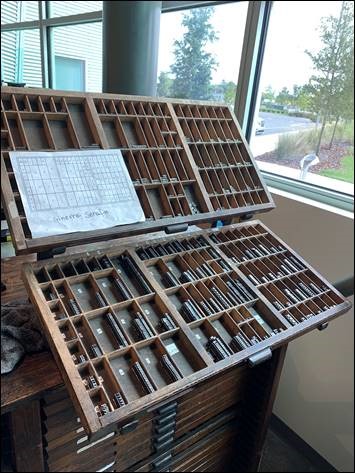
The terms “upper case” and “lower case” come from the old times when printing presses had manually set letters. Small letters were kept in the lower case (because they were more common and easier to access there) while large letters were kept in the upper case.
HT le Gitt


This piece is mostly for people who are interested in backtesting

This could be a consolidation week as crosswinds now blow in FX and equities