Vibes from a macro dinner, results of the macro survey, an explanation of the stonking Atlanta Fed GDPNow revisions, and no June cut from the BoC.
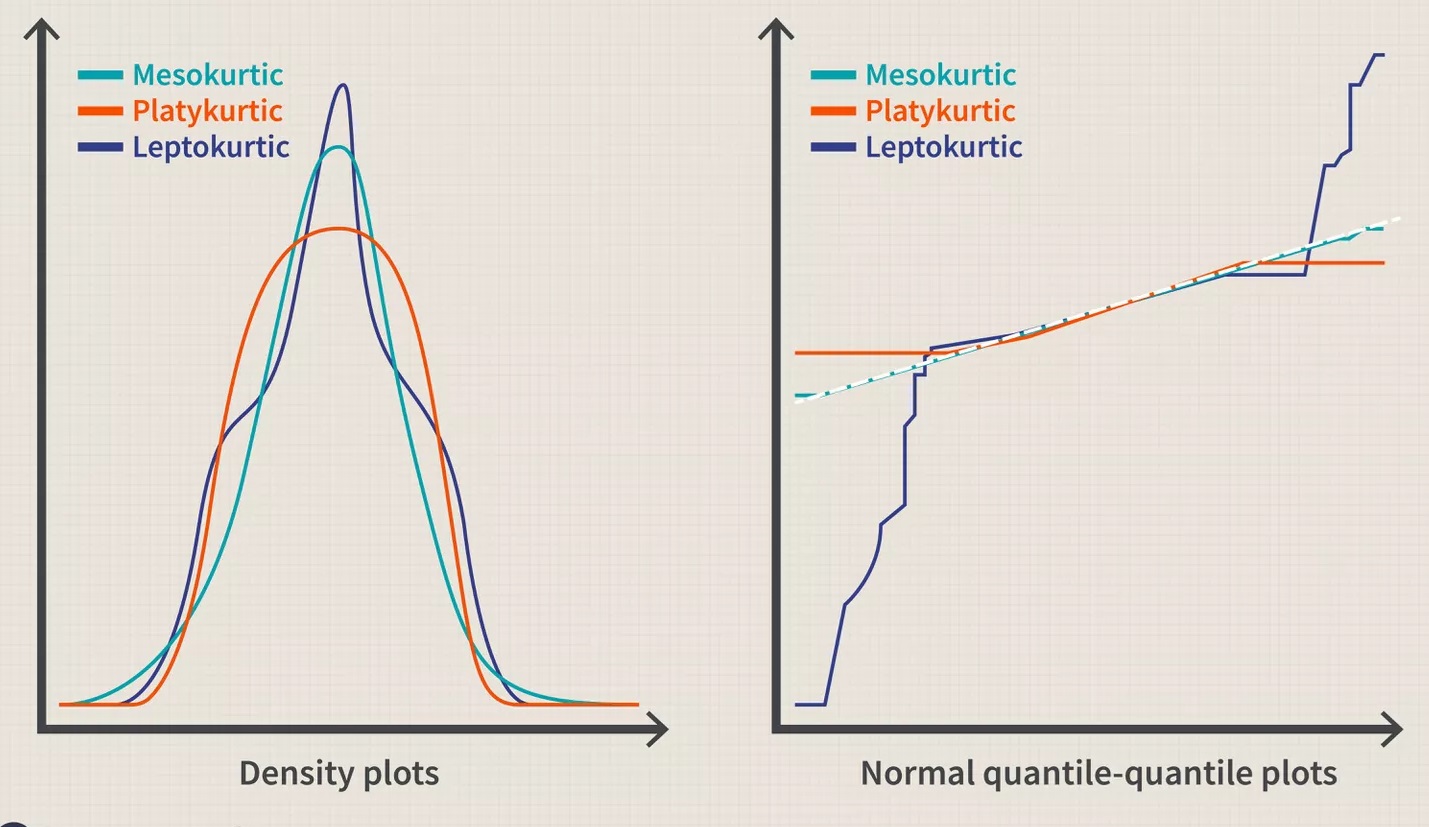
Everybody knows what leptokurtosis is, but can you define platykurtosis?

Vibes from a macro dinner, results of the macro survey, an explanation of the stonking Atlanta Fed GDPNow revisions, and no June cut from the BoC.
Everybody knows what leptokurtosis is, but can you define platykurtosis?
Long EURUSD @ 1.0785
Stop loss 1.0694
I hosted a small macro dinner last night with some PMs and a hedge fund CIO and while May 9, 2024, isn’t the spiciest date ever to host a macro dinner given low vol and somewhat meh macro narratives, there were some useful takeaways.
Some disagreement on Fed and inflation. But within a narrow band. Attendees saw between 1 and 3 Fed cuts this year, with inflation dropping either a bit or a lot. No recession, no mega reacceleration. As such, everyone sees the various paths as bullish for stocks because the only way stocks sell off is if we either get a recession or a rapid reacceleration in prices.
No strong view on the USD. Cyclical factors driving the dollar look to be near their peak, but with low levels of volatility the carry is still too high for aggressive bets on a lower USD.
On high alert for the possibility of true normalization in Japan. My main takeaway on the BOJ discussion was that instead of following the prices data or the wage negotiations or Japanese macro, the better way to trade the BOJ is to simply watch for a change in rhetoric. They have been slow playing the normalization, but there may be a time where they decide that taking rates back to something more in line with global norms is optimal. If that’s the case, their rhetoric will be less dovish first.
The US election is hard to handicap because a Trump victory is bullish USD via tariffs and bearish USD if he neuters the Fed. A Trump victory with a Blue House and Congress is seen as a completely different outcome than a Republican sweep. The sweep is the most unhinged outcome. Several people at the dinner think Trump’s odds are way above 50%.
What about Jeo? I think it’s interesting that everyone spends time game-planning a Trump victory, but nobody talks about the trades to do if Biden wins. If Biden wins, there could be a major fiscal drag trade as he’s unlikely to renew the TCJA.
A Biden victory is also likely to be bearish vol and bearish USDMXN as the status quo should be kind to the peso. While you can argue that Trump wrote USMCA and thus he might leave Mexico alone, consensus was that a) he wants to severely limit Chinese backdoor exports through Mexico and b) USMCA comes up for review July 1, 2026, and Trump will likely make life difficult for Mexico going into the review. Read a full explanation of the review here.
Other topics discussed were a) USDCNH (nobody thinks a deval is coming—it makes no sense in a world where China exports are fine, and they are targeting a stronger consumer and overall financial stability, b) USDTRY there is some interest in options structures that capture the carry if spot sits here, and c) lamb.
Ahead of the dinner, I also conducted a broader survey of the readership. Here are the results:

The final two questions were: What is your favorite FX trade now until July 31, 2024? And: Where will the S&P 500 close on July 31, 2024?
The FX trade answers were super mixed. Most popular were: Long USDCNH USDCHF USDJPY USDCAD, long AUDUSD, EURUSD and GBPUSD, and a few short USDJPYs in there too. No consensus whatsoever.
The S&P result are below. Strong bullish lean, just like the dinner.

I was able to get in touch with an economist at the Atlanta Fed, and he explained to me why their Q2 GDP estimate rose from 3.3% to 4.2% between May 2 and May 8. The answer makes sense but isn’t super satisfying.
First of all, many readers said to me that it’s simply bounce back from inventory-related weakness in Q1. That is not accurate—that explanation covers why the starting number is high (i.e., the 3.9% initial estimate on 26APR) but it doesn’t explain why the estimate rose from 02MAY to 08MAY. As a reminder, here’s the path the estimate has followed.
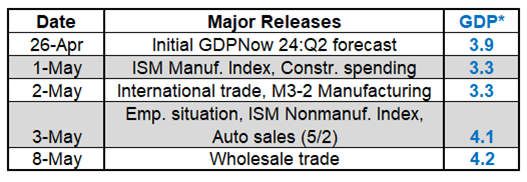
My question yesterday was how a weak jobs report, weak ISM and OK auto sales triggered such a large jump in their estimate. The answer has multiple components. These bullets mostly quote the response I got from the economist at the Atlanta Fed, but I have cleaned up his response for easier reading.
So, the conclusion is that the thing is a bit of a black box, estimates for the dynamic factor for unreleased data create a lot of noise early on in the estimate period, and a weak headline jobs number can still have a positive impact on the GDPNow if employment in particular highly-cyclical sectors is growing.
As I said yesterday, I’ll take the under! Q2 GDP trades as a contract on Kalshi (the betting/prediction website) and it’s trading at 2.9% right now. That is a more reasonable estimate, I think. Bloomberg economist consensus is 1.7%.
After this jobs report and the BoC Minutes emphasized upside inflation risks over downside inflation risks… I don’t think the Bank of Canada is going to cut in June. There are still 11bps priced in and I think that paying the June meeting is high EV.
Speaking of the ‘nucks, I am going to Canada for Mother’s Day (Hi Mom!) so there will be no am/FX on Monday. Back Tuesday.
Have a kurtosis-free day.
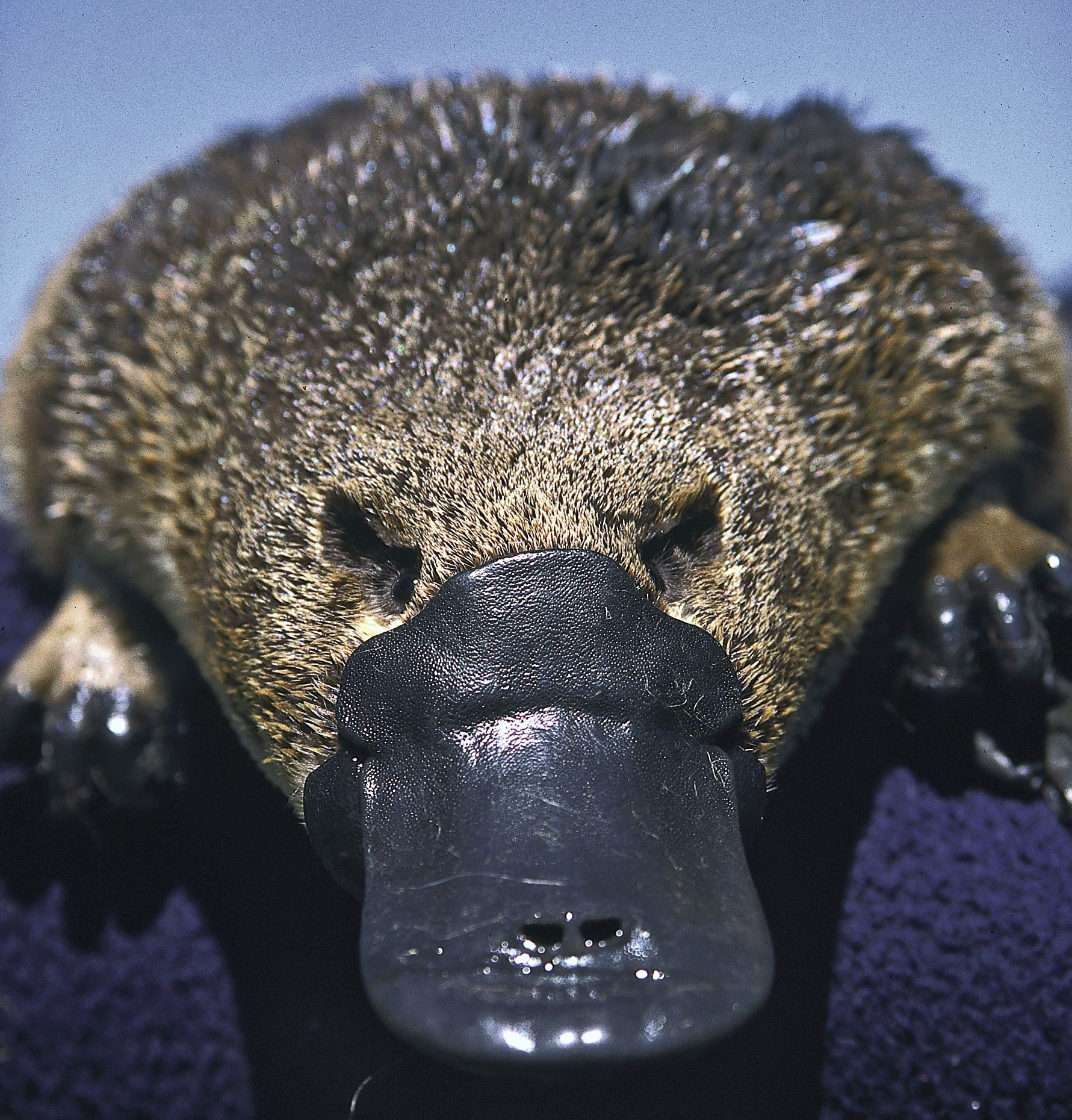
Platy is a prefix derived from the Greek word: platús, which means broad or flat. Like bill of a platypus.
The term “platykurtic” refers to a statistical distribution in which the excess kurtosis value is negative. For this reason, a platykurtic distribution will have thinner tails than a normal distribution will, resulting in fewer extreme positive or negative events. The opposite of a platykurtic distribution is a leptokurtic distribution, in which excess kurtosis is positive.


A sort of almost unbelievably large move in Brazil. Plus: Short CADJPY.

NZD has a bunch of bullish kickers: Election, seasonality, and inflation