The AI Capex Narrative is Wobbling.
Hello. It’s Friday. Thanks for signing up. I’m Brent Donnelly.

The AI Capex Narrative is Wobbling.

Hello. It’s Friday. Thanks for signing up. I’m Brent Donnelly.
Here’s what you need to know about markets and macro this week
The last Friday Speedrun was called “A Crisis of Faith” and that crisis of faith continues into the end of October now, with NASDAQ cracking support that held since August. There are many big stories running all at once.
First, the earnings numbers confirm what we already knew: 2026 is the year of peak AI Capex growth. 2027 growth will be slower than 2026 and more revisions are now likely to be down, not up. MSFT, for example, estimates $170B of spending for 2027, down from their previous $175B estimate and significantly lower than S&P’s forecast of $189B. The level of nominal USD spending on AI capex is still rising, but the tree will grow more slowly to the sky now because:
The market is dumping big tech because if this is peak AI capex, now it’s nail-biting time as we wait for visibility on payback. In the meantime, can a company with no real moat like OpenAI get through to the other side? Can CoreWeave survive market questions about its financial viability while its CDS trades 4-digits? Etc.
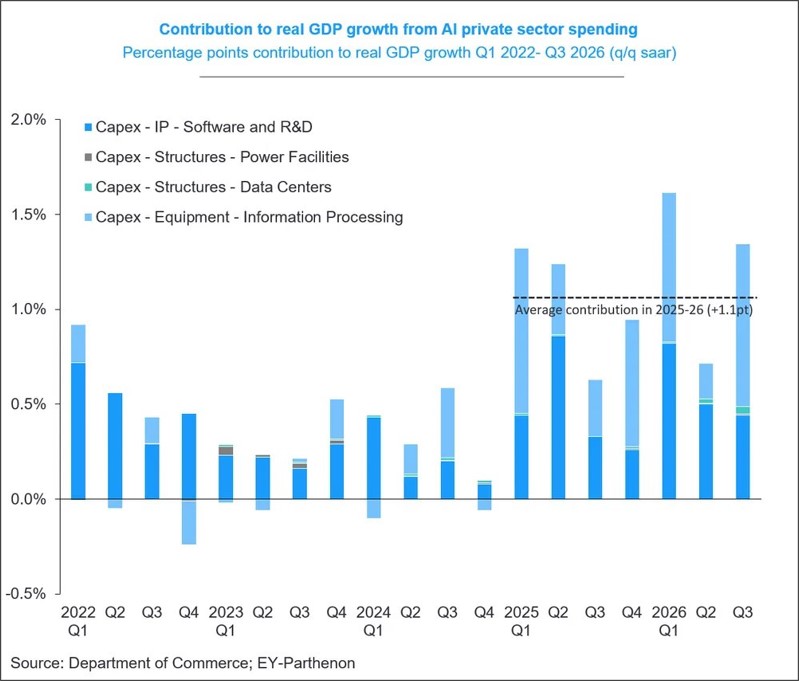
In the meantime, it can be argued the U.S. economy is a one-legged stool balanced on AI capex. And the stock market is, too. This chart from Parthenon (via Chuck, via Twitter) shows the contribution to real GDP growth from private sector AI spending.
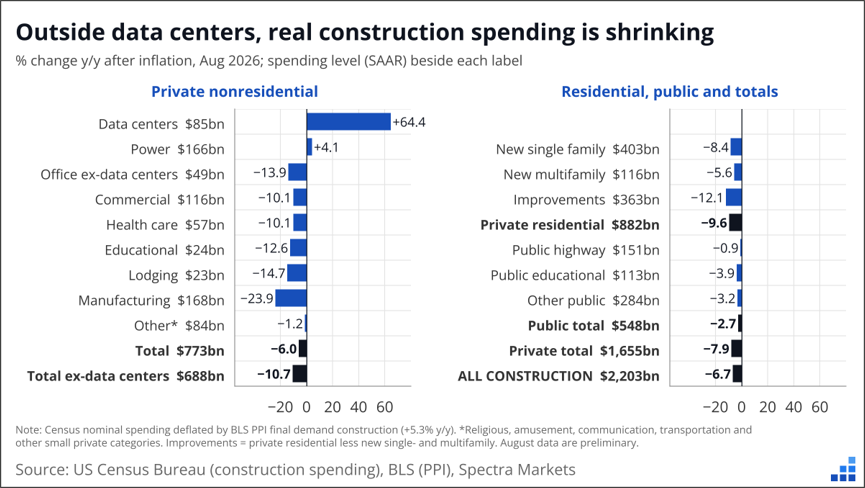
Crowded-out sectors like housing, suffering from high interest rates caused by big tech issuance and inflation from AI capex, electricity, tariffs and war, are not going to instantly rebound and take up the slack just because 10s are 5.00% instead of 5.25%.
So you’ve got some fear into midterms, every big tech company cratering post-earnings, and a Fed that looks completely lost as they continue to alternate monthly between a hawkish and dovish message. June FOMC hawkish, July dovish, Jackson Hole and September FOMC hawkish, then Jefferson, Waller, and Williams all screaming dovish forward guidance in October. And a chair who claims he’s “Doubling down on the inflation target” as his actions show a much greater willingness to stand or surrender.
The Fed targets YoY inflation, not 3-month annualized rates of change, or how fast inflation is slowing off the peak of 7% in 2021. But they continue to pass on rate hikes even as every conceivable measure of inflation has been above 2% for years and years. Since people like to cherry-pick the most hawkish or dovish measure when making their points about the Fed, here’s an index of the 13 most commonly cited inflation measures in the United States and an index of how many of them are above 2% at any given time.
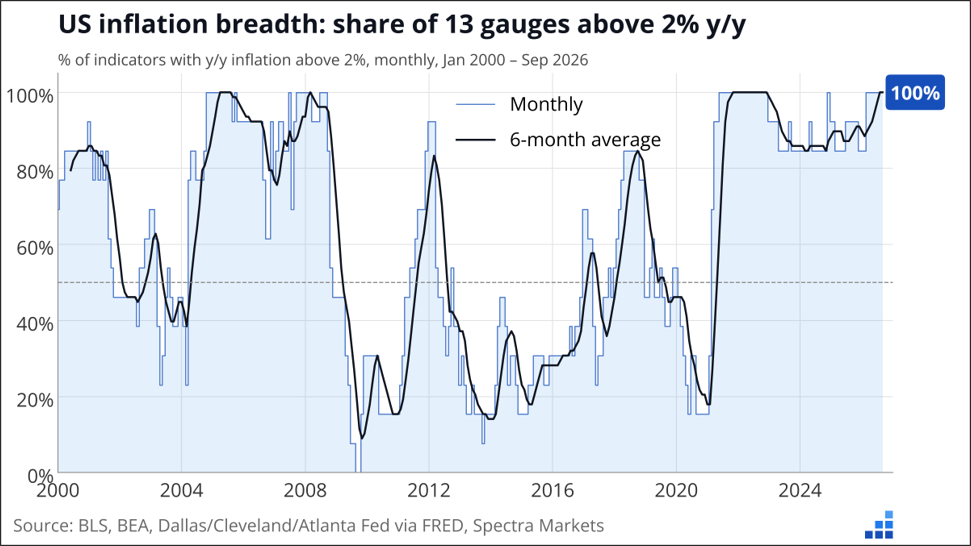
Above two percent for five years isn’t great, but the majority of them have been above 3%. That is, kind of, bad?
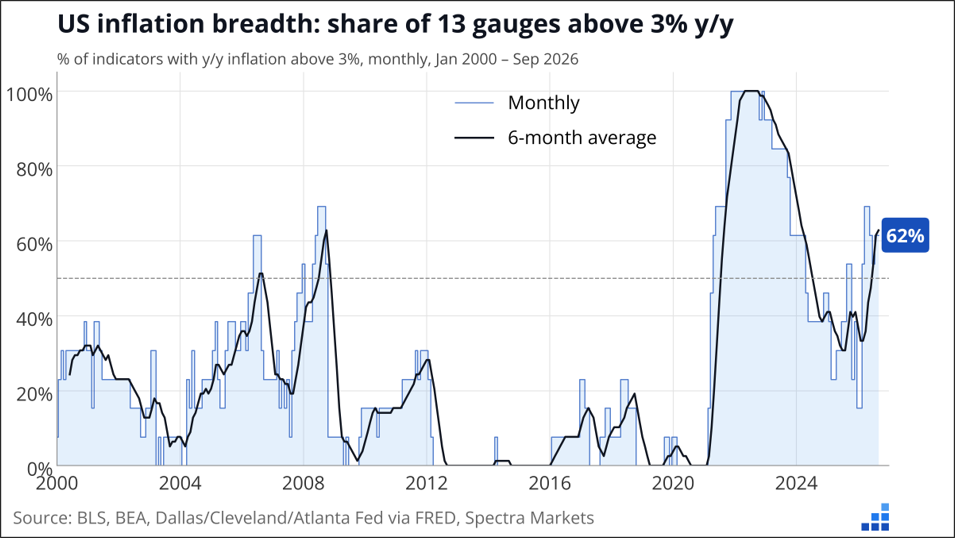
The combination of a Janet-Yellen-adjacent Fed, global tariffs, and war has kept inflation above target throughout most of this decade—and we’re entering the decade’s seventh year. The market is not really trading off the Fed much these days because the FOMC look to be flapping with no clear strategy other than maybe to hike once every few months, if absolutely forced, and hope for some softer data to let them off the hook.
And while the big story for a long time was that inflation expectations were fully anchored around 2%, they are rising again.
Outside the United States, the surprise win by Lula in Brazil crushed Brazilian assets, which had skyrocketed after a Round 1 win by market-friendly candidate Flavio Bolsonaro. One of the uglier dirtnaps in the past 20 years. Here is EWZ, the Brazilian ETF that trades in the U.S.A.
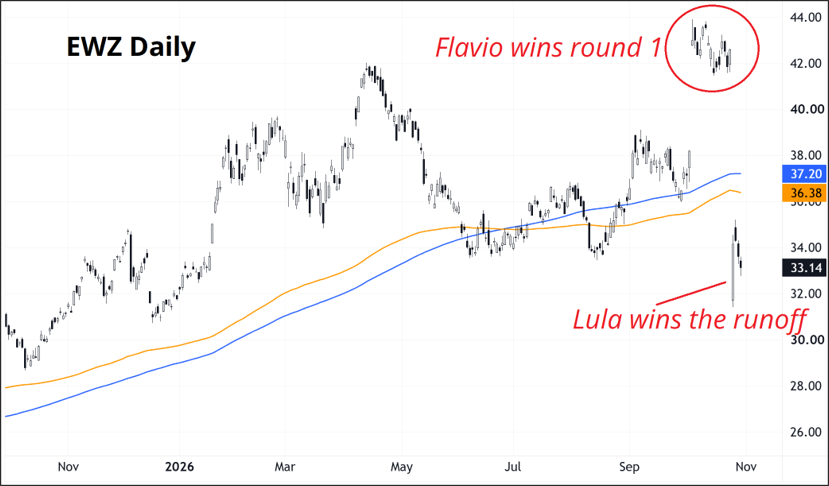
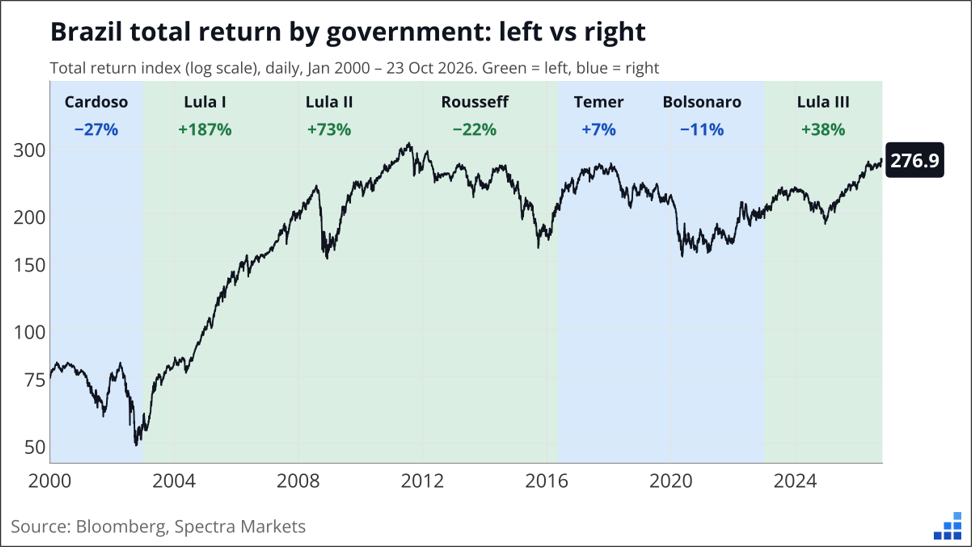
While Brazilian markets have been absolutely fine across three prior Lula terms, the setup into the election (everyone got long on Flavio’s round 1 win) has combined with a fear that maybe this time is different. Market patience with deficit sinners is not unlimited and maybe the bond and currency vigilantes will finally show up in Brasilia? That’s the fear. I don’t really buy it, but markets are fickle.
Here’s the performance of BRL over the last 26 years. You can see that global macro (China’s accession to the WTO, commodity supercycle, commodity bust, etc.) has much more to do with Brazil performance than who is in power.
What follows in a different font is some stuff I wrote in am/FX about the U.S. midterms. If you are an am/FX subscriber, you can skip to the next heading. If you’re not, learn more here. Let us know if you want a free trial. Maybe am/FX can help make you a better trader and help you find more ideas each week.
am/FX on midterms:
I have been dismissing midterms as unimportant, but here are three reasons that was probably wrong.
A strong Democratic showing opens the door for less business-friendly policies in 2028 and the market can start to discount that now. Sure, the Democrats cannot do much about trade and foreign policy as those policy decisions bypass Congress and are only for the President and/or the Supreme Court to make. But state support for giant corporations has been one of the hallmarks of the current administration while Democrats are likely to push back on perceptions of corporate favoritism and divert funds towards social programs. Deficits will remain gigantic and get worse under either party, but the money will go to different causes, depending on who takes the wheel in January 2029. The market can price this future now.
The one- to two-week window after the election is the highest-probability time interval for massive U.S. escalation against Iran. Once the elections have passed and the president is in his two-year lame duck phase, all bets are off. With oil already at the highs, and supply chains tight as a snare drum head, the implications of a massive escalation in the Middle East are scary. This is a good argument for why the midterms may not be a clearing event. The world will wait on pins and needles after the vote is over and regardless of the result, there will be a week or two of extreme clenching of the cheeks until we see if there is a new aggressive plan or if the war simply continues to barrel onward with no real direction, strategy, or timeline.
The market has vivid memories of 2018. That year, we had a Trump presidency, a new Fed chair in tightening mode, midterms, and a 19.6% drop in the S&P 500 between October 3 and Christmas Eve. And while everyone loves a good bullish midterm seasonals chart, the end of 2022 was also a bloodbath in tech. These memories are fresh enough to matter for sentiment, potentially.
Over the past ten years, the 200-day moving average in the NASDAQ has been a good, but not perfect, trend indicator.
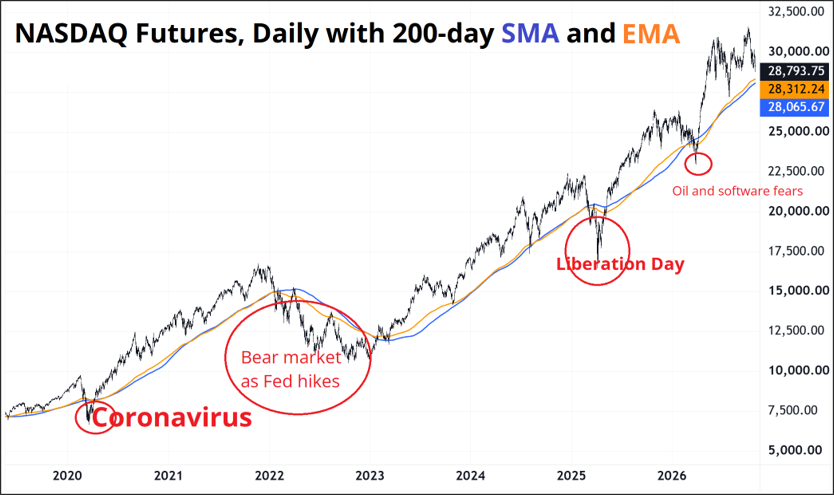
Those lines come in around 28065/28312. You can see that there have been false breaks on V-shaped bottoms, while the 2022 trend lower was nicely captured by the MAs. Anyway, if there’s going to be a bear market, it’s going to start with a daily close below 28000 in the NASDAQ.
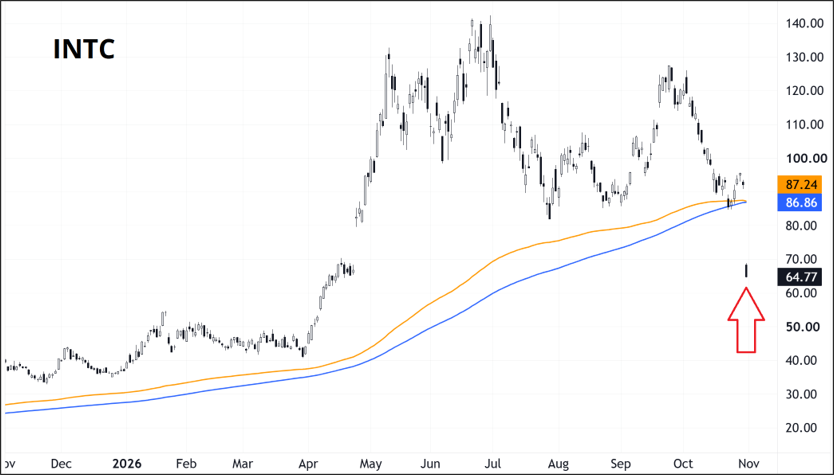
The INTC story went severely south this week as the $140 highs are long gone and we are sub-$65 right now. Eek.
After going short the indices near the highs and squaring up, I have been playing a rangebound view for the past few weeks. I thought I might be bullish yesterday as we approached the bottom of the range but in the spirit of staying nimble, I decided today that I am not bullish. I am scared and flat for now. If we are indeed at peak AI Capex growth and buyers are on strike until they see the next roll of the dice in the Game of Risk between the U.S. and Iran—that could open the trapdoor that sucks in the CTAs and trend followers.
And Anthropic is going to try to IPO into all this. That will generate some selling as investors exit stocks with similar fanbases (like SPCX) to raise money for ANT.
Something I found interesting this week: SK Hynix’s forward P/E ratio is around 5X which sounds crazy low, but speaks to how strongly the market does not believe in long-term sustainability of earnings during a supply shock (and shows a Korea discount too). The more visibility chip and memory makers can provide, the more attractive the single-digit P/E should be.
If you look at current projections, SK Hynix could conceivably make its entire market cap in earnings over the next three years. The market cap is $889B and the earnings are projected at $1.03T. This is pretty incredible! HT Leo.
Let me show you the comps for a bunch of other tech companies so you can see how unusual this 3-year payback number looks.
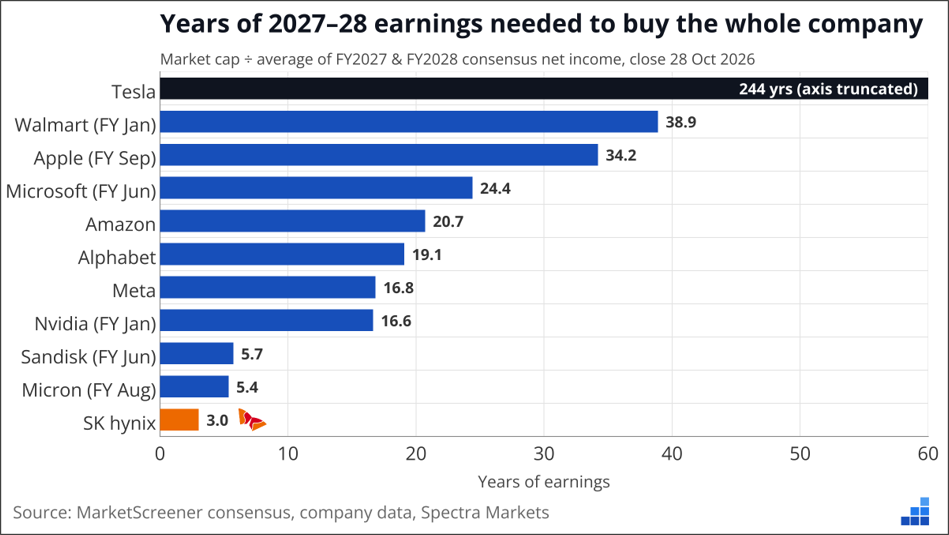
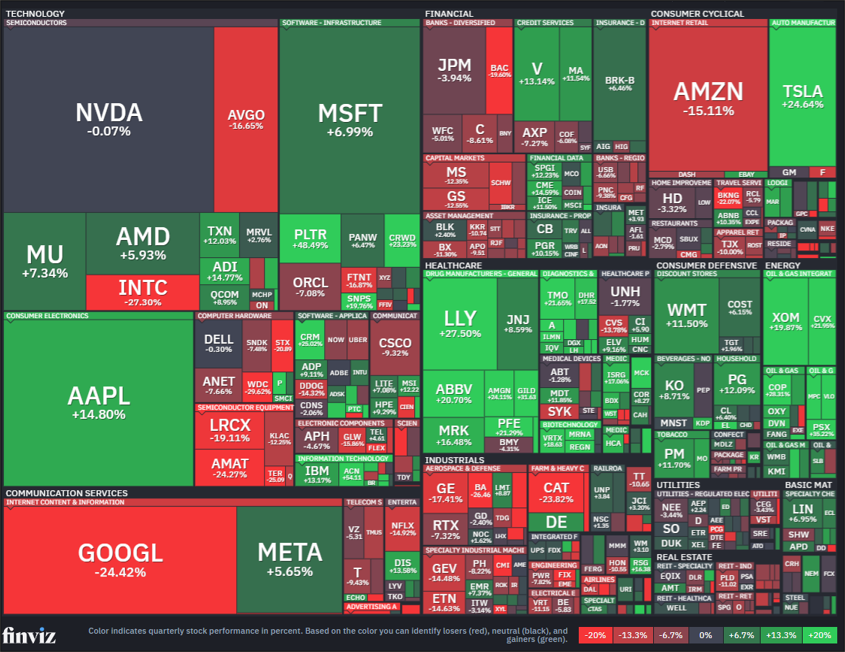
Tesla, funny. Obviously that entire chart rests on two years of earnings forecasts made by humans. There does seem to be a lot of margin of safety around those forecasts, though. Finally, here is a picture of the stock market over the past three months:
Here is this week’s 14-word stock market summary:
Peak AI capex growth and war risk are worrisome. Midterms a wildcard still.
U.S. data was strong this week, but bonds don’t care. The backward-looking data is meaningless if AI spending slows. There were five central bank meetings this week and there are four next week, and it’s a bizarre moment for policymakers because nobody has a clue what to do in a supply shock. Sure, there is some research out there on the topic, but most central bankers have been trained as central planners targeting demand. When supply is the dominant driver of inflation, you can argue for hikes, cuts, or on hold and keep a straight face pretty easily.
When a central bank faces high inflation and a weakening economy simultaneously, what to do? The RBNZ voted 4–3 to hold rates at 2.75% this week, despite inflation running at 3.7% and projected to rise to 4.4% in December. War-related disruptions to oil production, refining and shipping are pushing up energy and transportation costs, while a weak kiwi compounds imported inflation. And inflation is broadening as core inflation is near the top of the target range, and 56% of the CPI basket is rising by more than 3%.
The problem, say the doves, is that higher interest rates cannot produce more oil, repair refineries or reopen Hormuz. But! Say the hawks: higher interest rates can suppress demand and prevent the initial price shock from becoming embedded in wages, inflation expectations and broader price-setting behaviour! Tightening into a supply shock risks crushing a fragile domestic economy, where household consumption is weak, employment growth is subdued and housing prices are falling.
Do you hike to prevent temporary war inflation from becoming permanent? Or wait and hope for the best? The end of the war is unknowable. A guy told me once that it was going to be over in two or three weeks. As a central banker in a supply shock, it always sounds reasonable to do nothing and wait for more information. But if this war drags on for another two years, central banks have an increasingly sticky situation. If the war ends (or triggers a global growth downturn) they tightened into a recession and repeated the mistakes of 2008. Tough spot.
In a normal cycle, central banks try to slow demand to restore price stability. In wartime, they must decide how much economic damage to inflict to contain inflation they did not cause and cannot directly control. It’s a mess.
So this week the RBNZ stayed on hold, the Bank of Canada hiked, and the ECB and Fed waffled. The most important thing you need for predicting central banks right now is humility.
It’s been hard to make money in FX this last week or two because nothing is going on. There is a swamp full of gamma in EURUSD 1.1150/1.1250 and no coherent theme. One day we are trading the U.S. slowdown and falling tech stocks, the next we’re fretting over the still-looming European energy crisis.
I showed you the EWZ chart earlier, and you can imagine the USDBRL chart. It’s the same thing, but flipped because higher USD means weaker BRL.
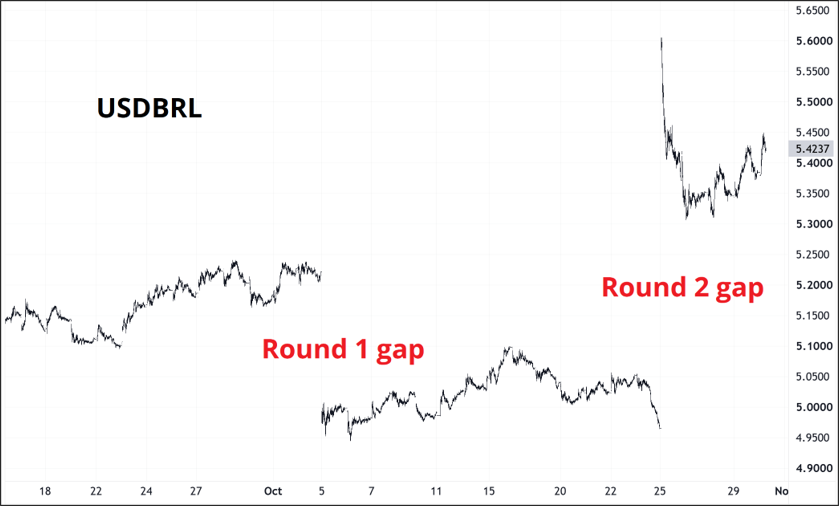
That sort of move, while certainly on everyone’s bingo card since Lula was trading at 20% on Polymarket, is extremely hard to risk manage. The only thing that stopped USDBRL from going further was that it traded limit up on the BMF (5.61) and so cooler heads eventually prevailed when it started trading again.
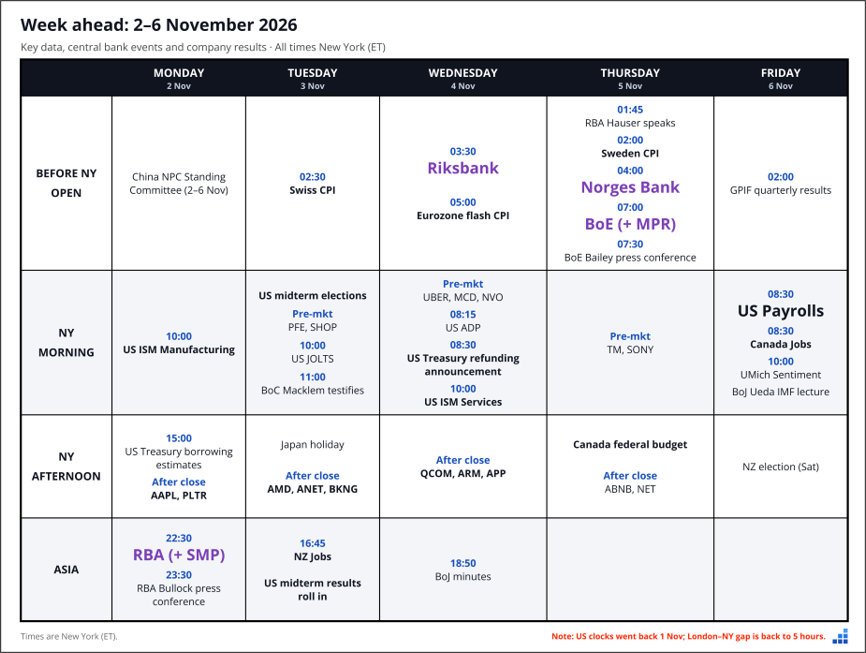
Here’s next week’s calendar:
HEY! If you’ve read Trade Outside the Box – please click here to leave a quick review. Thanks! And if you have not… Buy it here:
TRADE OUTSIDE THE BOX: Advanced Thinking for Professional Traders.
Here’s the one-pager.
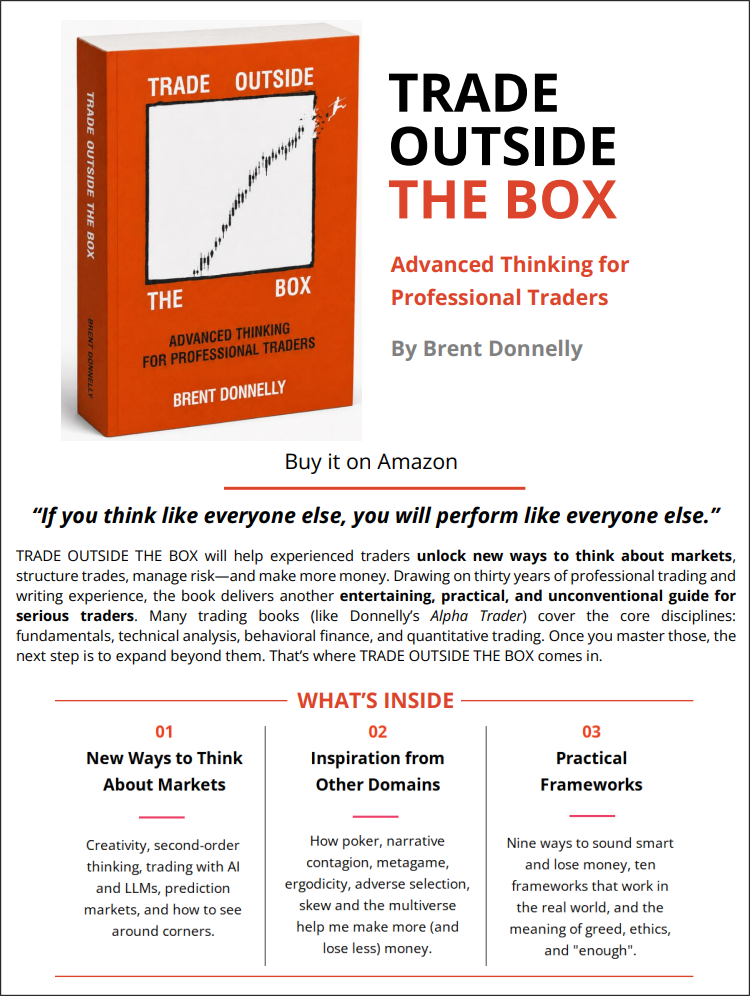
The book is written for experienced traders. If you are new to the game, I would suggest you start with Alpha Trader. If you have been trading or investing for more than five years, this book is for you (and you don’t need to have read Alpha Trader to enjoy it).
People have been getting more and more worried about AI and quantum computing and their ability to crack software and encryption and firewalls and so on. This is no idle concern when there is a two-point-six-trillion-dollar asset class made up entirely of digital coins. It’s possible that the market does not pay enough attention to the existential risk faced by these coins and this week’s Binance hack is a good example of the risks. Satoshi’s honey pot is out there, still.
Maybe we are learning: t+n settlement is tedious and patience-testing—but it exists for a reason.
When creating expected value grids, do you include zero as one possible terminal value of a coin like BTC or ETH? Or is that not worth considering? Not so much that an entire network is hacked and the global price of cryptocurrencies goes to zero—just that you can put the coins wherever you want—they are not safe. Not safe on an exchange, in a Ledger thingy, or wherever. You can hide your keys on a piece of paper hidden inside a cucumber, but you still might lose everything. I dunno man. Seems bad.
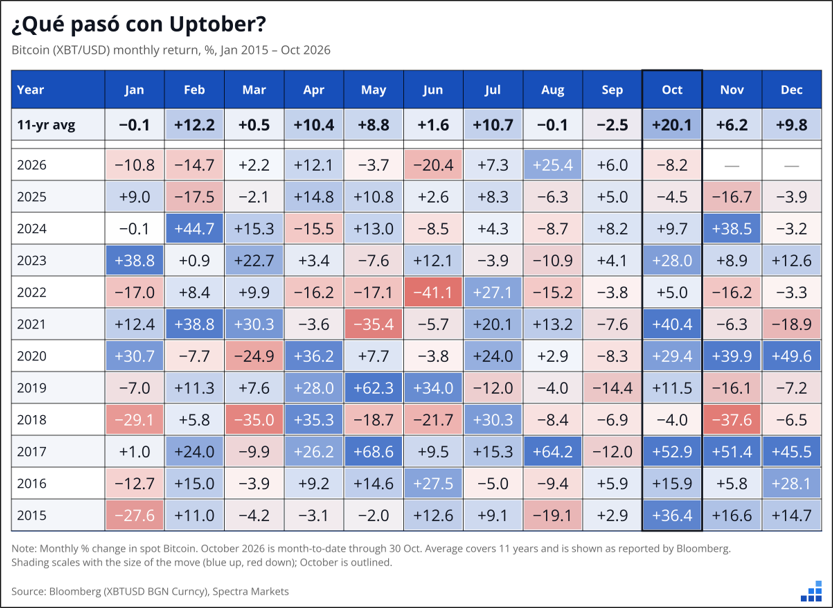
We were promised Uptober and we got Black October instead.
Speaking of Black October: I think there are two ways to look at the litany of infosecurity incidents this month. 1) AI bots are finding all the vulnerabilities in existing software. This will cause some pain, but will lead to fixes and more robust and antifragile systems in the future. Similar to the Y2K bug where vulnerabilities are identified, fixed, and life goes on. 2) AI bots with infinite ability to replicate, operating with no ethical guard rails or governing laws in the hands of well-funded bad actors will take down a big chunk of global infrastructure one day because everything is hyperconnected and fragile.
Have a good day!
I find it interesting that oil is near the highs, Dutch natural gas is through the roof, diesel is still ridiculously expensive, but the broader market (stocks and bonds) has stopped staring at energy prices all day. Maybe higher oil now means growth scare, not inflation scare and so you buy bonds like you should have at peak oil panic in 2008? Hard to say. But either way, as Alf put it: Bonds were oil, now they are KOSPI.
Gold and silver, like bitcoin continue to be bad insurance against equity market weakness as all three are liquidity barometers these days, not safe havens. That is not a huge surprise for silver and bitcoin lovers as they know deep down they’re cheering for higher NASDAQ, not lower. But holders of gold are more disappointed as the weight of the post-parabola hangover vastly overpowers any physical demand from China.
I have been tracking a triangle in copper for ages. If the market is starting to believe the peak AI Capex story, that’s bearish copper. 20NOV CPER puts or something like that make sense. Not investment advice.
Once a bubble bursts, it usually takes at least four years before the market will have the gall to create another one in the same asset (bitcoin 2017, 2021, 2025, e.g.). People have short memories but not Dory-short memories. That means we are unlikely to see another speculative fever in silver and/or gold until the year 2030 or so. Back to low-vol boringness.

That’s it for this week.
Get rich or have fun trying.
*************
A stripped-down, raw, mesmerizing and beautiful performance from Mazzy Star
*************
Have you noticed that people are now saying: “That is some bullsh*t” instead of “That’s bullsh*t”? I am always fascinated by the evolution of spoken language.
*************
Jay-Z mocking Noel Gallagher on Noel’s home court plus 99 problems with a sprinkle of AC/DC
Context: The Backstory and Feud courtesy of Chat
*************
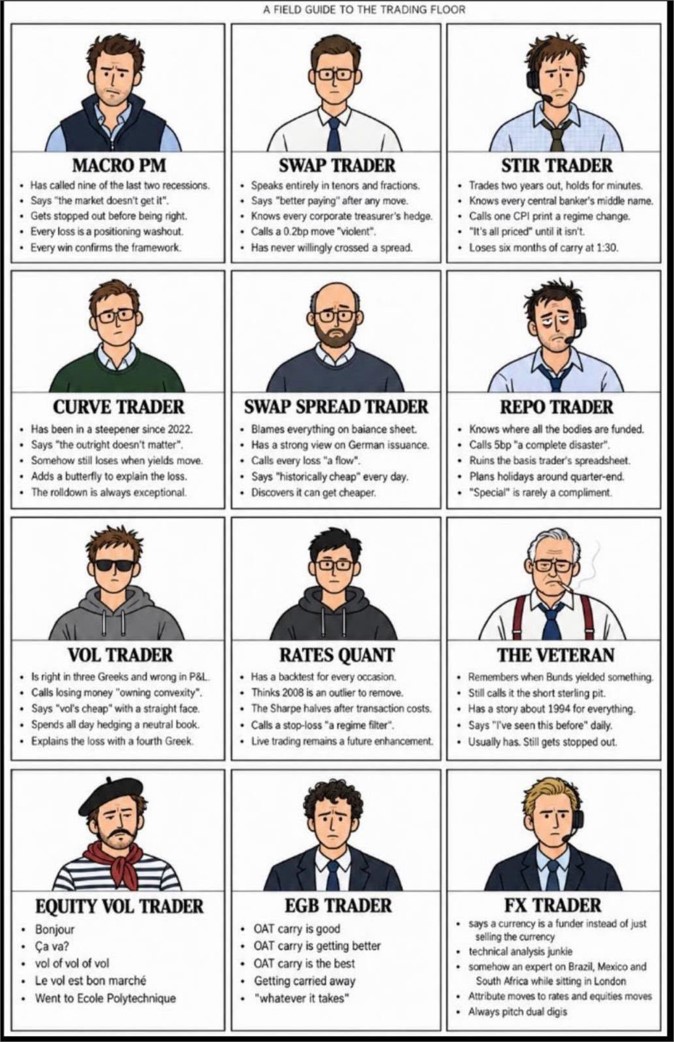
Whoever made this meme knows Wall Street very well. The equity vol trader and vol trader boxes are literally perfect.
*************
Been a while since I offered up a Phoebe Bridgers link!
If this song does not move you, you do not possess a soul, or a heart.
*************
Thanks for reading the Friday Speedrun! Sign up for free to receive our global macro wrap-up every week.


I think the bearish AI story will be priced in and stale soon.