A crazy week has ended.
Hello. It’s Friday. Thanks for signing up. I’m Brent Donnelly.
The About Page for Friday Speedrun is here.

A crazy week has ended.

Hello. It’s Friday. Thanks for signing up. I’m Brent Donnelly.
The About Page for Friday Speedrun is here.
Here’s what you need to know about markets and macro this week
Before we talk about the macro setup… My new book is out:
TRADE OUTSIDE THE BOX: Advanced Thinking for Professional Traders You can buy it on Amazon right here. Here’s the one-pager.
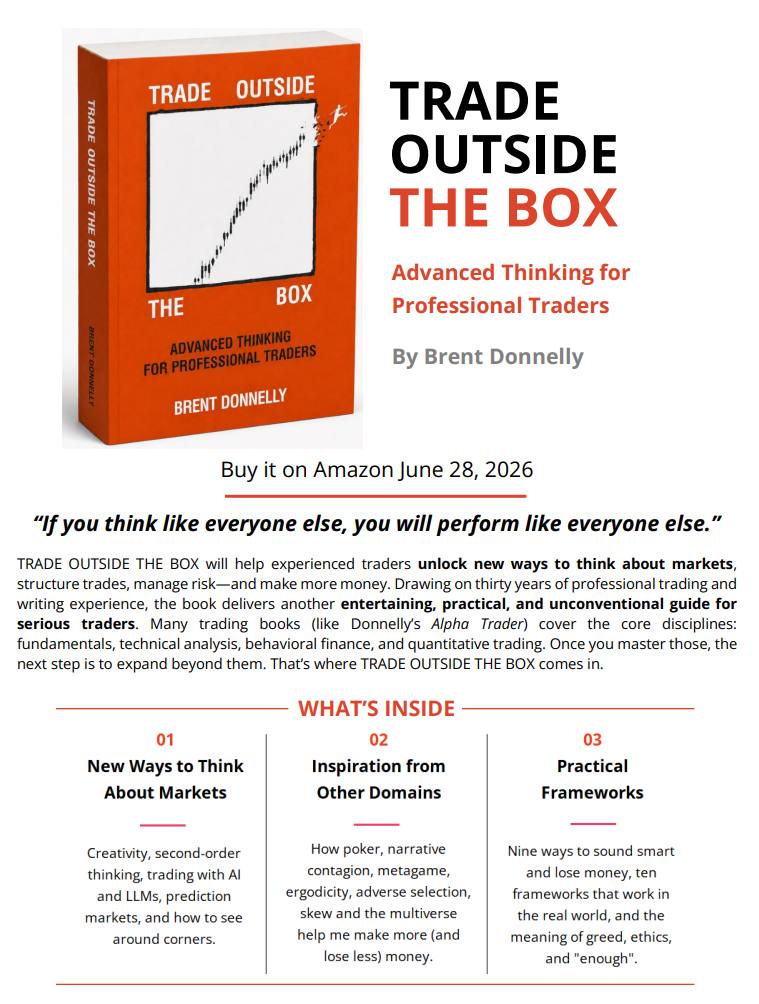
The book is written for experienced traders. If you are new to the game, I would suggest you start with Alpha Trader. If you have been trading or investing for more than five years, this book is for you (and you don’t need to have read Alpha Trader to enjoy it).
Let’s get started.
The market has shaken off higher yields, more tariff noise, more war noise, and a liquidation of Situational Awareness. The huge reversal in Korean stocks, semiconductors, and megatech came to a halt this week pretty much at the moment the news broke that Citadel bought the distressed portions of the formerly high-flying hedge fund. The selling stopped, MSFT and AMZN earnings were okay, and the market is stable. Still not a great month for stocks, but it could have been much worse.
The market recoiled from the word salad delivered by Kevin Warsh after the FOMC meeting and the Fed’s credibility on inflation remains incredibly wobbly as the Chair made a series of surprisingly dovish remarks and either didn’t have the votes for a hike, or didn’t want to hike at all. His June 17 assertions about inflation fighting credibility were not backed up with action and so the market continues to believe that 3% is the new 2% and the Fed will continue to do the old: “We will get inflation back to 2% in 2 years” thing for a sixth straight year.
Asked by Neil Irwin why rates shouldn’t be higher, Warsh’s answer was that they effectively are: rates are higher than they were 42 days ago, nominal rates have moved up, and “we’re observing them” — while rejecting the premise that no Fed move meant no tightening: “Markets are reacting in real time.”
He set this up in the opening statement, calling the intermeeting rise in nominal and real yields “among the most significant in the last two decades,” ranking around the top decile.
This has created a huge wave of confusion in the market as nobody really understands the reaction function anymore. So, if the market prices in higher yields, you don’t need to hike? Wut. I can guarantee that if the market prices in lower yields, they will happily cut. The Fed has a long and rich history of following the market, as you can see here:
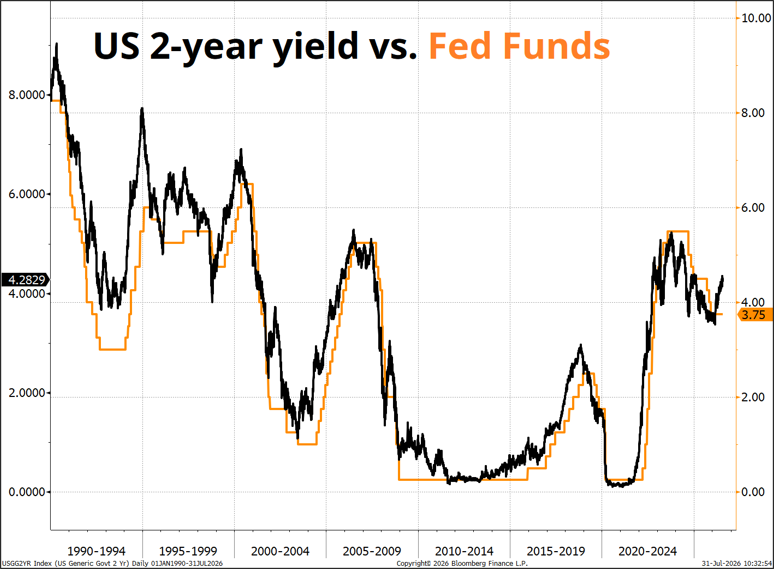
Imagine a world where the more nominal and real yields rise, the less a central bank believes it needs to hike. That’s a strange world, much different from the past. And borderline incomprehensible if you’re trying to gameplan the reaction function of the Fed.
The Fed was not the only game in town this week as the Japanese Ministry of Finance lit a fire under the yen, intervening to the tune of $50 or $60 billion dollars. It appears that this intervention might be a bit different from past forays as the U.S. Treasury is gearing up to join in. I will discuss this more in the section on fiat currencies.
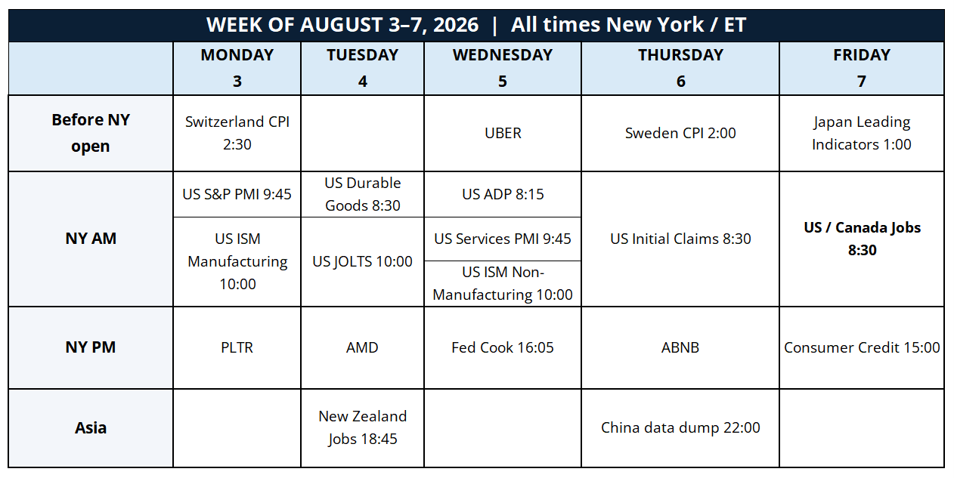
Next week’s calendrier:
The Situational Awareness hedge fund has left Cathie Wood, Bill Hwang, Michael Saylor, and Tom Lee in the dust on the list of largest drawdowns as they went from $45B to $10B in a few months on the back of serially correlated, high-vol, single theme bets. Much like ARKK in 2021, the genius becomes the pariah when the strategy is simply to load the boat with one theme and use leverage all the way up.
Often, the liquidation/bailout/risk transfer of a portfolio like Situational Awareness tends to be the kind of event you see at the lows in stocks, but one thing troubling me is that bitcoin and gold are again trading heavy and cannot find a real bid, even as NQ just rallied 1300 points in a straight line. The big tech seller disappeared as Citadel took the wheel, but animal spirits remain hard to spot. I can see a good case for bullish stocks (buybacks start up, earnings were okay, Fed is dovish, etc.) but the seasonality in August and September plus the bond market’s angry tone and the complete disappearance of retail demand are concerns. As such, I get the bullish equity view but can’t get on board. I am neutral stocks, looking for choppy pain trading for the next six weeks or so. The October to December period always leans bullish and this is particularly true in midterm years, but a lot can happen between now and St. Leger’s Day.
The real story in stocks continues to be dispersion and nearly-meaningless index moves. AAPL down 9% and AMZN up 14% just today, for example! Check out the 1-week visual… Often this thing would be nearly all red or all green in a given week.
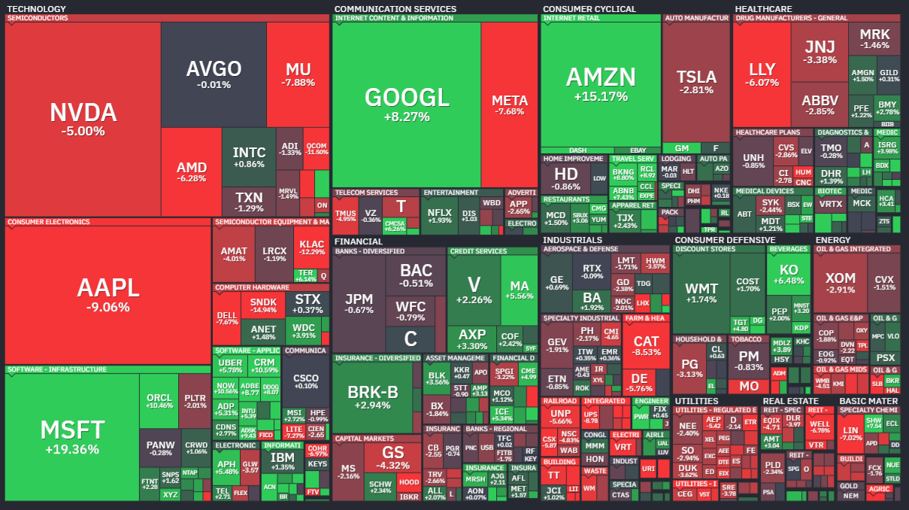
Here is this week’s 14-word stock market summary:
Dovish Fed, bearish seasonality, moar buybacks, no animal spirits. It’s a stalemate for now.

https://www.spectramarkets.com/subscribe/
Real rates continue to go and stay higher as Fed credibility is low and inflation fears remain somewhat elevated. You have the commodity impulse, the war uncertainty, AI Capex and computer costs soaring, and so on. Then again, it’s pretty easy to make a dovish case for inflation, too, with trimmed measures showing no sign of upward pressure and inflation swaps way, way down.
Growth in the U.S. is heavily reliant on fiscal stimulus and AI Capex, but growth is growth and we continue to slide through year four of the soft landing many thought was not possible. Mortgage rates were 2.6% and now they’re 6.5% and yet here we are. Smoothly sailing.
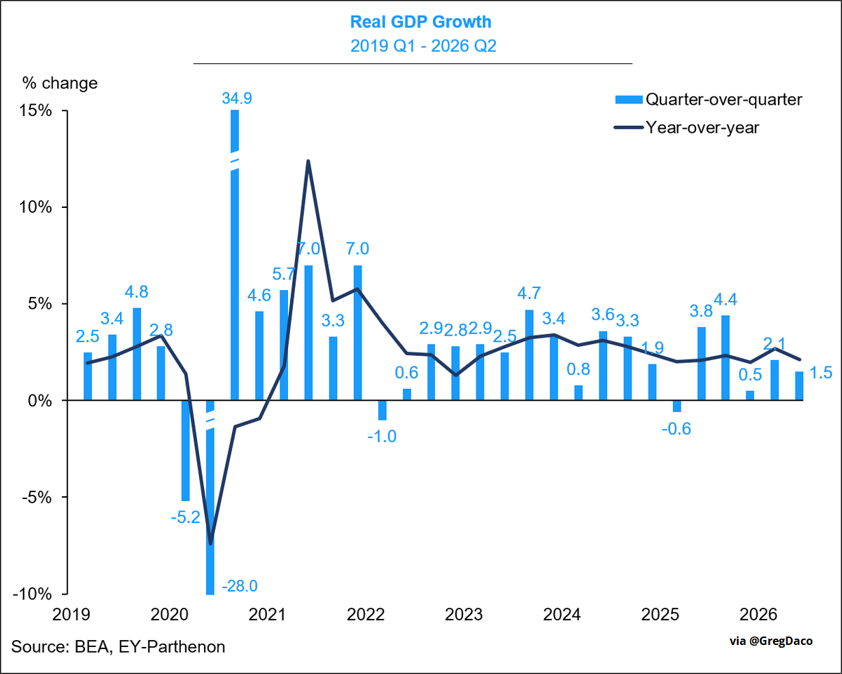
One day there will be a recession, and it will be a huge surprise because so many indicators flashed yellow and red this cycle (including, of course, the inverted yield curve) and yet there has been no recession as bananaland fiscal policy has made the U.S. economy indestructible as long as interest rates remain somewhat under control.
With the Fed reaction function unclear as the committee splits into factions and Warsh can’t elucidate what the framework is… There is plenty of time for some random weak data and a September hold from the FOMC. The pricing has dropped down to 50/50 for that meeting now.
If you are an FX trader and you’re tired after this week, just understand that every week was like this (but 10X crazier) for about 52 weeks in a row from March 2008 to March 2009.
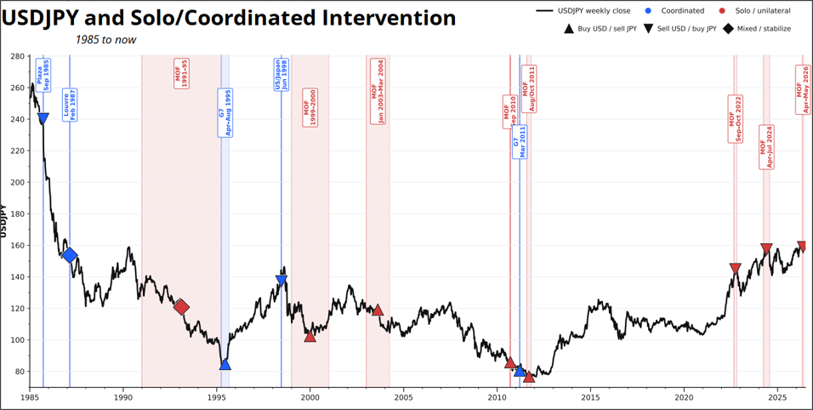
The MOF dropped the hammer on USDJPY again, and while the market is highly skeptical of the future effectiveness of this sort of dollar selling, the backdrop has changed a bit now with GPIF potentially on board and the Fed refusing to hike rates. We went from three cuts to three hikes and we’re back to two hikes and could end up realizing zero. Any suggestion that this Warsh Fed is different from all the asymmetrical Feds in the past looks misguided. They will hike only when forced and will cut on the first whiff of danger.
Meanwhile, BOJ pricing is ticking higher as September has moved from 15% to 30% odds of a hike. When you have MOF, US Treasury, GPIF, market positioniong, and rate differentials all pointing one way, it makes sense to bet on JPY. We have been doing the trade via CHFJPY put spreads and GBPJPY cash and it has worked well so far. Actual intervention by the U.S. (not just rate checks) would be highly meaningful because solo intervention is a stall tactic, but not a market turner—coordinated intervention usually turns the market for good. See here:
The dovish turn from Warsh and the subsequent cratering of the bond market set loose the USD sellers and EURUSD is well off the lows now, as are AUD, NZD, and just about all currencies.
Remember when bitcoin and QQQ were friends? That all ended in October 2025.
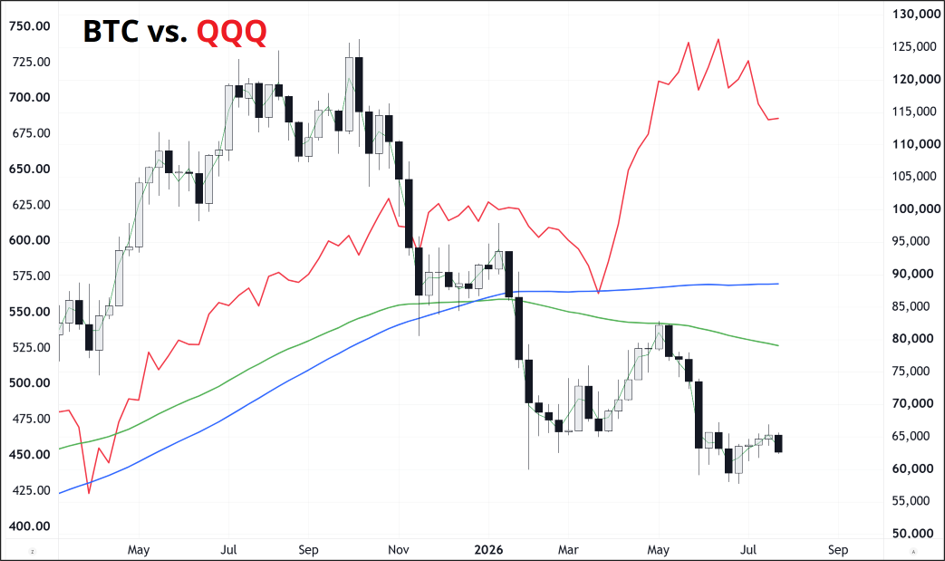
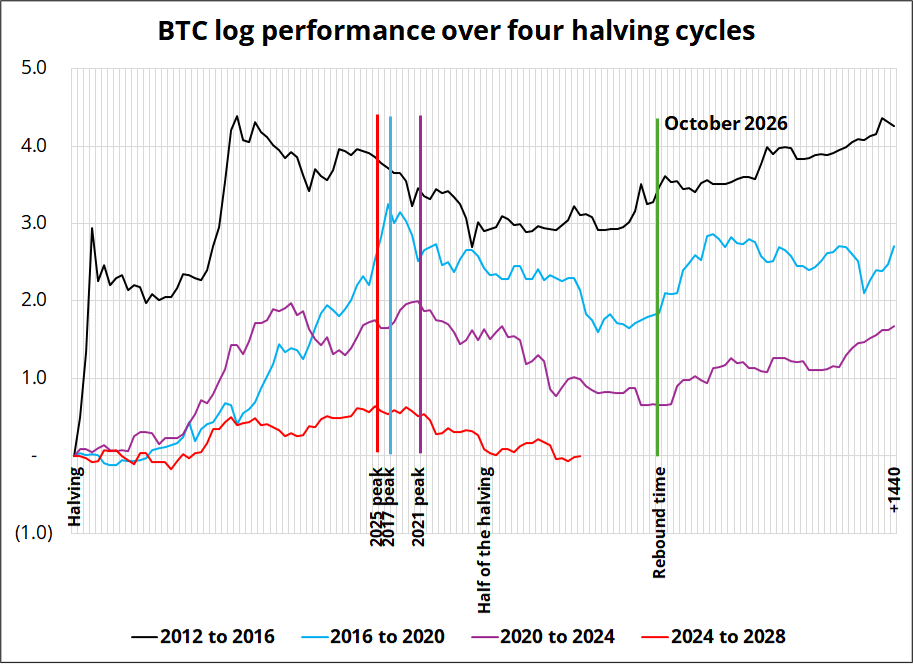
I mentioned that stocks tend to do well October to December and while the correlation of bitcoin has been poor/negative, it’s worth noting that the halving cycle will make a bullish turn in October 2026. If bitcoin is set to become a risky asset again at some point in the future (as opposed to its current status as a thing that does not move), it would make sense that it would also start to rally in early October as the bullish part of the halving cycle kicks in.
This chart shows the log performance of bitcoin over the four halving cycles. You can see that returns are getting worse each cycle, as one might expect given trees do not grow to the sky. You can also see that past cycles have topped and bottomed roughly around the same point in the cycle. The sample size is too small to say this is anything beyond pure randomness, but it’s worked out of sample this time, so it’s worth monitoring. One of the biggest reasons the few bears got bearish in Q4 2025 was the halving cycle.
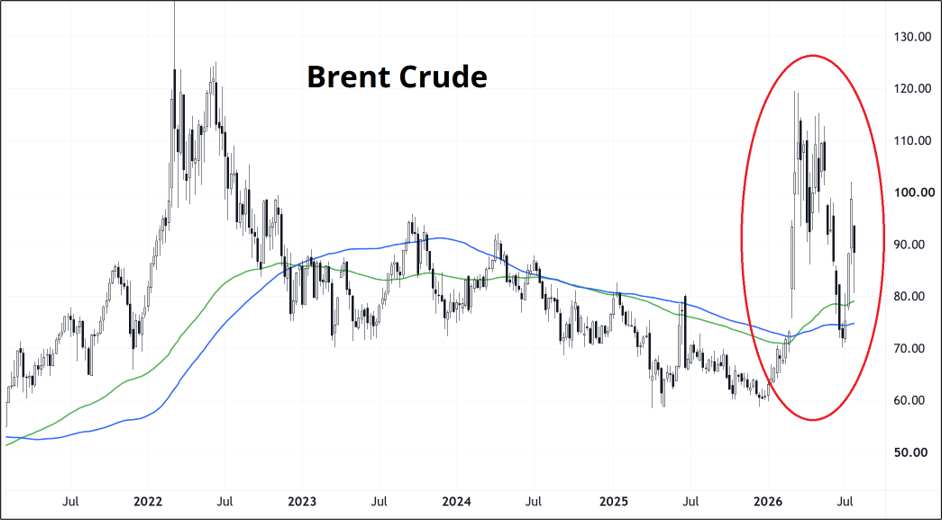
The year is 2026. The U.S. is engaged in another war in the Middle East, looking for WMDs. The daily chart of crude is one of the messiest daily candlestick formations I have ever seen, in anything.
Gold, like bitcoin cannot find a friend. It keeps looking like it wants to rally, and there are plenty of advocates saying it should… But then meh. Retail traders have taken their ball and gone home as bubble after bubble loses luster and leaves lumpy losses.
Gold, silver, bitcoin, HYPE, quantum computing, space stocks, etc. All those charts look like mountains. There are many reasons to be long gold (positioning, options skew, etc.) but the fact is that on a trading time horizon, it just trades poorly. I have tried long gold twice in recent weeks and I am giving up on it now as it looks to me like it’s almost ready to another leg lower. Here’s the chart.
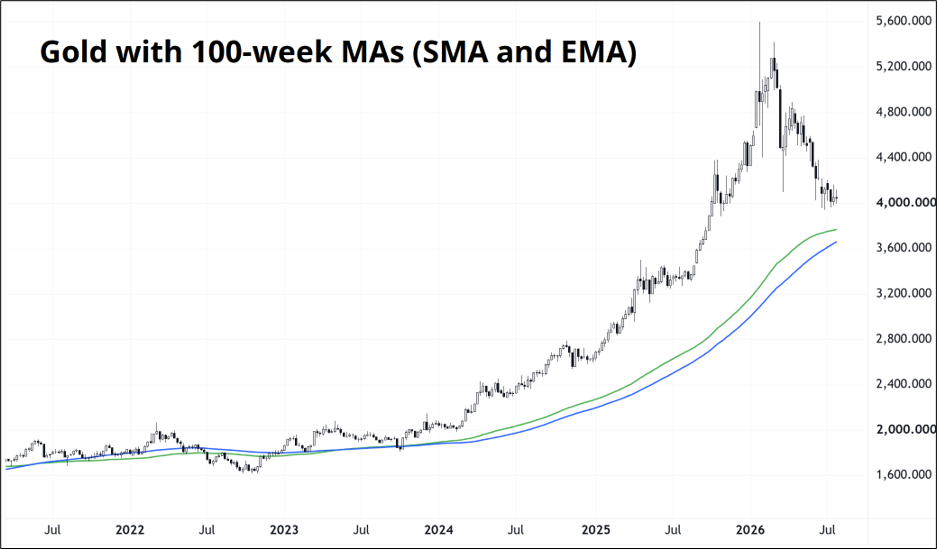
Those weekly moving averages come in 3650/3750.
That’s it for this week.
Get rich or have fun trying.
TRADE OUTSIDE THE BOX: Advanced Thinking for Professional Traders is out! You can buy it on Amazon right here.
*************
*************
Alice in Chains back in the good old days before smartphones and QE.
*************
*************
*************

*************
Thanks for reading the Friday Speedrun! Sign up for free to receive our global macro wrap-up every week.