The Spectra FX Positioning and Momentum Report
Choppy markets since CPI as players digest a flurry of conflicting information about China reopening just as the global economy looks tired and the US economy soldiers on despite housing and auto malaise. Each recent narrative has lasted just a few days before fizzling and some markets are now close to testing their CPI Day gaps. Consolidation.
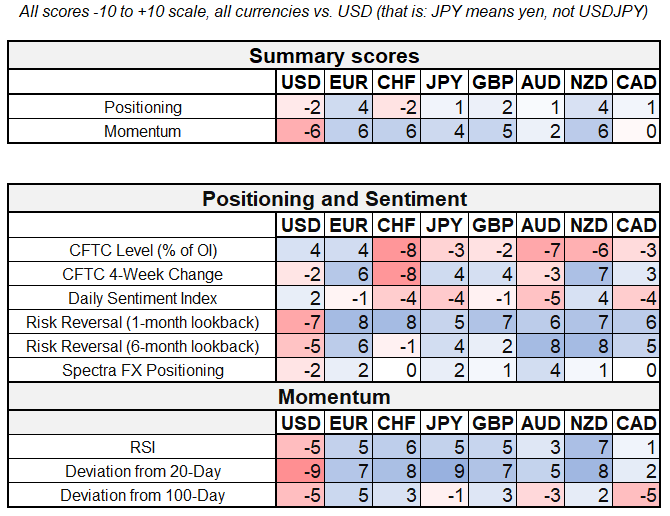
Here are this week’s positioning and momentum scores:
G10 FX Positioning and Momentum
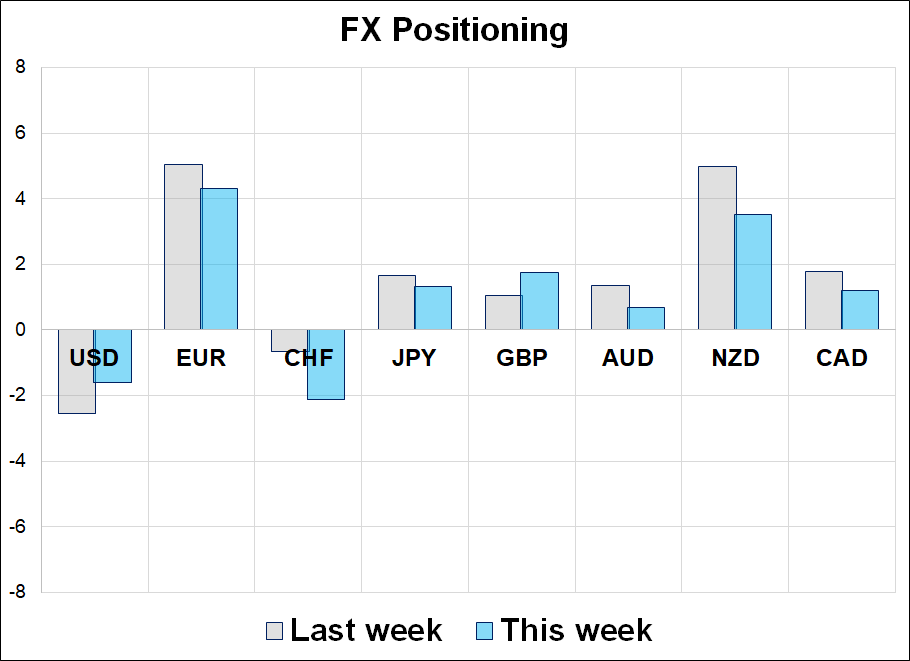
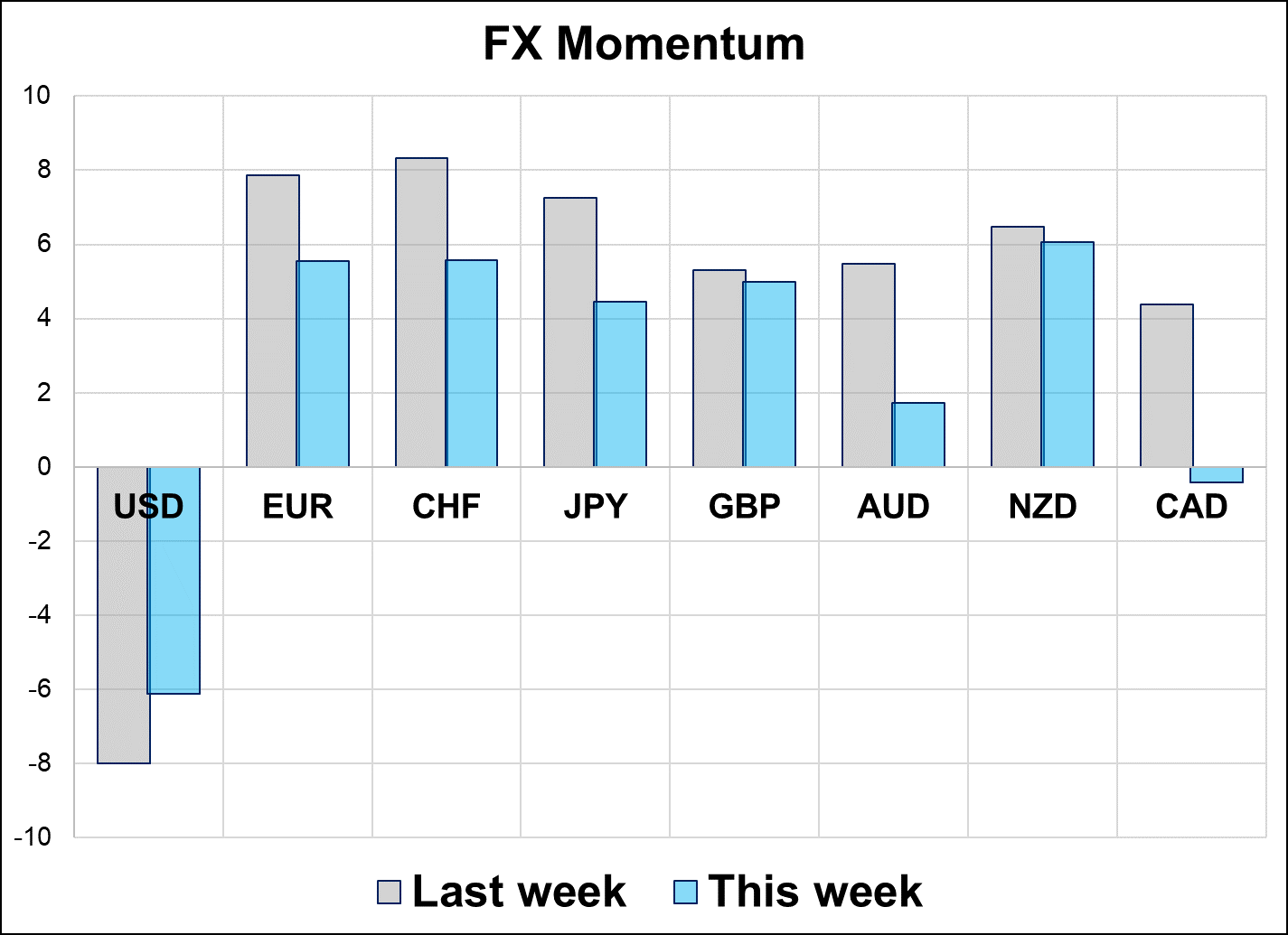
Five Takeaways
1. EURUSD’s failure at the 200-day moving average, some dovish ECB comments, and disappointing COVID noise have sucked the air out of USD selling momentum. Momentum remains modestly on the side of USD shorts, but the second derivative has slowed.
2. Options markets have not responded much to the rebound in the dollar as this correction of the correction sets up for consolidation and chop, not a new trend. Of particular note, the risk reversal in USDCAD has not reacted AT ALL to the big rally in USDCAD. This suggests speculators are not re-engaging in bullish USDCAD structures like we saw in late September / early October.
You can see from the chart that on that rally in USDCAD, specs went Beast Mode buying topside, pushing the risky from +1.5 to +2.5 in a few short days. The risky then fizzled back to +1.0 on the big USD turn and has stayed down there. This is bullish USDCAD as it shows spec participation from 1.3250 to 1.3450 has been limited.
USDCAD 1-month 25-delta risk reversal
3. It’s rare to see bullish sentiment in NZD and bearish sentiment in AUD from the same cohort at the same time but that’s what we have seen in the past two weeks. Retail traders are bullish NZD and bearish AUD and the CFTC has been buying NZD and selling AUD. There was a big, popular AUDNZD long trade out there for a while and perhaps this is residual unwind momentum. NZD trades well vs. peers. It is particularly notable that NZDCAD has not gone down in the most recent USD rally (NZDCAD usually has significant beta to USD moves because NZDUSD is usually more volatile than USDCAD).
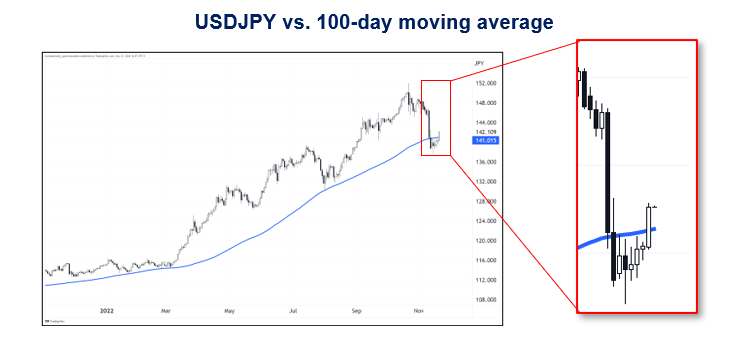
4. USDJPY and AUDUSD both put in a false break of the 100-day moving average and trade on the stronger USD side once again. This is more a signal of chop and consolidation than a reason to resume USD bullish trades. Here’s the false break in USDJPY, for example:
5. It is hard to understand what is motivating the interest in CHF shorts. Confusing.
Anecdotes and Observations
1. Last week, Tom Brady dropped the laser eyes, and a few days later, The Economist dropped a bearish crypto cover.
In June 2022, I wrote a list: “Eight signs of a crypto bottom,” and item #7 on that list was: “The Economist publishes a bearish crypto cover.” We now have ticked off 5 out of 8 signs. Full list here.
Crypto is in the throes of a slow-motion, cascading Lehman Brothers-style moment where all the interconnected entities that make up the house of cards fall, one by one. But in this version of history, there is no “Too Big to Fail” and there will be no panicked meetings held in the wee hours of the weekend at the Eccles Building. And unlike John Thain and Ken Lewis—SBF and the other kings of centralized crypto will not receive bailouts.
The kneejerk response to this cover might be to buy BTC, but remember that the payoff on contrarian trades motivated by covers of The Economist is generally 6 to 12 months out. One final epic collapse could be necessary to cleanse the deep stains left by FTX. While more and more signs are accumulating that the bottom is near… “Near” doesn’t mean “here.” The path to the final bottom and the low print are important considerations. GBTC, Genesis, DCG, and other issues still hang in the balance as potential post-FTX aftershocks. I would rather buy a crash than this grindy downtrend.
Two more things to consider: November 26 is the average seasonal low point for BTC (and the November 8 seasonal peak worked well). Also, the bitcoin halving cycle turns bullish soon. With Fed policy also looking close to pause mode, there are good arguments for buying the climactic dip in BTC. Good luck timing and risk managing it, though.
2. Engagement in FX over the past week has been high from fast money and spot trader types, and low from bigger picture macro. It’s a good tactical punting environment with no coherent big picture narrative. The script for 2023 is not yet clear and anyway, it’s a bit early for people to put on new year trades. Expect aggressive recession bets if we get some clear signs of weakness in the US economy.
There are many recession signposts out there right now, but not enough evidence of US economic weakness yet. Residual US economic momentum is keeping people from shoving chips into the pot. So far.
That’s it for this week!
Thanks for reading.