NZD has a bunch of bullish kickers: Election, seasonality, and inflation


Subscriber-only
Brazil, Canada, yen
A sort of almost unbelievably large move in Brazil. Plus: Short CADJPY.

NZD has a bunch of bullish kickers: Election, seasonality, and inflation

18DEC 1.22 AUDNZD PUT
Cost ~0.56% AUD off 40 spot
Short 4.95/5.05 USDBRL strangle and buy 4.80/5.20.
Max gain is what you receive: ~1.65% off 4.98 spot.
Max loss is 1.35% 05NOV expiry
Took off the 4.95 put 16OCT to turn into long BRL.
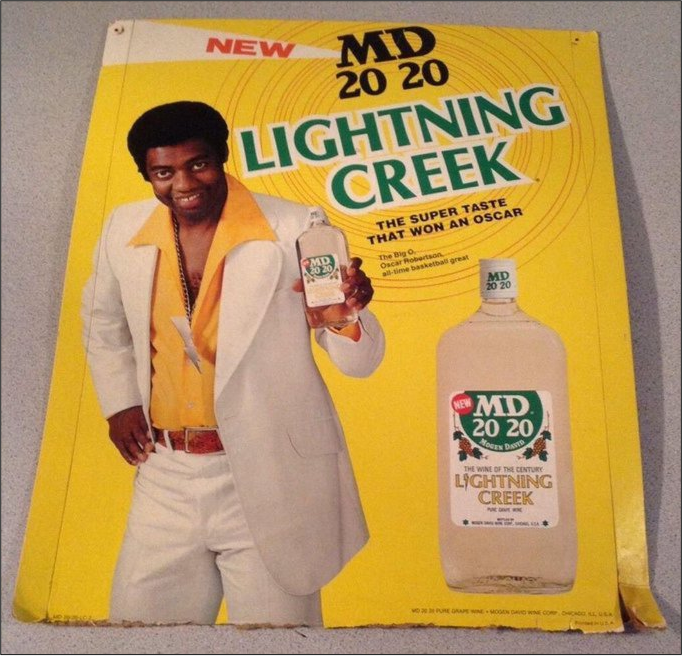
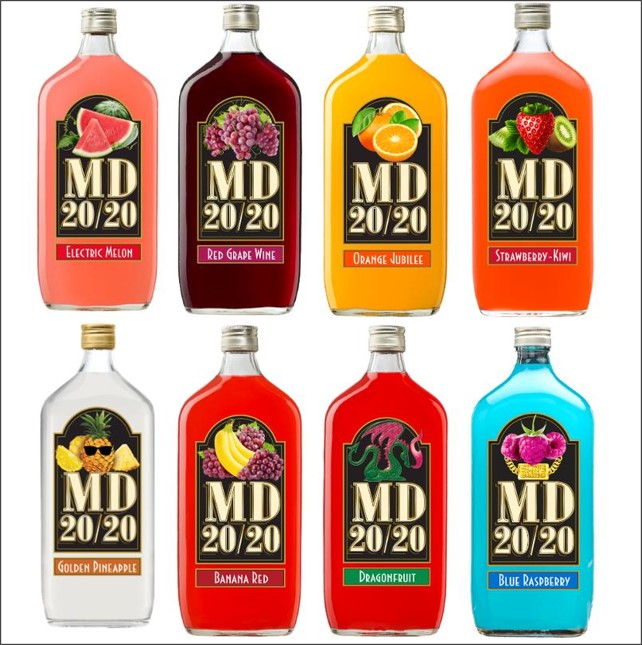
This vintage ad from the 1970s features basketball legend Oscar Robertson promoting MD 20/20, a cheap, sweet, high-alcohol fortified wine nicknamed “Mad Dog.”
20/20 originally meant 20 ounces and 20% alcohol. The slogan “The Super Taste That Won an Oscar” plays on Robertson’s name. The beverage has never won an Oscar.
The product still exists today!
In Monday’s am/FX, my equity view was: “I think the best strategy is to lean bearish at 30,000 and lean bullish at 29,000 and recalibrate if any meaningful new information arrives.” We briefly crossed 30,000 on Wednesday and here we are at 29,000. So, my base case should be to lean long here as I believe the new information this week pretty much cancels out.
We have a bearish reaction to META, repricing of neocloud debt, and perhaps a bit of actual new info from the Special Committee at META (see Final Thoughts). This tightening in financial conditions is somewhat offset by substantially lower yields across the board. We are now staring at what looks like a major convexity-driven high in yields, touched the moment of the blatantly sensationalized cover from The Economist. When you hear people talking about bond market convexity, regardless of how credible they are, it tends to mark the final innings of a bond move.
Congratulations to The Economist for nailing the top in yields to the minute. Now they just put out a new cover: “The Agony of Liberal Europe.” Let’s see if that one has the same soothing effect on OATs as their panicked high pressure valve bond market story had on fixed income.
An RBNZ hike Tuesday night is 85% priced with 17 out of 18 economists on board for a hike, too. I lean towards a non-event or mildly hawkish meeting as they probably don’t want to stir the pot too much into an election.
The NZ Labour party, which is favored to win the 07NOV election, is keen to return the RBNZ to a dual mandate. This is one of their campaign promises. Such a move would not impact the December RBNZ meeting but could have dovish implications for the next one (way out in February 2027) because the unemployment rate (5.6%) is high and rising in New Zealand.
Weak NZD and high oil are a bad combo for inflation in NZ (see chart). Meanwhile, you have an election 10 days after the RBNZ, making things even more complicated.
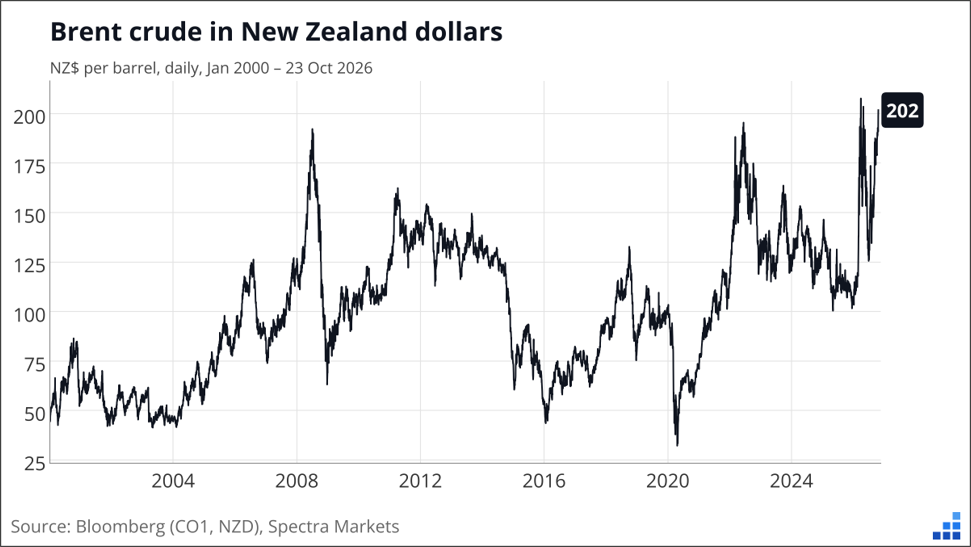
Oil in NZD is back at the ATH.
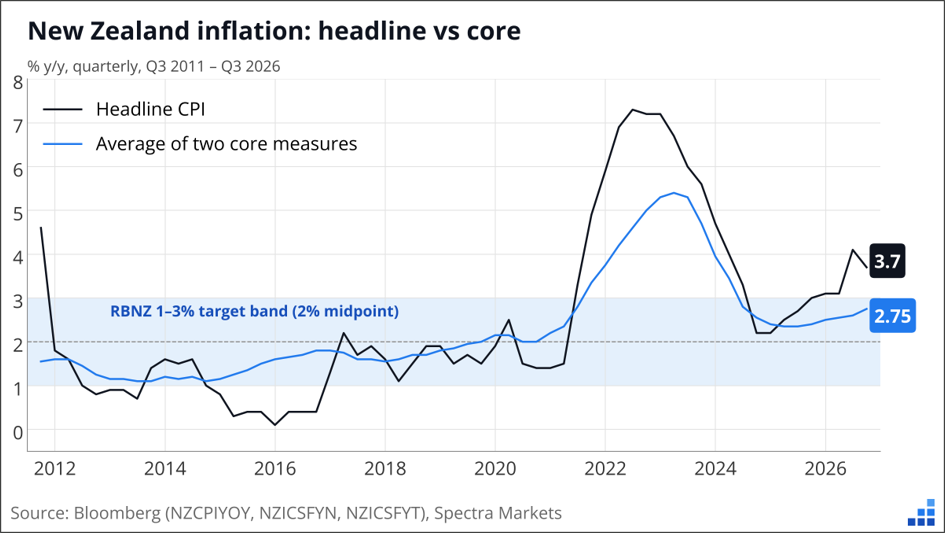
New Zealand has the same inflation setup as many countries, where headline is well above core, but the split is not as wide as it is in some other nations. Please see chart. This makes it hard for the RBNZ to look through headline, especially as there were huge second-round effects in 2022/2023 and it took the RBNZ about two years to get core back into the band.
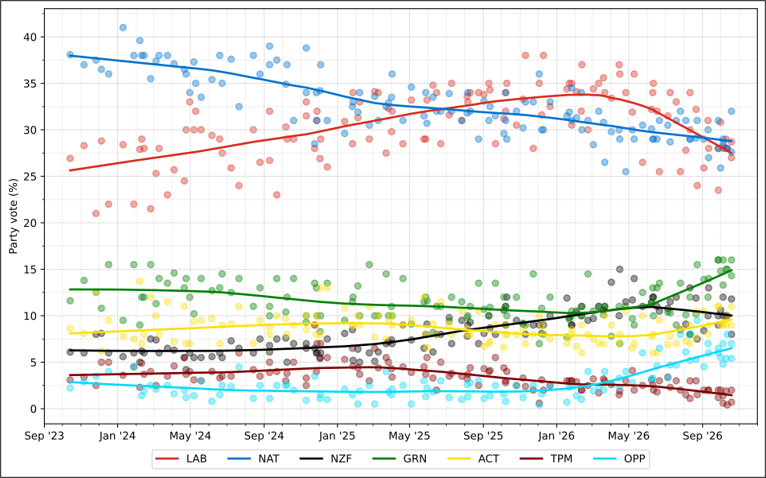
Meanwhile, a potentially important development is that on October 20 there was a surprisingly strong poll showing Luxon’s National Party in a much stronger-than-expected position. National were the ones that sent the RBNZ to a single mandate, so they are the more hawkish of the outcomes.
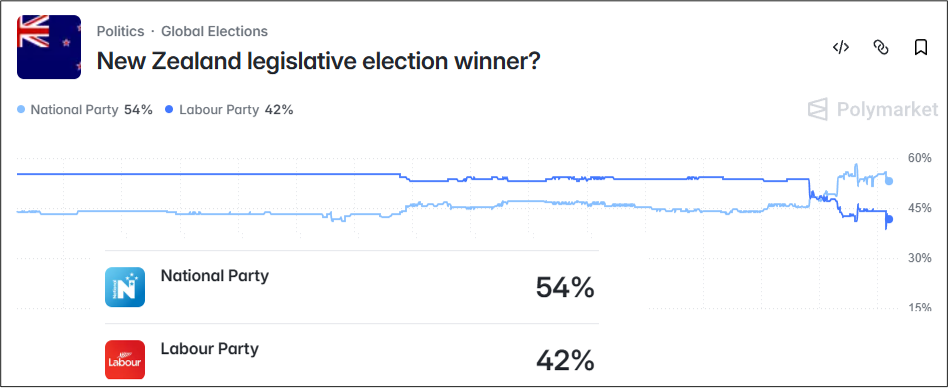
Recall how a few months ago I made some money long AUDNZD thinking that the market would price in Labour and the end of the single mandate, but now AUDNZD is way higher and National has momentum so the news flow momentum vs. pricing now points the other way. It’s not just about one poll; the dot plot below (an aggregation of polls via Wikipedia) shows how Labour (red dots and red line) has lost momentum.
I wish I had a strong view that the USD is about to weaken because the daily chart is an absolute beauty and the seasonality for NZD is tremendously strong into year end.
Here are the charts of three major NZD pairs. Note how NZDUSD is near the range bottom and AUDNZD is still near the highs after an epic run. NZDJPY is midrange.

And here is the historical seasonality plotted against the moves this year. NZDUSD has been oscillating out of step with the seasonal pattern while AUDNZD and NZDJPY have been closer to the norm. While the NZDJPY seasonality is strongest, my bet is that GPIF and other pension flows into JPY will keep all yen crosses capped (stable or stronger yen) and so I don’t have any interest in long NZDJPY.
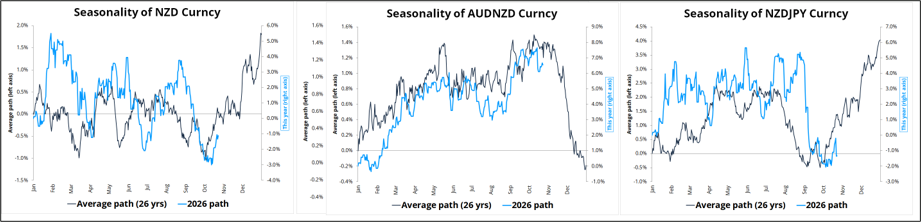
This all leaves me thinking that the election has the potential to be a positive catalyst for the NZD after months of pricing it as a potential negative catalyst. Inflation is not backing off and while it’s impossible for the RBNZ to outhawk year-ahead pricing, they can still sound hawkish enough to support the currency. The entry point, the political momentum, and the seasonals all suggest that AUDNZD lower or NZDUSD higher are good trades now until year-end.
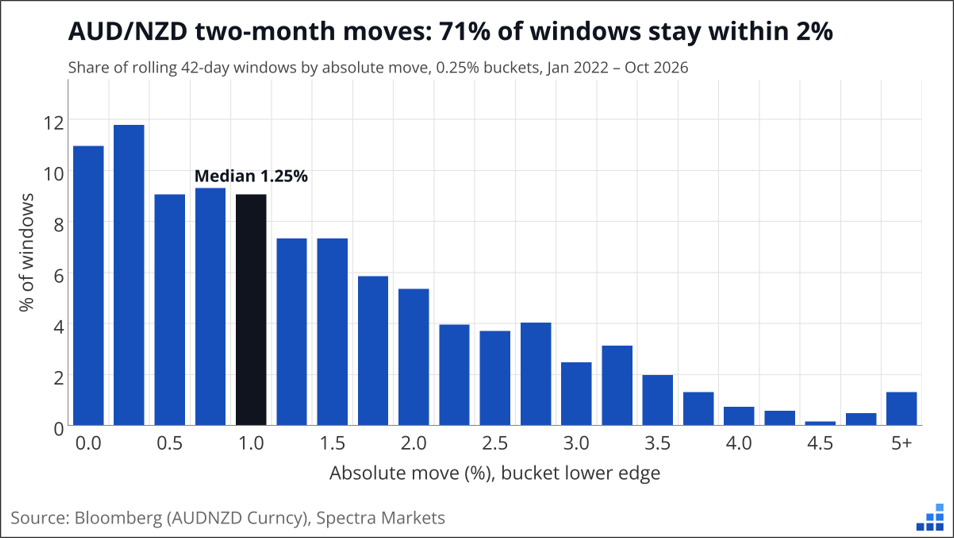
For now, I am going to put on AUDNZD downside. I don’t feel comfortable short USD yet because corporates and real money will both need to buy tonnes of USD next week for month-end, and I have no strong view on the FOMC meeting. There are four ways to do this trade, all simple. Before I think about options structures, however, I need to have a sense of historical moves. I am going to look only at 2022 to now because the post-COVID regime is probably the right one for benchmarking possible volatility now until end of the year.
There are four ways to play this AUDNZD view.
I prefer the more vanilla plays here because I think there is a possibility of an outsized move and selling the 1.20 put to create a put spread doesn’t cheapen things that much anyway. I will add the 2-month vanilla 1.22 put to the sidebar. If Labour wins the election, there will likely be a zippy move higher in AUDNZD, initially, so I like the option better than spot. There is a scenario where Labour wins, AUDNZD spikes, and then AUDNZD trends lower for weeks afterwards as people come to the conclusion that it’s not really the gamechanger they initially thought. The option gives you staying power through some events, and the leverage is decent. The digital is also okay, but could be “I was right and I lost money.”
By my calculations, selling spot here and risking 1.2526 is similar P&L to buying the 1.2200 put if AUDNZD ends up at 1.2000 around Christmas. Obviously speed and path determine which structure will be correct.
One heck of a calendar next week with five central banks plus advance GDP, and massive month-end flows. Should be USD buying in size and some rebalancing flows buying stocks as mid-week approaches.
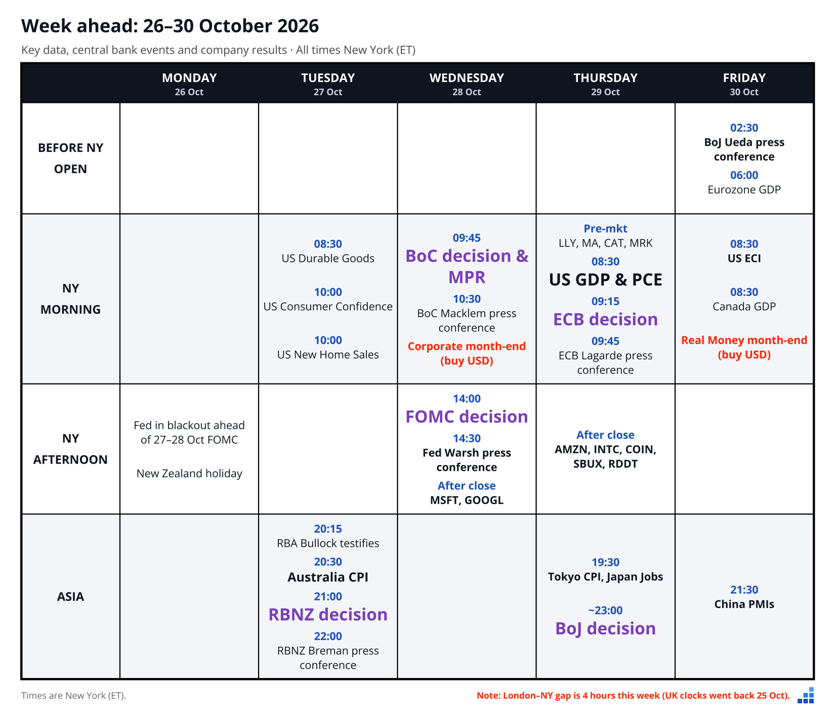
The BoC looks overpriced to me, as discussed earlier this week. BOJ maybe a bit underpriced—you cannot say there is a zero chance of a hike with inflation doing what it’s doing. Possible short CADJPY trade setup there, but we can talk about that next week.
My equity punts looking okay so far with RKT and ASHR at least going the right way for now! RKT up 7% and ASHR made a flashy spike low and then rebounded as the Chinese National Team got involved.

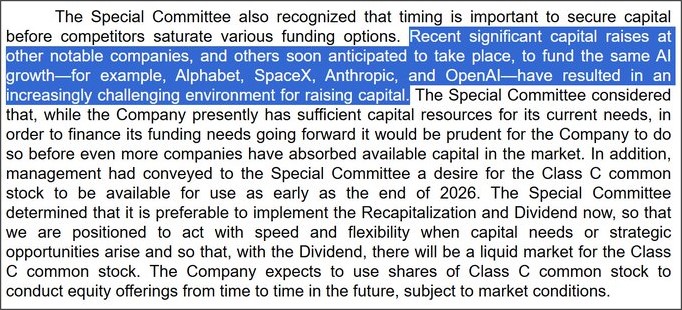
If you’re wondering what a Special Committee is for, it’s a small group of independent board directors set up to review any deal where the controlling shareholder has a conflict of interest. Here, Zuck wanted a new share class but he’s in conflict because he’s got voting control through the super-voting Class B. Hence, a Special Committee.
This vintage ad from the 1970s features basketball legend Oscar Robertson promoting MD 20/20, a cheap, sweet, high-alcohol fortified wine nicknamed “Mad Dog.”
20/20 originally meant 20 ounces and 20% alcohol. The slogan “The Super Taste That Won an Oscar” plays on Robertson’s name. The beverage has never won an Oscar.
The product still exists today!
A sort of almost unbelievably large move in Brazil. Plus: Short CADJPY.