Given the fissures in bank stocks, I would not expect an orthodox reaction to NFP today.
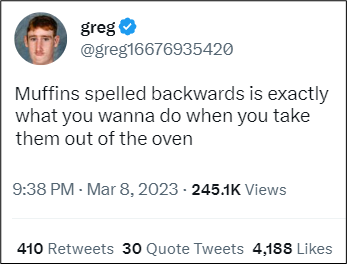
This is the type of joke I think Jon
Walsh would enjoy.

Given the fissures in bank stocks, I would not expect an orthodox reaction to NFP today.
This is the type of joke I think Jon
Walsh would enjoy.
Will square this up before EOD:
Short USDJPY at 136.90
Stop loss 138.56
Take profit 132.36
Added yesterday:
Buy 137.50 USD call and sell
134.50 overnight USD put
March 10, 2023
I do not expect an orthodox response from markets on today’s number. The most unorthodox response could come from a clearly strong number. Here’s how I see the chain unfolding in that scenario.
That’s quite a few steps in a complex process, but that is my base case on a clearly hot number (e.g., headline >250k, UR <3.4%, AHE MoM > 0.3%). On a clear weak number, my base case is more orthodox. Bonds up, stocks down, USD down. In the middle, there is a Goldilocks number that will settle things down. Something cool (but not too cool) like +165k, 3.5%, 0.3% would settle jangled nerves.
The thing about a strong number is that with so much private data signaling weakness to come in various industries and the lags in construction disemployment set to unfold soon the narrative has now become that the strength in the public data is in its final innings anyway and this is the last hurrah.
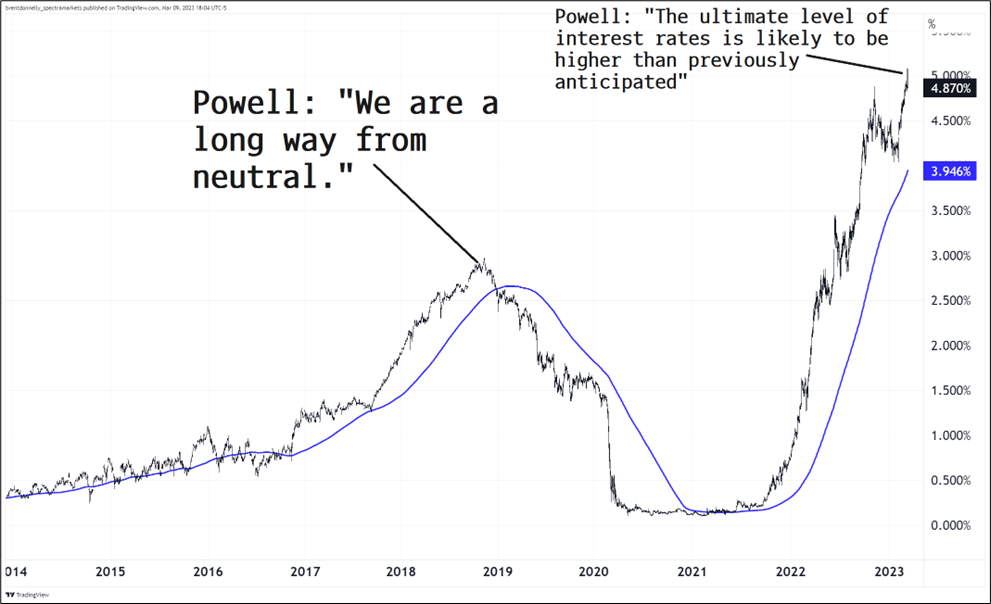
Powell may have found his October “long way from neutral” 2018 moment here as he finally pushed the terminal rate high enough to break something. Things like SI and SIVB were destined to be broken, of course, but it seems like this umpteenth step up to a higher peak terminal rate finally triggered the straw/came/back deposit exodus that might break the back of FCI.
The collapses of SI and SIVB are glaring examples of how extremely low rates trigger misallocation of capital into unprofitable businesses and a torrent of hot money that cannot find useful outlets for deployment. With too much money chasing too few good projects in 2021, the money either went into unprofitable junk companies and SPACs or (in the case of SIVB) it got parked in duration products like MBS. When the free money spigot shuts off, the hopeless unicorns realize they were never meant to fly and they go down like Icarus, and drown in the sea.
The excess liquidity parked inside the financial system via leveraged carry trades dies as banks have excess duration risk and fractional deposits.
You don’t see it posted anymore, but this chart was important back in 2020/2022.
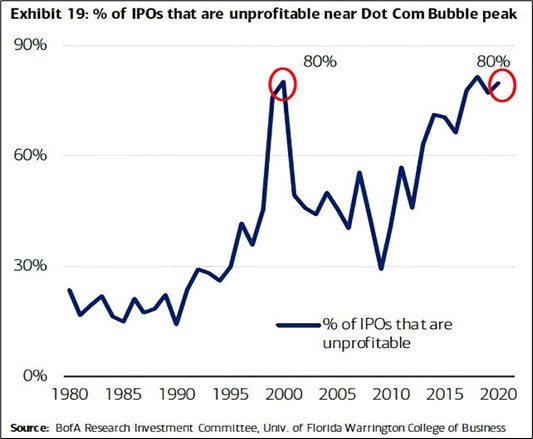
Anyway, I digress. This will all happen again in 2040 when the Great Mars Colonization Bubble is fueled by Fed Chairman Jimmy Donaldson pinning the USDCBDC overnight rate at -1% for too long. Asset bubbles can be the result of too much money chasing too few good projects. When the good projects are fully funded, the remaining money gets sprayed all over the place without much regard to future profit or even payback potential.
I will exit the USDJPY trade at some point today. While I believe yields are set to go lower, the thesis on the USDJPY has become stale and the main catalysts are in the rearview.
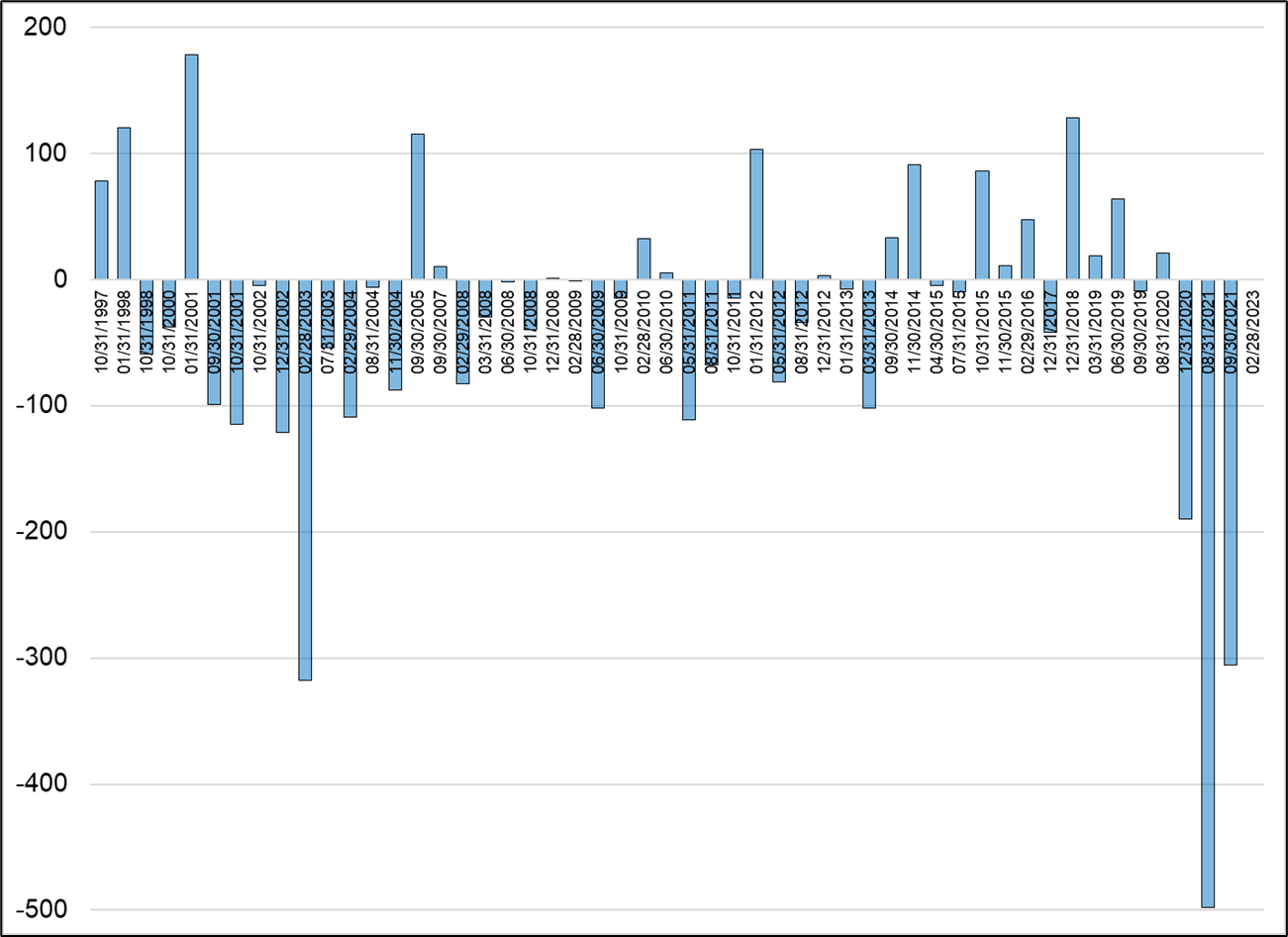
I have been saying that I don’t see anything in the high-frequency data that suggests a weaker number today. One reader made an interesting observation: Weaker-than-expected consumer confidence releases tend to foreshadow weakness in NFP. Consumer Confidence for February was expected at 108.5 and came in at 102.9, a meaningful miss of 5.6 points.
Below, I show all the NFP releases for months when Consumer Confidence missed by 5 points or more. The average NFP miss in this period (1997 to now) is 6,380 jobs, and the average miss in the conditional sample is 31,750 jobs. Medians are zero and minus 9,000.
Here is the chart:
So, there’s that. Fun fact, the reader that pointed this out to me was the first subscriber to input his credit card number and subscribe to am/FX when I launched the paid version in September 2021.
Don’t forget to sign up for The 2023 Spectra Markets NCAA Basketball pool. Where else are you going to get a tungsten cube or Spectra hoodie for free? You can sign up here at CBS. The password is: amfx.
I am out the first three days of next week so I’ll see you next Thursday!
Have a sweet-smelling weekend.


This piece is mostly for people who are interested in backtesting