The BoE and UK government should probably keep quiet, wait a bit, and hope this too shall pass.

GDP per capita, by country

The BoE and UK government should probably keep quiet, wait a bit, and hope this too shall pass.
GDP per capita, by country
September 26, 2022
While I am generally an advocate for fading Sunday gaps, last night’s move in GBPUSD does not qualify in my book, because it happened well after the market opened in Asia. The reason initial Sunday gaps tend to mark major extremes is that liquidity on the open is negligible, so the currency or commodity overshoots and only reverses once it hits a super large liquidity point from a medium or long-term name.
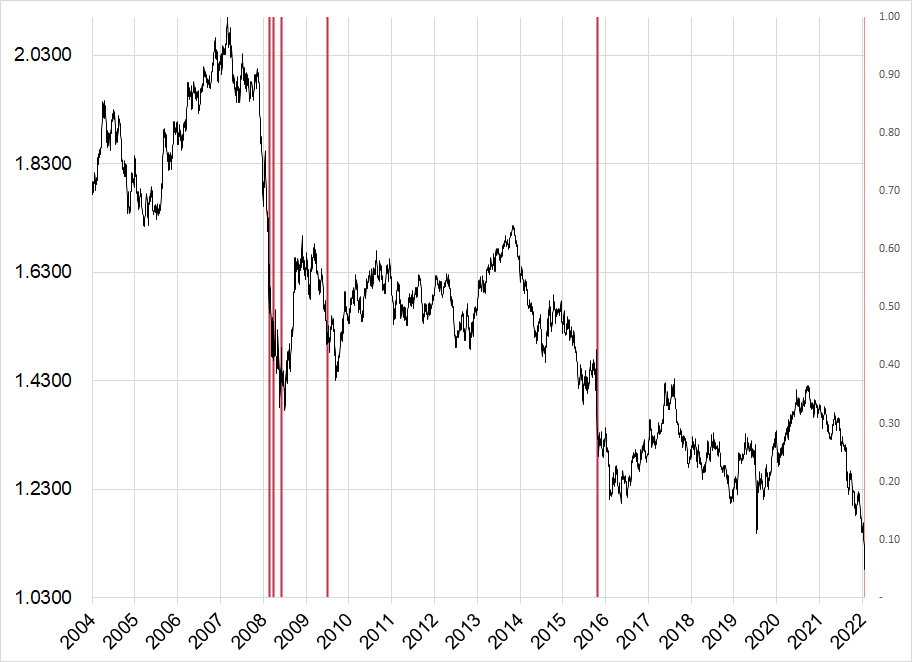
Yes, GBP is illiquid in Asia, and yes, the overnight 1.0350 low becomes an important pivot, but no, the move last night was not a textbook Sunday gap move. The low took place around 9 p.m. NY time, which means all the major trading hubs in Asia were open. As such, the move last night is more like the epic moves we saw on Sunday nights in 2008, 2010, or 2016. This chart shows GBPUSD with Sunday down moves of 3% or more from the Friday close.
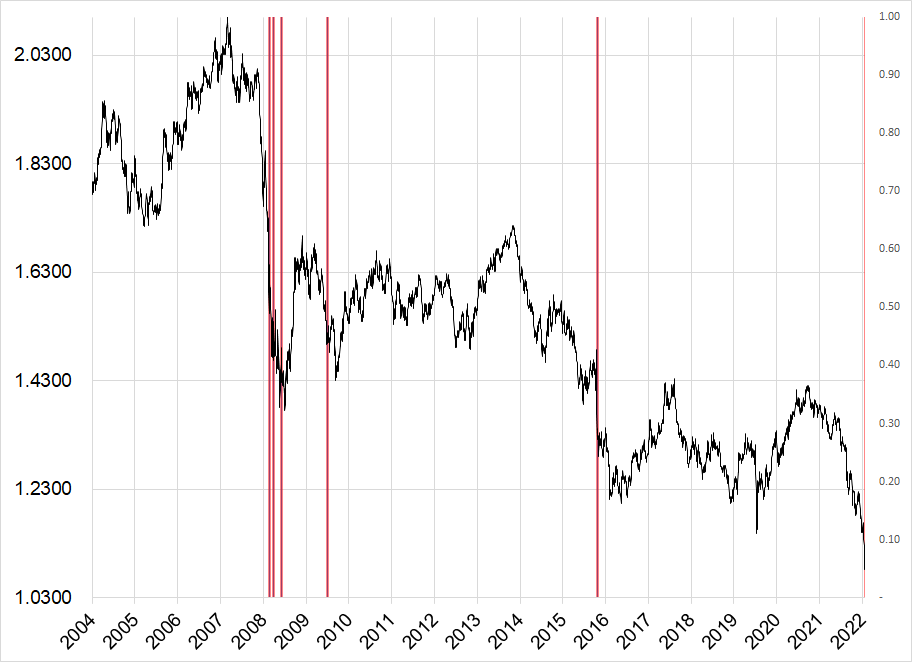
Data back to 1992, but despite the ERM crisis that year, there are no Sunday/Monday down moves >3% before 2008. The three unique instances are 2008, 2010 and 2016. Here are the next 100 days of GBPUSD after those huge Sunday/Monday moves:
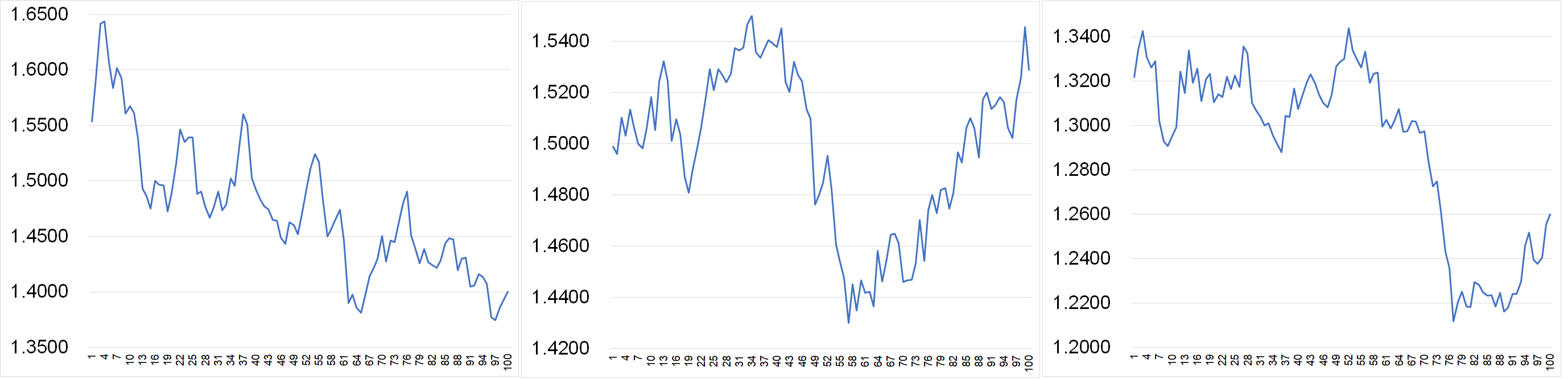
Using the first signal in 2008 and ignoring the others, which overlap
The takeaway is that these huge dumps lead to consolidation and a sell rallies market.
The debate in GBP remains active as most accept the collapse narrative, but many still cling to the view that the new policies in the UK will ultimately lead to a better structural outlook and therefore buying UK assets at these discount levels will prove to be a great investment. Here’s Tyler Cowen’s sanguine view.
The issue with trading a bull view is that long GBP is almost impossible to risk manage. The moves are too big, the vol is too high, and the fall is so large that unless you are buy and hold, there isn’t much of a tradable bull view here. This is a good place to acknowledge that my view going into the election of Truss as PM (am/FX: A Matter of Truss) was completely, spectacularly wrong. I got lucky with the strong US CPI, because it compelled me to bail on GBP longs well before the carnage. But still mucho wrongo.
The threat of GBP intervention from the BoE is non-zero, but their reserves are microscopic and so the threat is not credible other than as a one-day short squeeze operation or something like that. Even a huge rate hike and simultaneous GBP intervention would probably only work for a day or two. Very hard for a central bank with no war chest to go to war. Here are some numbers from Jens Nordvig, for perspective:

The BoE and UK government should probably keep quiet, wait a bit, and hope this too shall pass.
If there is a rally, whether it’s induced by intervention or a simple squeeze, the big sell zone is 1.1200/1.1350. That feels far away, but we were 500 points lower about 12 hours ago, and 1-week GBP volatility is trading around the same levels it traded in the heat of the COVID panic in March 2020, so anything is possible. On the wide, 1.05/1.12 looks like a short-term equilibrium zone.
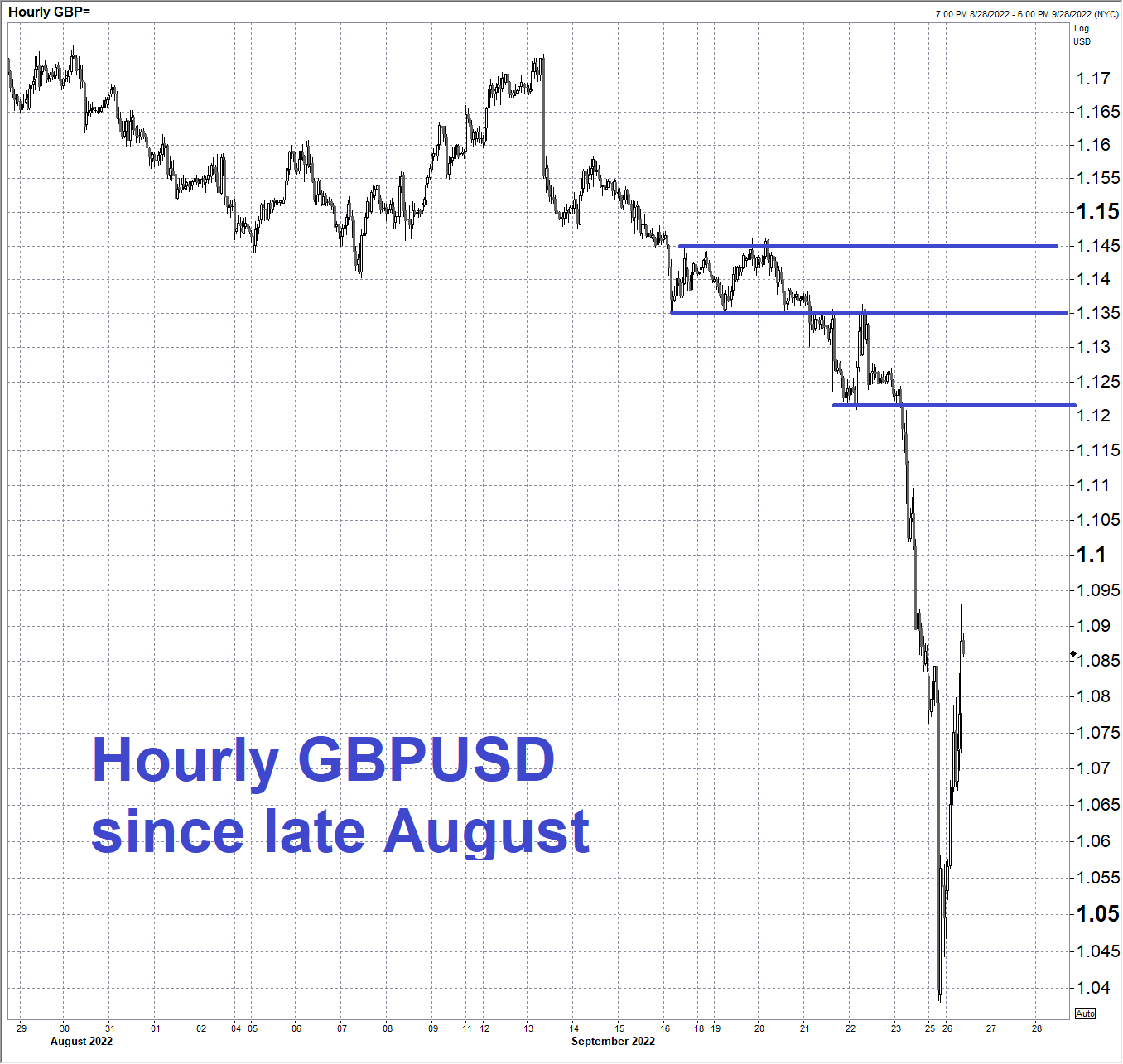
As predicted by just about everyone, USDJPY rejected the MOF’s initial foray and is aiming to recapture the highs within a few days. Estimates put the size of the intervention around $20B USD, which is a nice chunk. The next time we get above 145 in Tokyo time, we shall get a sense of the MOF’s resolve.
I will be on Street Signs, CNBC Asia, today at 10:30 p.m. Singapore time (10:30 a.m. NY). Tune in for my best effort to make sense of the current FX chaos. Hope your day is Nunavut levels of productive.
GDP per capita, by state and province
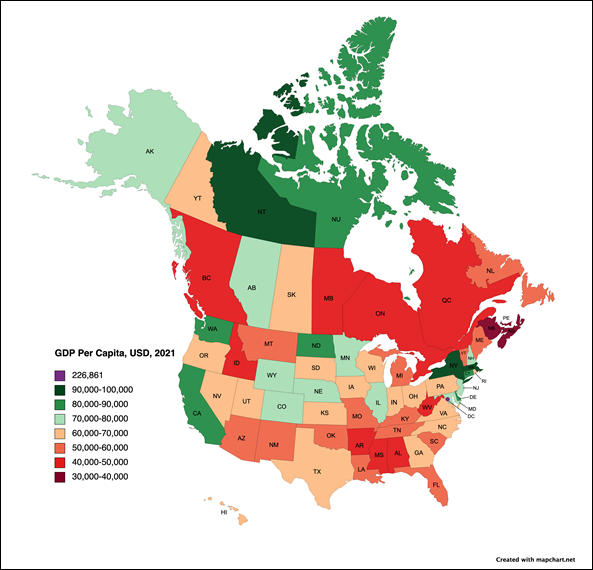
New York and Nunavut remain archrivals.


This piece is mostly for people who are interested in backtesting