
Matt Gittins hosted a Spectra FX dinner last night and it was excellent. Here are my notes.


Subscriber-only
Brazil, Canada, yen
A sort of almost unbelievably large move in Brazil. Plus: Short CADJPY.

Matt Gittins hosted a Spectra FX dinner last night and it was excellent. Here are my notes.


Guess whose PhD thesis
was on the topic of currency
debasement in England?
September 28, 2022
It is an amazing moment in global macro. There are so many themes right now it’s almost impossible to keep up. I went to a Spectra FX macro client dinner last night and it was one of the most fun and interesting macro dinners I’ve ever attended. Lots of crazy smart people talking all things macro. Here are the highlights:
A big chunk of time was devoted to Fed policy, specifically the terminal rate and probability distribution around various (radically different) outcomes. Matt Gittins sent around a sheet asking for everyone’s view on the peak Fed Funds rate and responses came in between 4.5 and 5.5. This is in stark contrast to a dinner we held in December 2021 where the most aggressive expectation was for 6 hikes in 2022 and the mode was 4 hikes. At 4.5%, I was the only participant who forecast a terminal rate below market pricing. Everyone else was above. Maybe the pendulum has swung too far?
The most interesting part of the discussion was around the various inflation / unemployment combinations that we might see in 2023. For example, if inflation falls to 4% and stays there, while unemployment rises above 5% or 6%… What is the correct policy? When the Fed is clearly in restrictive territory (say 4% or 4.5%), it’s not obvious that more large hikes are necessary. As such, my view is that Fed Funds will get to 4.5% and then flatline there for ages as the Fed waits (hopes) for inflation to break.
Would the Fed tolerate steady 4% inflation if the unemployment rate was up at, say 5.7%? what about 4% inflation and 6% UR? It is not at all obvious what the policy prescription should or will be in these scenarios. At some point, if inflation stays sticky, the Fed would need to unpause the hikes and take Fed Funds deeper into restrictive territory. But I think the first pause will be a long one.
One PM suggested the Fed should follow the EM playbook which is to keep hiking until you break inflation’s back, then cut aggressively. Others in the room agreed that this more hyperactive style of policy would make sense and could lead to tremendous volatility in both directions in 2023. For example, the Fed could hike to 5.5% or 6.0% in 2023 as inflation remains sticky and then cut to 3.0% in 2024.
If you picture various UR vs. PCE scenarios in 2023, you might see something like this:
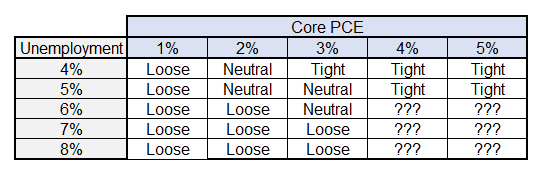
The point isn’t really whether I have filled in these boxes exactly correctly, it’s that the bottom right zone is a tricky wicket where there’s a wide range of possibilities when considering what policy setting the Fed will or should aim for.
The number one takeaway from the Fed conversation is that the probability distribution for 2023 is wide but the main scenarios do not involve rate cuts in 2023. Inflation remains the only target for Fed policy now, but things get super interesting if they succeed in pushing unemployment significantly higher in an environment where inflation does not back off. Nobody at the dinner expects inflation to get anywhere near 2% in 2023 as the old 2.6% ceiling for core PCE is now the floor. Resistance becomes support!
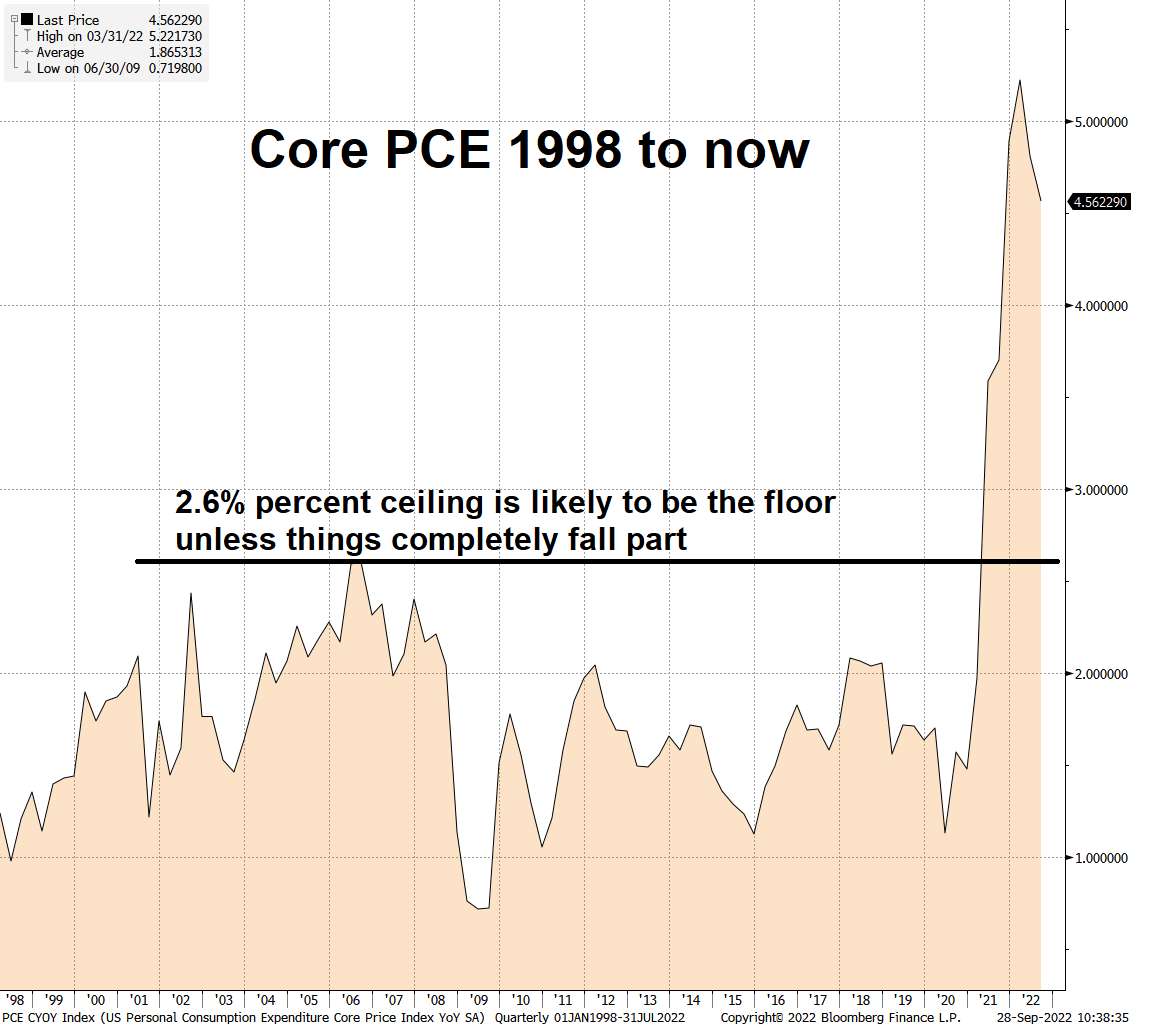
Before I get into the discussion around the BoE, this headline out earlier today is good for a chuckle:
BANK OF ENGLAND CANCELS SPEECH ON BALANCE SHEET REDUCTION BY ANDREW HAUSER, WAS DUE SEPT. 29
The main question around the table on the Bank of England was: Now that we have seen a regime shift to an EM-style scenario where higher rates do not benefit the currency, what is next? How could authorities get the UK back to a developed markets regime where higher yields = stable / higher currency?
The UK is facing a form of the “sudden stop” that can wreck emerging market economies. A sudden stop in capital flows leads to a sharp decrease in output, private spending, and credit to the private sector. And exchange rate depreciation. Going around the room, there was only one good answer for what could reverse this psychology / doom loop now that it has started: Scrap the budget and start over. Is this likely? No. Is it possible? Sure.
Today’s announcement of unlimited gilt purchases by the Bank of England has put a temporary floor under GBP because the reversal of the gilt collapse is triggering a short squeeze in cable. But is a policy that involves massive monetization of debt going to be good for the currency when we look a few days, weeks, or months out? It seems unlikely.
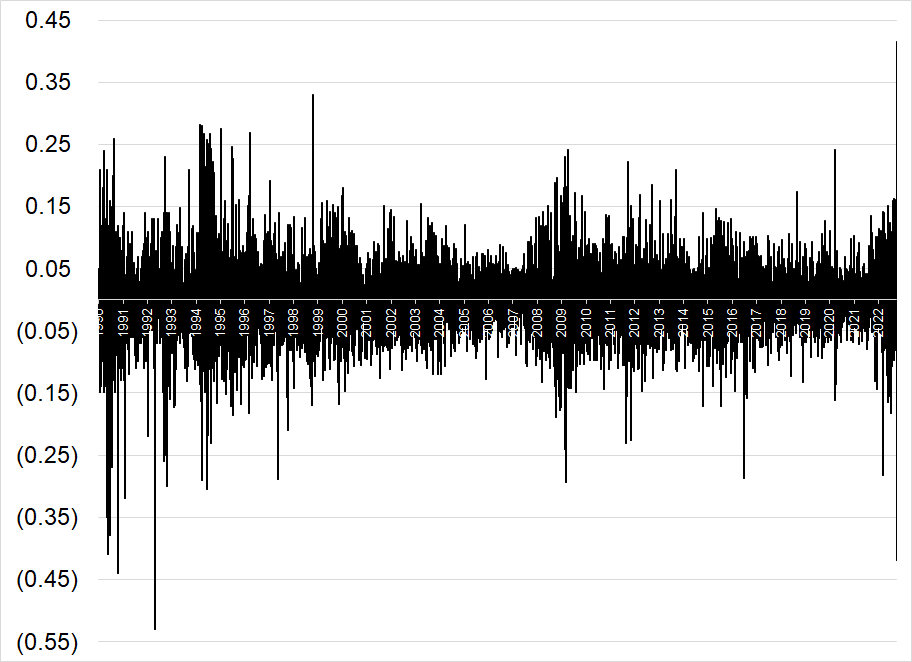
This new policy mix / U-turn is totally incompatible with an economy experiencing high inflation. The UK is now like Italy where the debt markets are not reliable, and the authorities need to lurk as a backstop. Market-based interest rates are a memory. Gilts are the new BTPs. Sometimes, it’s hard to appreciate that history is being made when you are sitting in the middle of it as it happens. Witness the historic moves:
The room was generally bullish vol. Interest rate and economic volatility remain high and interest rate volatility is the driver of volatility in all asset classes. This will remain true for the foreseeable future. Think about everything that worked from 2010 to 2020, and do the opposite.
Quite often there is a raging consensus at dinners like this and those raging consensus dinners tend to be big red flag contra indicators. There were no red flags with regard to positioning or sentiment last night.
Higher vol was the only consensus view. A majority expect the next 5% in the dollar to be higher, but positioning is probably around 35% of max long USD. On stocks, there was a cautiously bearish vibe, but no raging bulls or bears. More like: “Stocks should probably go down, but they probably won’t lol.”
I am still bullish stocks (see yesterday’s am/FX) and my view is stronger today with the BoE backstopping gilts (removes panic) and the false break of the June lows in SPX.
Intriguingly absent from the discussion were the MOF’s yen intervention, and crypto. There are only so many themes we can tackle in three hours, I suppose, but this speaks to the myriad of global and idiosyncratic stories.
Here’s Phil Valori of Spectra FX Solutions pontificating on the pound as the UK government sets GBP on fire in the background. Grilled bacon is the best.
Have a fiery day.
The political thought of the recoinage crisis of 1695-1697
Kwasi Alfred Addo Kwarteng (Author), University of Cambridge
Thesis, Dissertation, English, 2000
Publisher: University of Cambridge, [Great Britain], 2000
Dissertation: University of Cambridge
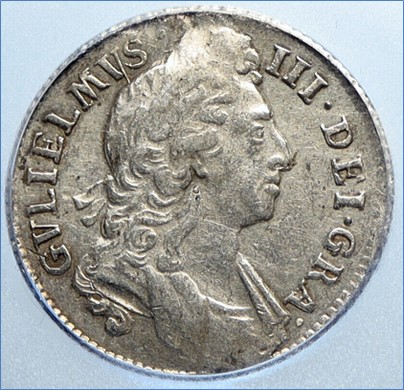
Sterling was in disarray in the late 17th century. Hand struck silver coins from prior to 1662 had been clipped around the edges and thus their value (weight) reduced so that they were no longer a viable tender, especially abroad. Since the machine-struck silver coins produced by the Royal Mint in the Tower of London after 1662 were protected from clipping by an engraved, decorated and milled edge, they were instead forged, both by casting from counterfeit moulds and by die stamping from counterfeit dies.[2]
By 1696 forged coins constituted approximately 10% of the nation’s currency. The currency also had a third problem: its value as silver bullion in Paris and Amsterdam was greater than the face value in London, and thus vast quantities of coins were melted and shipped abroad — an arbitrage market. New Acts of Parliament were passed in order to create the Bank of England and protect national monetary security. The situation caused William Lowndes of the Treasury to ask the warden of the Royal Mint, Isaac Newton, for help.
A sort of almost unbelievably large move in Brazil. Plus: Short CADJPY.

NZD has a bunch of bullish kickers: Election, seasonality, and inflation
