The ETH and BMNR comment is very near the end
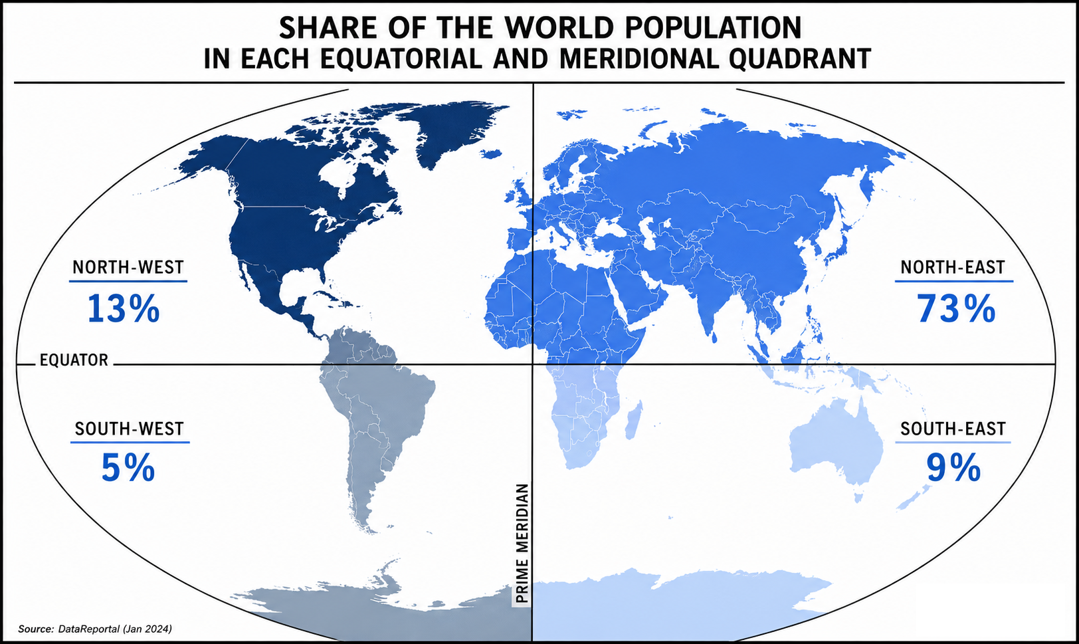
Roughly 86% of the world’s population lives in the Northern Hemisphere.

The ETH and BMNR comment is very near the end

Roughly 86% of the world’s population lives in the Northern Hemisphere.
Short EURJPY @ 184.80
Stop loss 186.37
09SEP USDCNH call spread
6.7300/6.7400 for 42 CNH pips
Risking 42 to make 58 off 6.7430 spot
10SEP CHFJPY put spread
199/196 for ~37bps off 200.50 spot
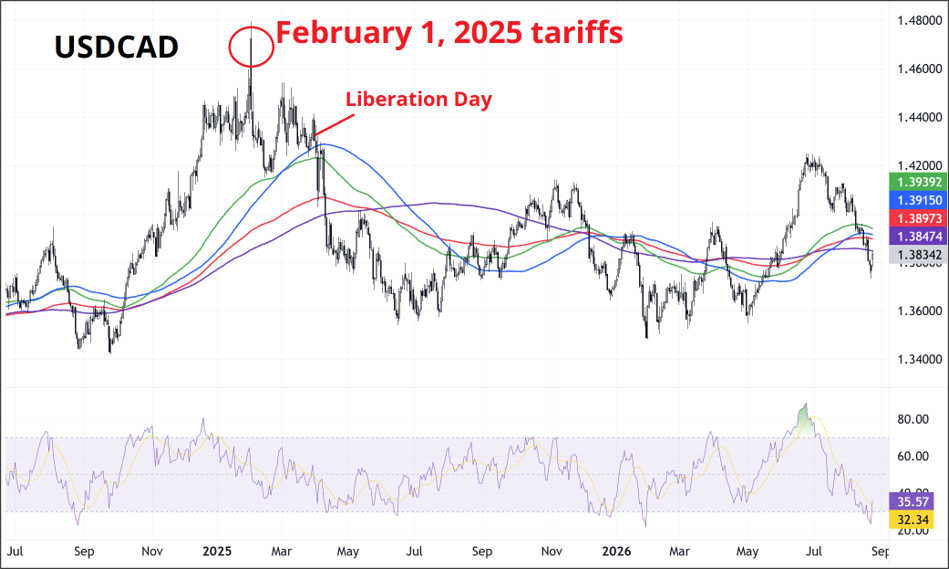
One of the big lessons from April 2025 is that economists and markets don’t have a very good handle on what tariffs mean for currency markets. In 2025, the market had been buying USDCAD for months and was making specific calculations to convert tariff percentages into USDCAD big figures. I recall one bank was targeting 1.63 or something. Then, Canadian and other pension funds went nuts and clubbed the USD broadly and USDCAD specifically down hard. USDCAD trended from 1.4700 to 1.3500 after putting in a textbook Sunday gap high on the tariff announcement.
This time, USDCAD is near the lows, trading oversold on the daily chart with an RSI that just went sub-25. The new tariffs cover only 5% of Canadian exports to the U.S., but there is new uncertainty and some question as to whether this might develop into something bigger.
Starting conditions are often just as important to news reactions as the news itself. The classic example of this is how the USD reacts to major equity bear markets. In 2000/2002, the market was massively long U.S. assets and so while the initial reaction to the popping of the NASDAQ bubble was kneejerk USD strength, the eventual outcome was a much weaker USD. In 2008, the market was max short USD as both speculators and global corporates borrowed massively in USD. The collapse of the equity markets in 2008 thus triggered mega unwinds of the USD shorts and the dollar rallied spectacularly until the governments changed the rules and injected infinite liquidity in late 2008/early 2009.
If you were feeling a desire to short CAD on this news, the crosses make much more sense than USDCAD because with the USD you get too many crosswinds. The U.S. is a land of falling economic surprises, rising yields, strong equities, and random policy shocks. The dollar is not the right currency if you are trying to isolate a Canadian story. CADJPY short or GBPCAD long are two reasonable candidates, and GBPCAD is long carry, which helps. But I don’t think there is a trade here.
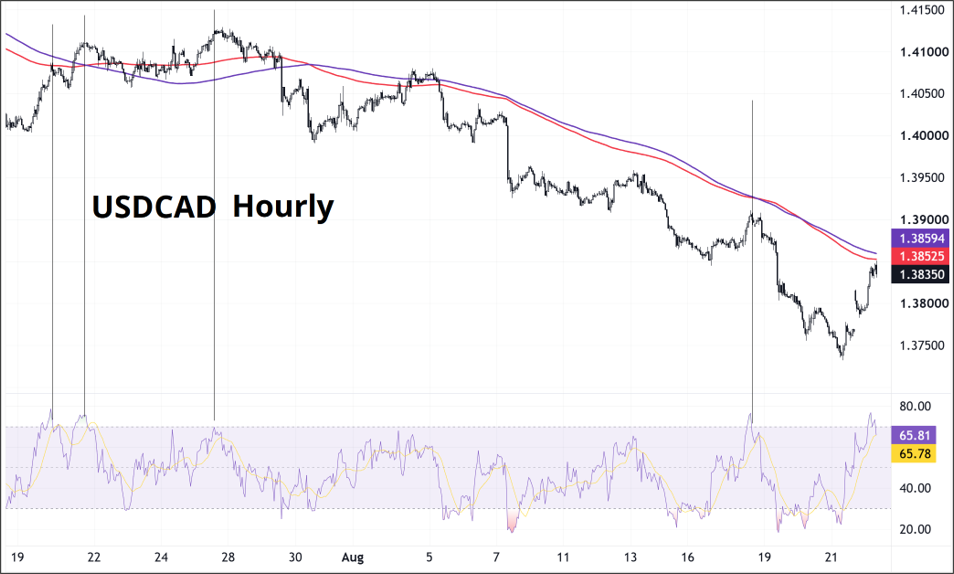
While the daily chart above shows USDCAD rebounding from extreme oversold (bullish!), the hourly chart is now in a state of extreme overbought and bumping right up against the 200-hour moving averages (bearish!). Same deal with the CAD crosses.
An important consideration here is that the Canadian counter tariffs do not come into effect until September 8th, so this sets up for another pointless kerfuffle where everyone backs down at the last minute.
Furthermore, the economics of the current round of sanctions is too small to matter. Finally, we have seen this all before. It’s hard for the market to get excited and/or scared of a theme when the theme is 18 months old and the tariff threats go on and off like Delta Wi-Fi.
While it makes sense that the market added some risk premium for further escalation, I would not be chasing short CAD here. To me, the CAD trade features too many crosswinds to make any sense, whether it’s vs. GBP, JPY, USD, or anything else. If you believe that this is a gamechanger for the Canadian economy because things will escalate and this new battle in the U.S.-led war on global trade will lead to ever-higher tariffs: GBPCAD is the play.
Bloomberg is reporting that NZ’s Labour party has pledged to restore the RBNZ’s dual mandate if it wins office on November 7. This would be a bit of a whipsaw for the central bank, as the employment objective was removed just a few years ago (2023).
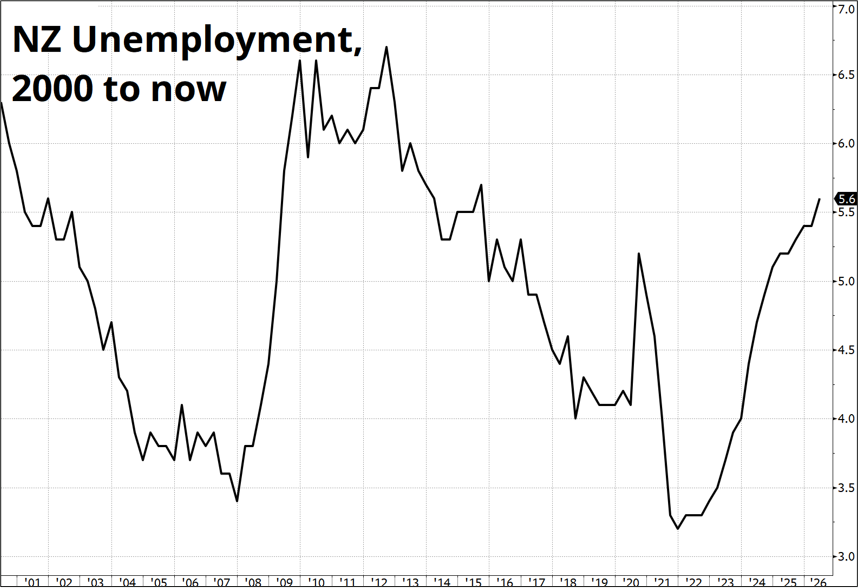
If you look at the chart here and ignore the fact it looks like the ascii shrug emoji, you can see that unemployment is high and rising in NZ. Therefore, if Labour wins the election in November, the market will read that as dovish.
I have written many times over the past few months how I felt that four hikes from the RBNZ in one year seemed bananas, and this is another reason that dovish RBNZ trades should do well.
Labour is currently ahead in the betting odds and so this is another dovish brick in the wall for NZ rates. The current policy rate is 2.50% and here is the implied rate for May 2027.
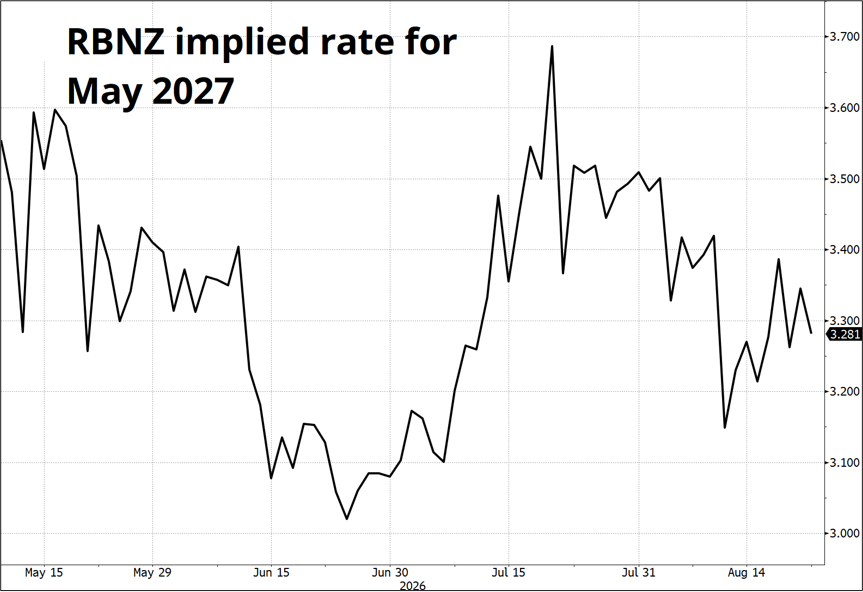
And here are the election odds.
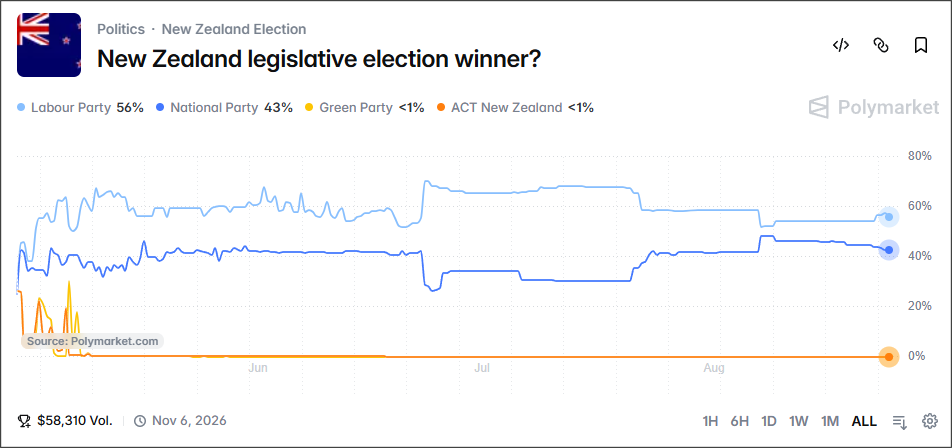
And the polling:
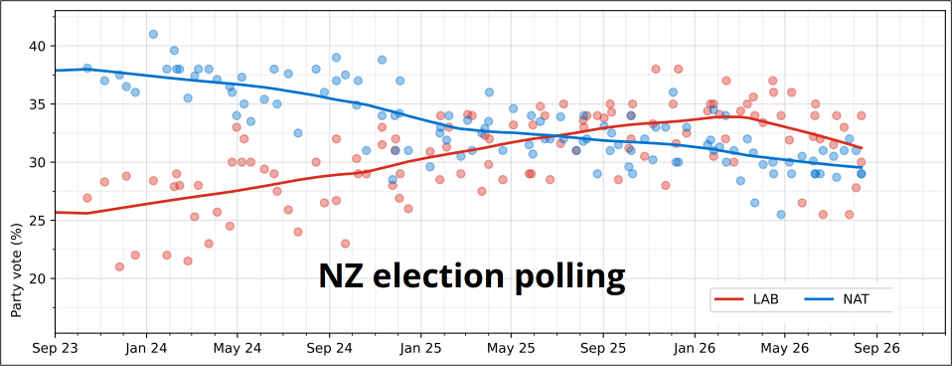
While it is clearly pretty dumb to be changing a central bank’s mandate every three or four years, this shows the tension in NZ right now as the economy is weak but the ghosts of inflations past continue to haunt policy. HT to NJ for the heads up on the mandate shift.
The calendar is a tad thin this week, and it feels to me like the market has spent a decent amount of mental and real capital on last week’s Bessent news. That leads me to believe that we will get a quiet week this week as Core PCE is unlikely to surprise and Fed policy has lost a bit of relevance as it’s really movements in 10s and 30s that matter right now. Note the Jackson Hole program is expected at 20:00 on Thursday night. Sometimes there are clues in there as to whether or not the speeches will be relevant to markets. More important than any market event itself is the question of whether U.S. 10-year yields can stay below 4.75%/4.80%.
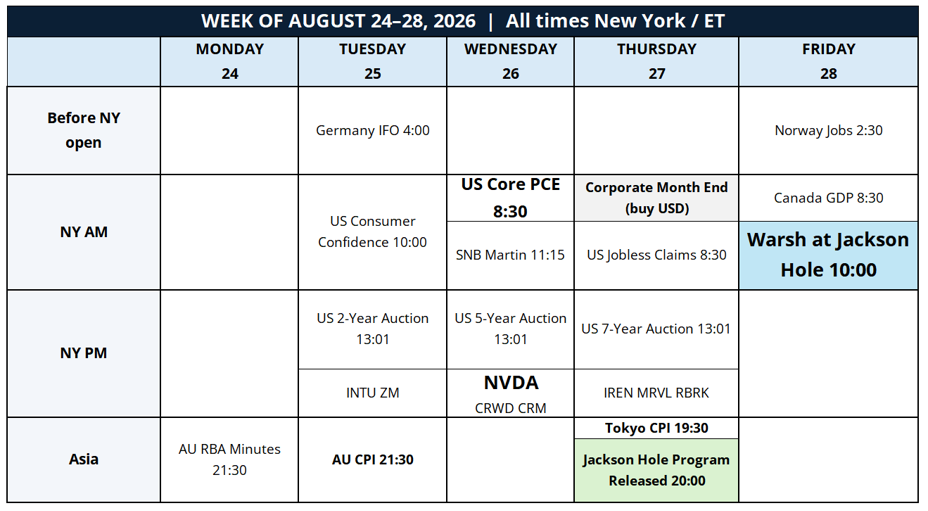
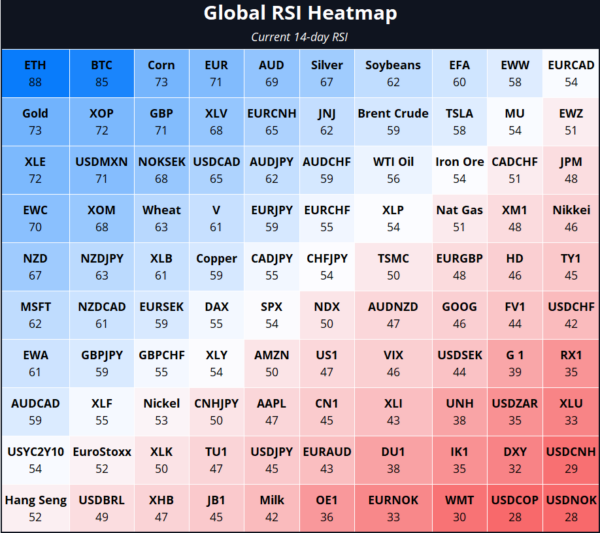
Positioning report to follow. Remember to check the RSI heatmap for inspiration.
Have an AMAZING week.
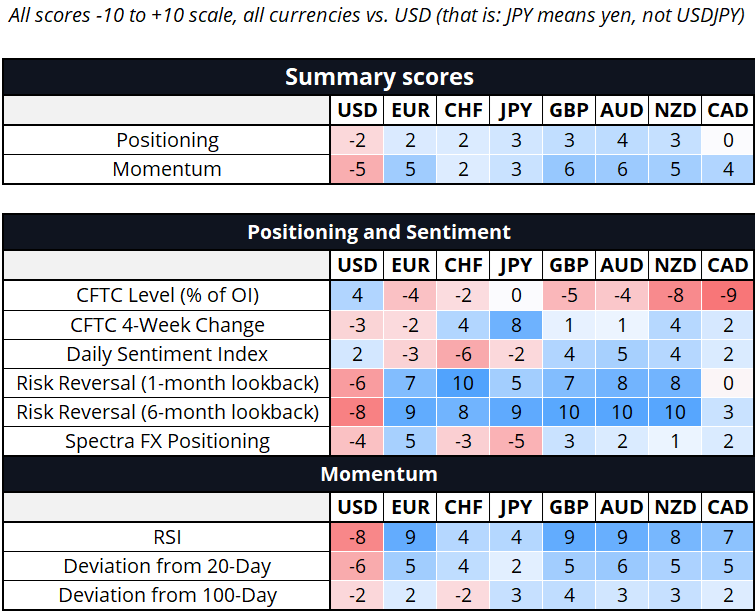
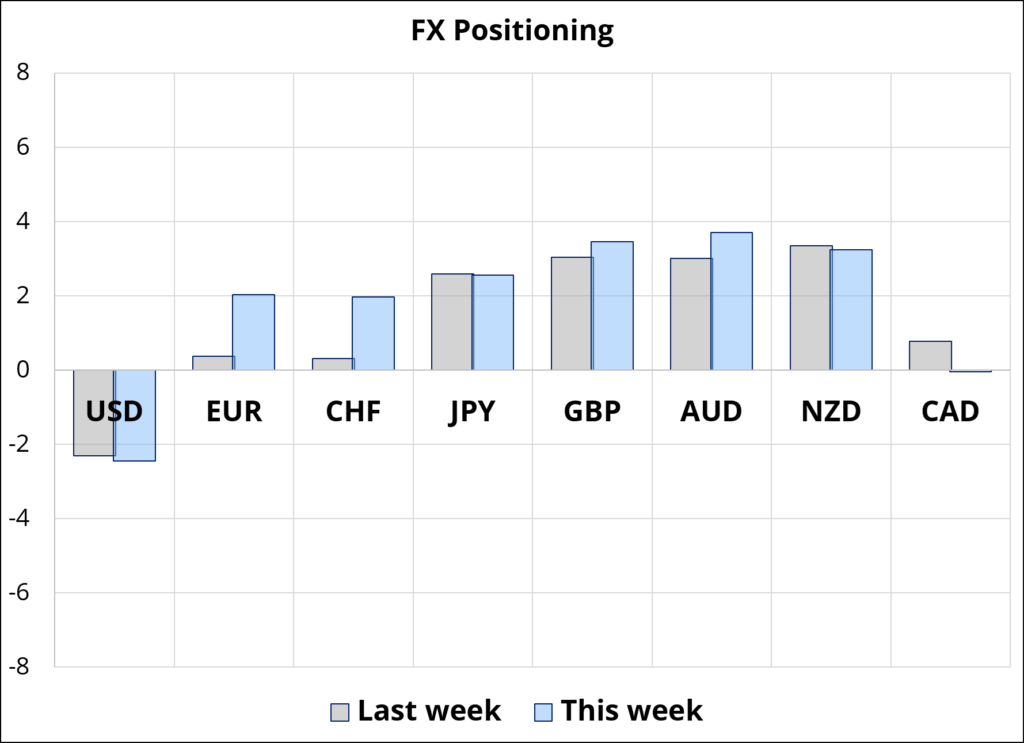
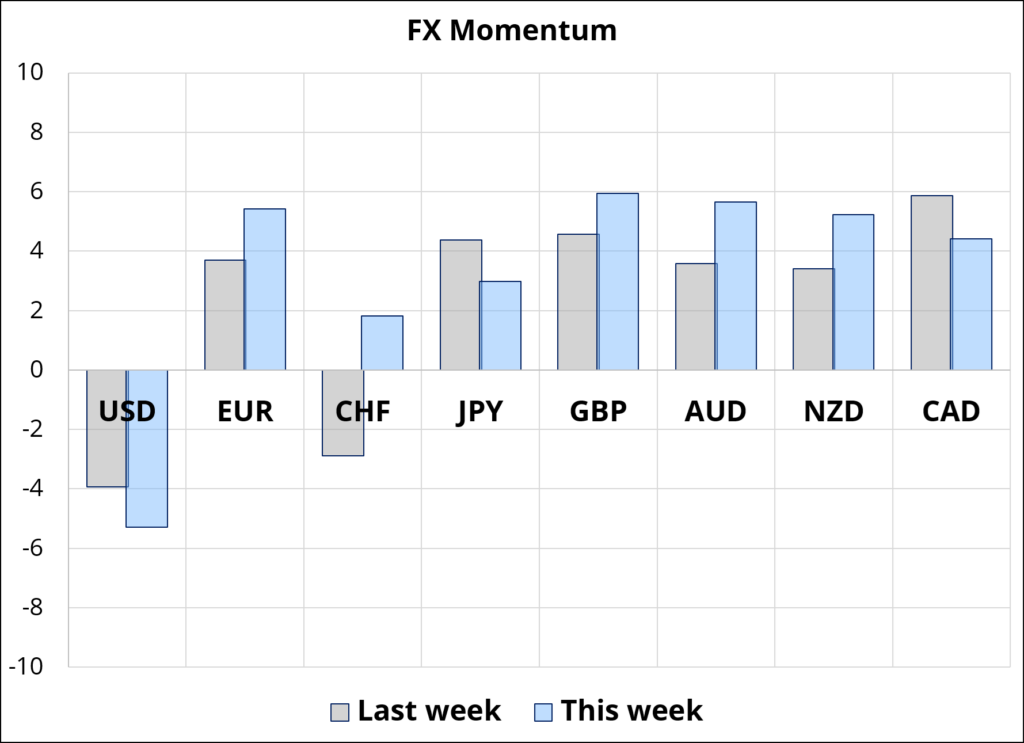
Hi. Welcome to this week’s report. (To read about how I use and trade this report, see here.) The market is pivoting back to short USD as the Bessent news emboldens the debasement trade after months of somnolence. The options markets have obviously snapped to attention in a dollar-bearish direction, while the CFTC very slowly reduces its foreverlong in the dollar. Note in the RSI matrix how crypto RSIs exceed 85. Interesting timing because major resistance in BTC comes in 80k/84k. If you got long in the 65k area, this isn’t a bad place to square up your crypto and wait for a dip. Or go short with a fairly tight stop, if you’re so inclined. Short BMNR (the ETH proxy) is particularly interesting given it’s right at major resistance and ETH is so overbought.
Roughly 86% of the world’s population lives in the Northern Hemisphere. Most people live in the North-East.


This piece is mostly for people who are interested in backtesting