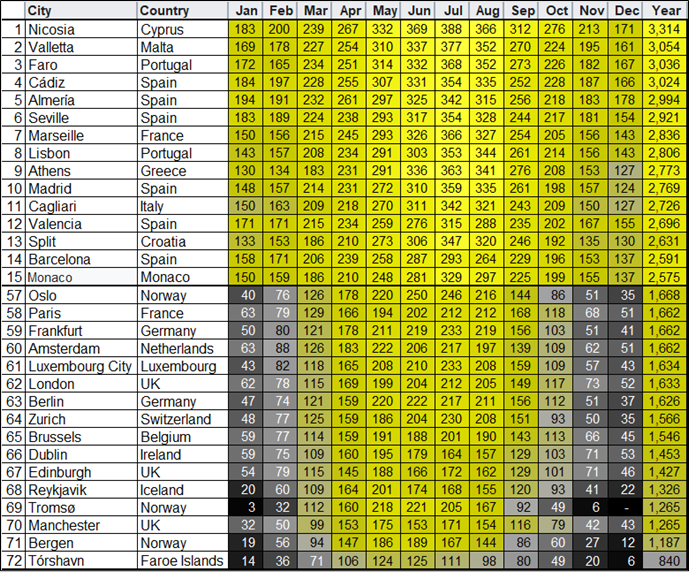
I am back from a week in London. The view there is rather foggy.

Tórshavn is the capital and
largest city of the Faroe Islands.
Population ~21,000

I am back from a week in London. The view there is rather foggy.
Tórshavn is the capital and
largest city of the Faroe Islands.
Population ~21,000
21JUN USDJPY
123 digital put @ 20%
(spot ref 131.30)
20JUN USDCHF
0.8850 digital put @ 20%
(spot ref 0.9275)
March 27, 2023
I am back from a week in London. We met with a ton of hedge funds and some banks and I got back in touch with many old friends, including many from the Lehman days. This trip was different from almost any other trip I have taken of this sort as there was a notable lack of consensus and confidence in the market. Most traders were in a bit of a fog post the crazy rates blowup.
Often, client views on a trip converge around a consensus and that consensus often works like the magazine cover indicator as a peak narrative is identified. This time, views were all over the place and confidence in those views was as low as I can remember.
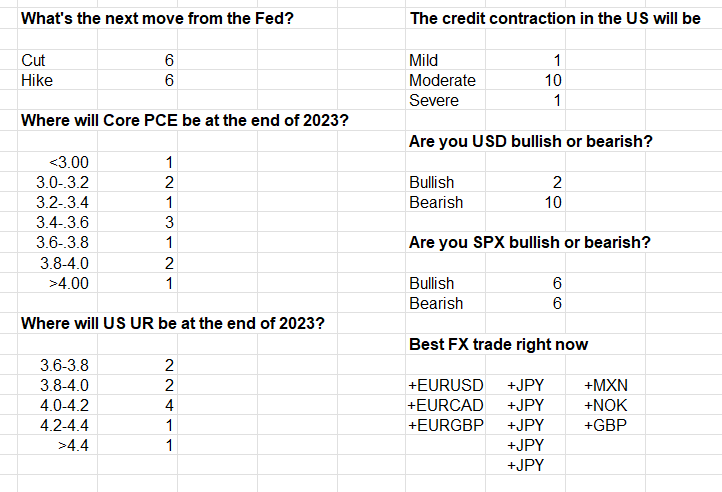
We hosted a macro dinner Thursday night, and Matt asked everyone for their views. Keep in mind when reading the results of the survey, almost everyone said they were around 20% of max risk. In our other meetings, we also found that most hedge funds do not have much risk right now. Here are the survey results.
Outside the dinner, expectations for the credit contraction that will result from the regional banking crisis were all over the map. They can mostly be distilled as either:
1. Credit is about to tighten aggressively. Regional banks make up a significant portion of lending in the US and they have just been scared straight. Even larger banks are losing deposits, despite the recent transfer from regionals to megabanks and as money flees the banking system for higher rates in T-bills, lending is going to be hard to secure. This first chart from @carstenval below and the second chart from me (below that) explain the deposit flight story nicely.
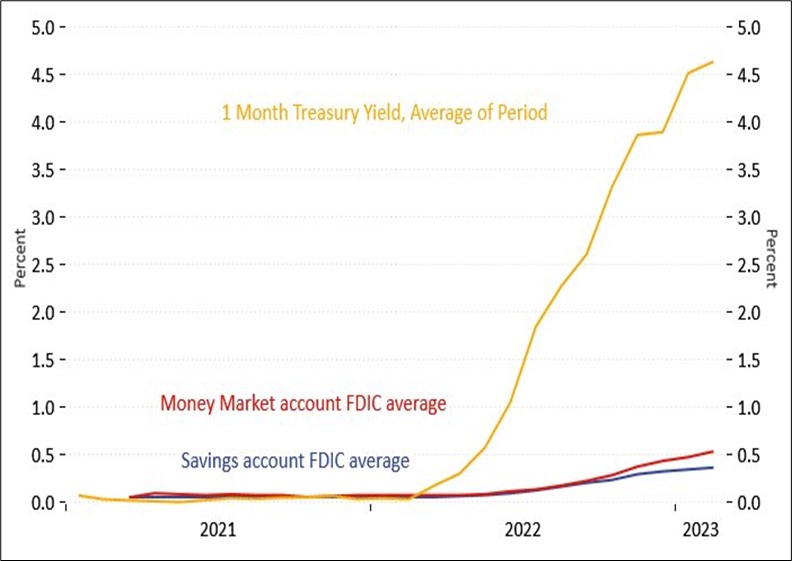
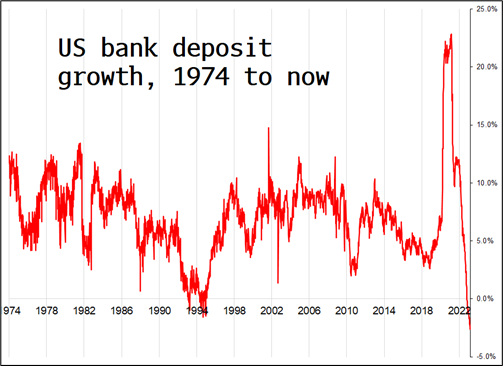
Deposit flight + credit fears = tighter lending standards and a shortage of credit. Small and medium sized businesses cannot simply switch from regional banks to megabanks as the large US commercial banks are overwhelmed with new business account applications and do not have the resources or the desire to onboard small business right now.
Disinflationary bust: Sell USDJPY, buy bonds, buy gold, sell stocks. The worse things get, the more likely we move to the USD-positive part of the smile as the US enters a liquidity crunch.
2. This is mostly an idiosyncratic combination of tech malinvestment, crypto crackdown, and a bank (CS) that we knew was in trouble for months if not years. There is no broader read through to the wider economy and the successful ringfencing and unwinding of these banks cauterizes the wound and sets the stage for a continuation of stronger-than-expected US growth. China reopening and a solid setup in Europe further bolster the idea that everything’s going to be alright.
The US muddles through while the rest of the world does fine. Buy EURUSD, buy EM, sell fixed income vol.
The tricky question is how to figure out what is happening on the ground. Presumably, credit contraction will hit business confidence more than consumer confidence, at first, as I don’t think the average shopper in Tallahassee, Florida, or wherever is all that concerned about the fall of Silvergate Bank.
We could see evidence of fear as early as the 04APR and 05APR ISM releases and I would also keep a close eye on Consumer Credit (07APR). The NFIB Small Business Optimism Index (11APR) will also be useful as it contains a specific reading on lending conditions. Remember that ISM simply asks businesses how they are feeling this month vs. last month and so I would think the most likely miss will be on the weak side as businesses are seeing the same credit tightening concerns as you are. There are many other business lending measures of various frequency and I would overweight those going forward. Let me know your favorite timely gauges of credit conditions.
I think it’s worth mentioning here that it’s time to stop looking at the old measures of financial conditions like GS and Bloomberg FCI. The Fed doesn’t care much about where VIX or SPX are trading. They care about lending and credit conditions, so those are the gauges to watch if you want to talk about financial conditions in a way that matches what the Fed cares about.
The consumer is also worth watching as some banks, particularly Citi, have been picking up weakness in the high frequency data… “CITI: Our Traffic Tracker, which uses cell phone data to determine physical store traffic .. show that traffic decelerated to -7.3% in March wk 3″ — consistent with credit-card data showing that “disruption in the financial sector did have an impact on consumer shopping.” (HT CR).
Conference Board Consumer Confidence comes out tomorrow and it showed a larger-than-expected drop last month. It’s possible that regardless of SIVB and friends, the same tightness that is squeezing banks could finally be exerting pressure on consumers, too. If US consumers are tightening up, Canadian consumers are feeling even more of a pinch.
This goes to the idea that there are naked swimmers out there and the long and variable lags of aggressive global tightening have now passed. The chickens are coming home to roost on both the consumer and the credit side. Part of the reason everyone in London is so confused is that the various hits to the market have come like asteroids out of nowhere. Predicting the genesis of the next blow up is nearly impossible.
We could be in a period of Whac-A-Mole here where random victims of rising rates continue to pop up as (for example) CRE and P/E mark to market, mortgages and personal loans reset, and so on. Just because SIVB has found a buyer does not mean there are not other naked swimmers choking on saltwater as they hobble toward shore.
So the view from London is: Concerned and confused. My views have not changed. The recent collapses of SIVB and CS and so on are a symptom of very rapid rate rises from the Fed, and not the primary cause of the coming economic contraction. While SIVB and CS have been treated, more symptoms will emerge.
I see that the majority of punters are bearish USD and USDJPY shorts are popular, but I believe risk overall is low and positions are small. There are plenty of ways for the USD to go down from here. I think EURCAD higher is a trade that works in many scenarios, whether the credit contraction is moderate or severe at first, and only a complete collapse in credit (which I do not expect right away) takes us to the crisis side of the USD smile (bullish USD).
I expect upcoming US economic data will be worse than expected and yields and the USD will trend lower.
I haven’t heard anyone talk about TRY in ages, but it came up a few times on the trip. The Turkish election is May 14, and the view seems to be that there is plenty of room for post-election depreciation, regardless of who wins. The currency has been unrealistically stable for months and once the election passes, incentives will change as authorities will have less motivation to maintain currency stability. Some are playing this through forwards (though forwards have already moved a lot) and some are looking at options.
Wednesday is corporate month end, Friday is month end and April 5 is the peak of USDJPY bullish seasonality.
Finally, April tends to be a bearish month for the USD, led by GBPUSD.
Have an excellent week.
https://en.wikipedia.org/wiki/List_of_cities_in_Europe_by_sunshine_duration


A sort of almost unbelievably large move in Brazil. Plus: Short CADJPY.