Thinking about USDJPY, USDKRW, and Google’s issuance
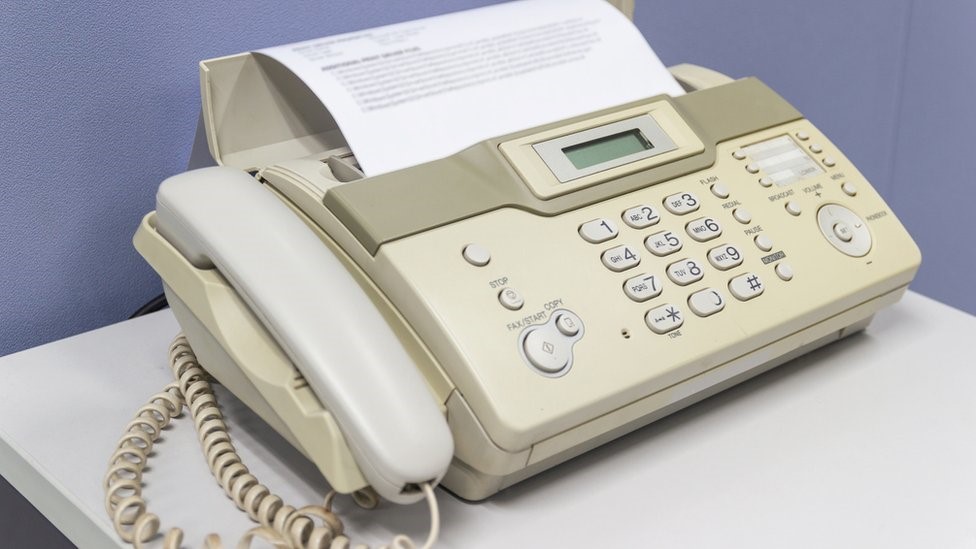
The fax machine was patented in 1843, thirty-three years before the telephone.

Thinking about USDJPY, USDKRW, and Google’s issuance

The fax machine was patented in 1843, thirty-three years before the telephone.
Short CADJPY @ 115.30
Stop loss 116.61 Take profit TBD
Long USDCAD @ 1.3833
Stop loss 1.3744 Take profit 1.3944
Long GCQ6 at 4610
Stop loss 4294 Take profit 5320
Getting antsy. Will exit soon.
Just to give you a sense of what happened last time in USDJPY… The MOF intervened on April 29 and May 1, 2024, the exact same point in the year as the April 30, 2026 intervention. USDJPY then did pretty much nothing for five weeks as it was a slow grind back up to the highs. This chart shows low, close, and high (red, black, green).
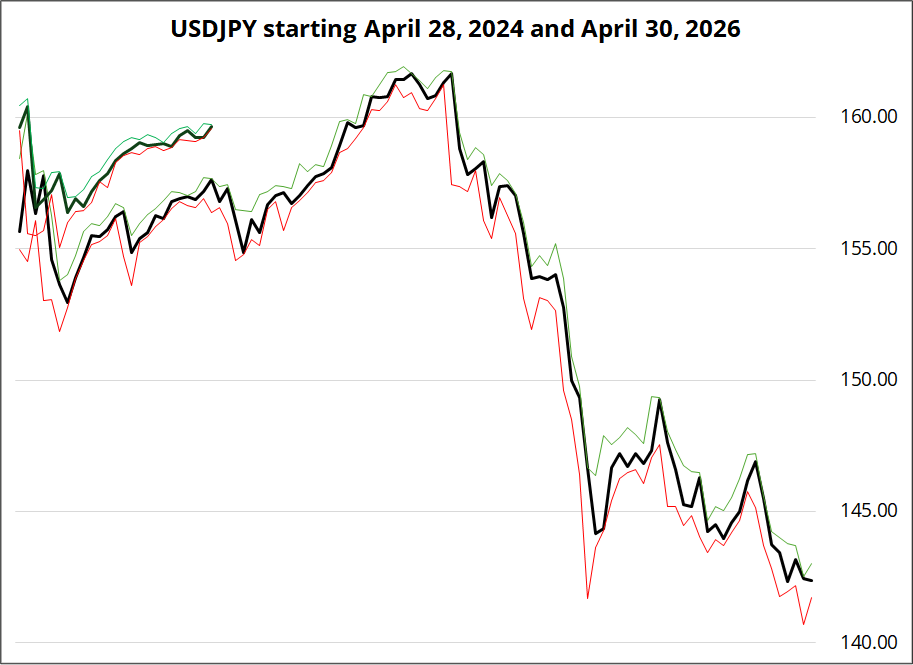
The date and the levels are essentially identical, so I didn’t even have to rebase USDJPY. I just used one y-axis. I present this in case you are on the edge of your seat waiting for the next intervention. You might be there for a while. USDJPY went all the way to 161.85 and was up there for days before the MOF reappeared. Here’s the daily data into and after the intervention.
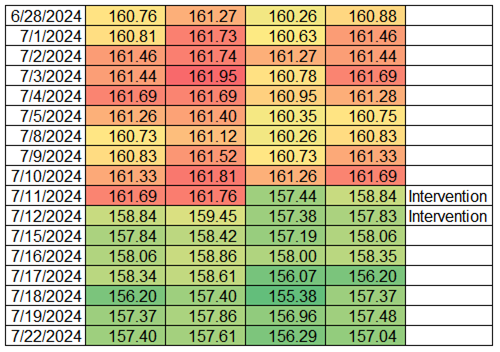
I am showing this simply to give you a sense of how slow and painful things were last time. It is important to note, however, that different people were running the MOF at that time. Takaichi and Company appear to see a bit more urgency than their predecessors.
While we get a Ueda speech this week, I think the key dates for USDJPY are Friday (nonfarm payrolls) and June 17 (Warsh’s first FOMC). The BOJ story is kind of boring at this point with the June hike pretty much priced, and falling inflation in Japan almost guaranteed to keep them hiking at a glacial pace. There is less than one full hike priced for the remainder of 2026 after the presumed June hike (80% priced).
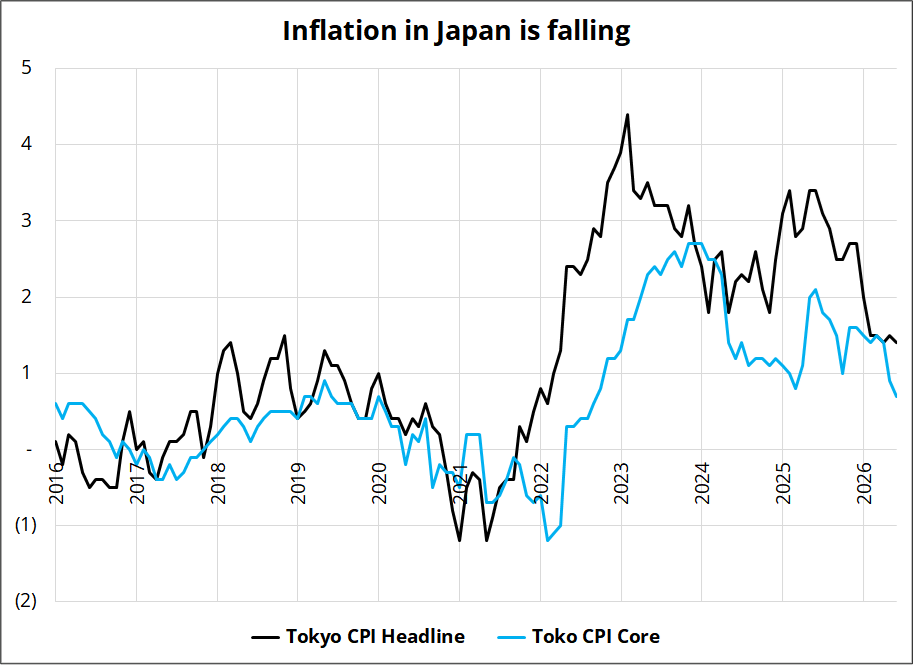
I use Tokyo CPI because it is perfectly correlated to, and released one month before national CPI
Whatever your view is on USDJPY needs to come from the dollar side and then once you have your USD view, you need to factor in the probability of intervention as we rise. I would think the July 2024 model is appropriate here. Intervention odds click above zero as 160.00 nears and click substantially higher if 162.00 trades.
Something like the chart here.
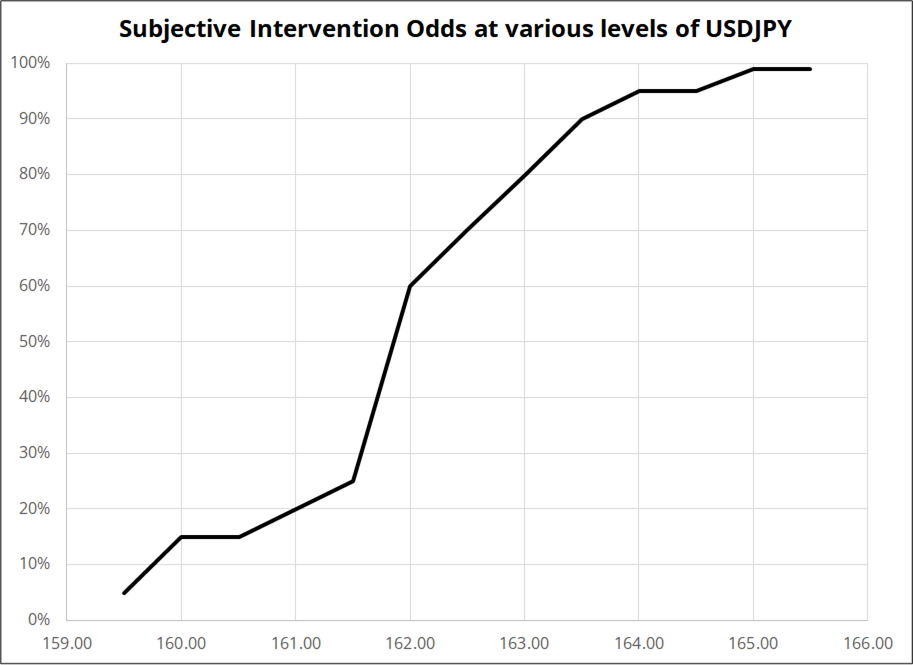
My base case is we follow the 2024 playbook with Warsh’s first presser key for USD direction in general and USDJPY direction too.
Speaking of things where it’s the USD that matters, not the denominator currency, there has been substantial intellectual and real capital invested in the short USDKRW trade over the past few months. There are all kinds of KRW-specific reasons people are bearish USDKRW (balance of payments, inflow/outflow predictions, intervention, REER, etc.), but the reality has been that it’s a USD trade, not a KRW trade. It’s one of those cases where it seems like the market doesn’t have the right framework.
USDKRW decoupled from the USD in 2025 (weaker KRW) and subsequently recoupled in 2026. Everyone is waiting for the perma-discount on KRW to come back in, but it never does. I don’t know why that’s the case, but usually when there is this much energy and money spent on a theme for three or four months and it doesn’t work, that means that something else is happening and the analytical framework leading to the view is wrong. I suppose it’s similar to the rate differentials vs. USDJPY thing.
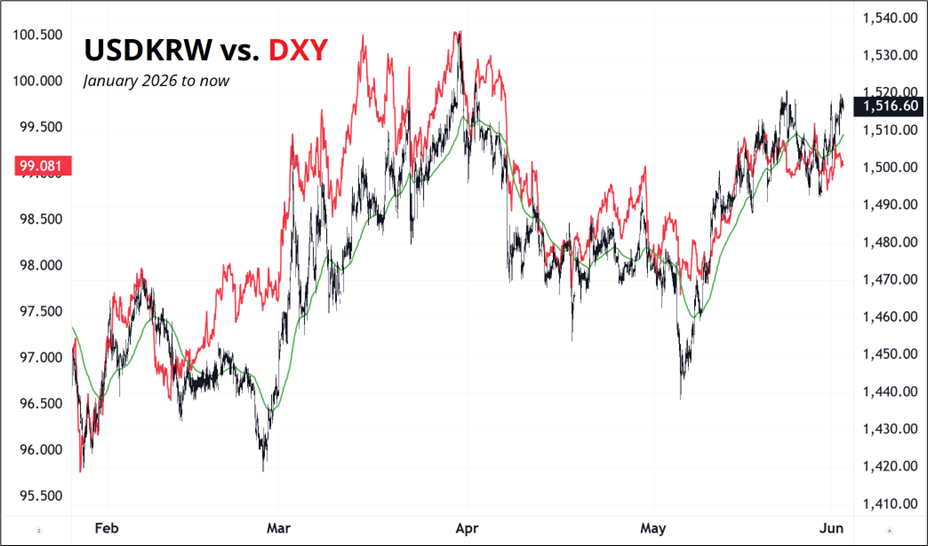
I guess you could argue 1500 from this chart, but not much lower than that.
As mentioned earlier, U.S. jobs and Warsh are the key for dollar direction. The money continues to flow into the AI Capex boom in the United States and while it was supposedly going to lead to a jobs and software apocalypse, the narrative has completely flipped. Now, the consensus seems to be that AI capex will be good for job creation, at least initially, as it sparks an inflationary boom. With all the jobs data this week, it’s a good time to check out two good, short pieces on the U.S. job market.
https://libertystreeteconomics.newyorkfed.org/2026/06/remote-work-leaves-younger-workers-sidelined/
Google raising capital is a major turn of events. This is the turn from capex light money-printing machine to capex heavy hardware thing. While Google issuing shares to raise money for capex isn’t a complete shock, it’s important. It necessarily means that they will no longer be conducting buybacks and that is a major change in capital structure policy.
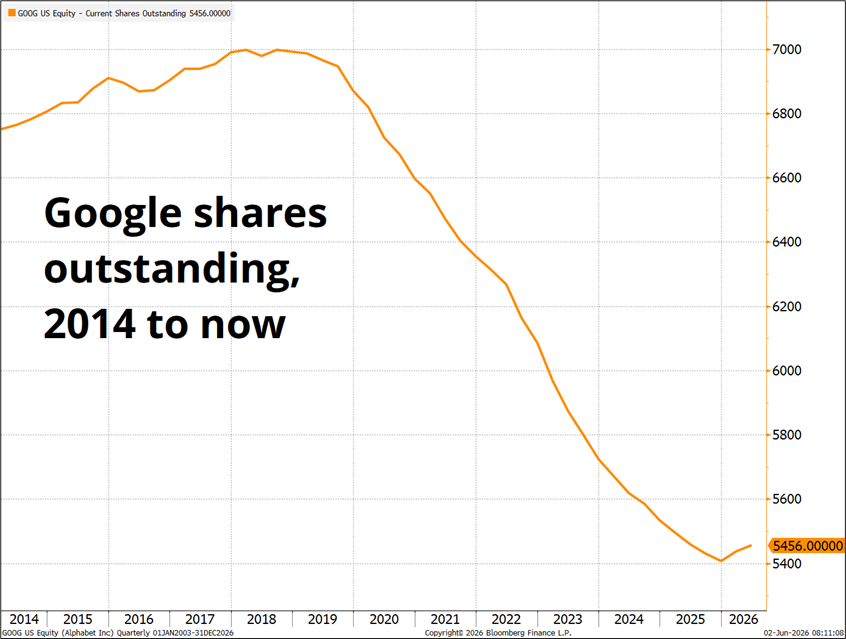
It’s not like you just go short Google today because of this, but the change in shares outstanding is one of the strongest predictors of stock returns. It is a known anomaly across all stocks, on average, but not a thing you use to trade individual stocks. Here is a famous paper on the topic: Shares Outstanding and Cross-Sectional Returns. And the abstract:
Post-1970, the change in shares outstanding exhibits a strong cross-sectional ability to predict stock returns. This predictive ability is more statistically significant than the individual predictive ability of size, book-to-market, or momentum. Our finding is related to research that finds that long-run returns are associated with share repurchase announcements, equity offerings, and stock mergers.
It makes sense! Price is a function of supply and demand. If you reduce or increase supply, price responds in the expected direction. And it jives with Sparkline Capital’s finding:
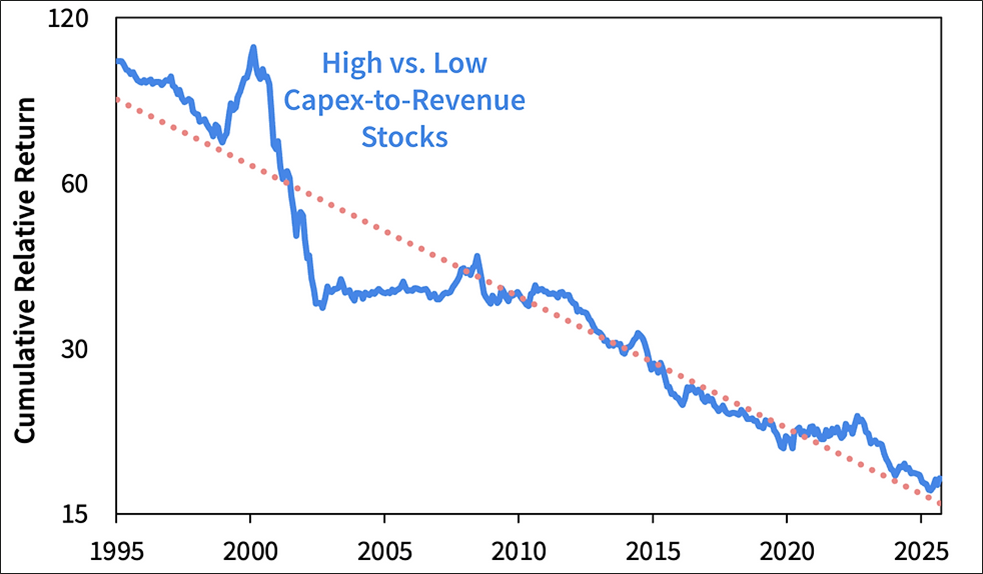
The flywheel is: low capex, print money, use money to buy back stock. Or high capex, lower margins, need cash, issue stock. There you go. I hope your day is at least a reasonable facsimile of excellent.
A beautiful beast
The fax machine was patented in 1843, thirty-three years before the telephone.


This piece is mostly for people who are interested in backtesting