
Consolidation is boring, bad breadth is a chupacabra


Subscriber-only
Brazil, Canada, yen
A sort of almost unbelievably large move in Brazil. Plus: Short CADJPY.

Consolidation is boring, bad breadth is a chupacabra

Short 4.95/5.05 USDBRL strangle and buy 4.80/5.20
Max gain is what you receive: ~1.65% off 4.98 spot.
Max loss is 1.35% 05NOV expiry
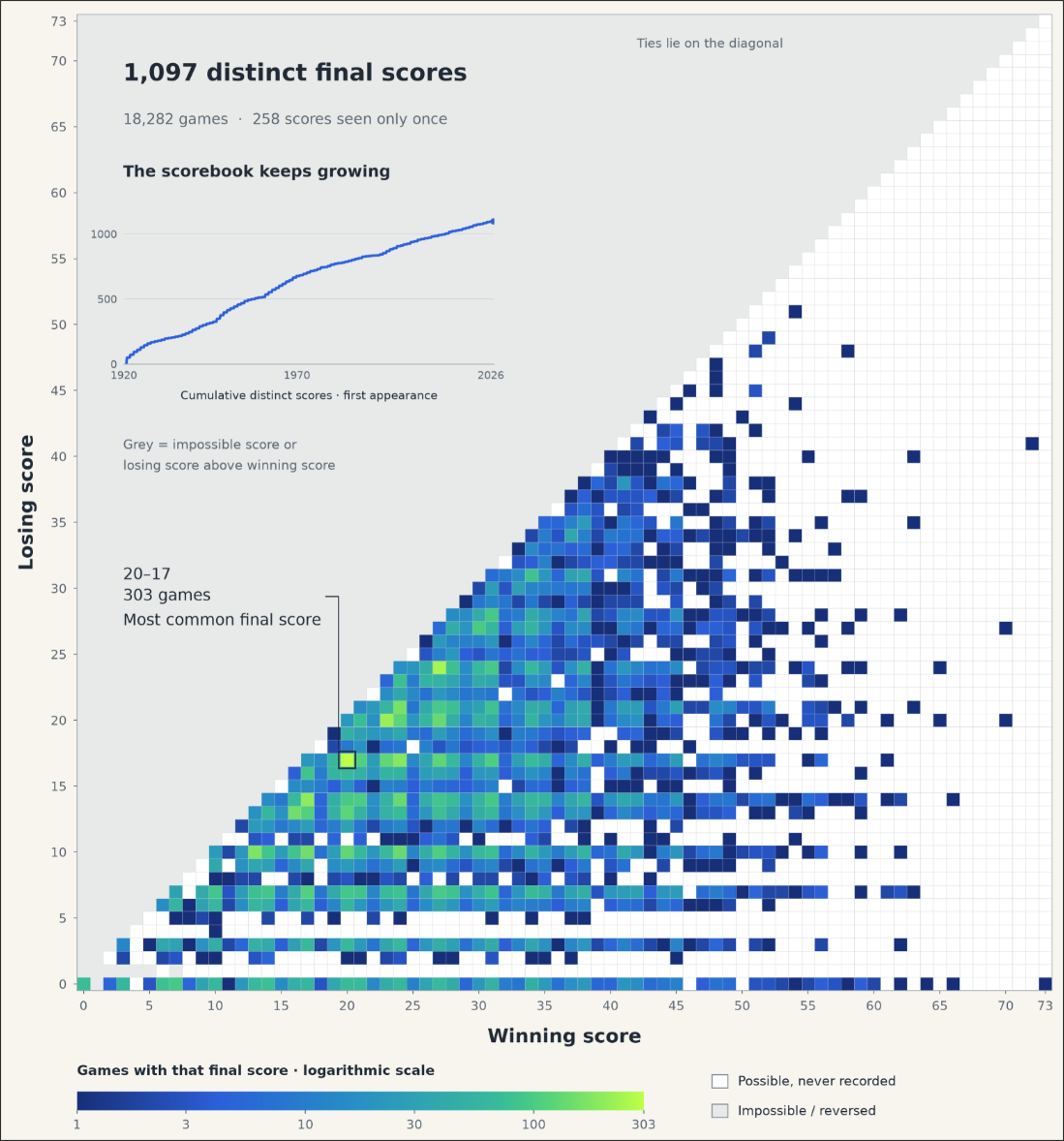
Distribution of all NFL scores in history. See bottom of page for larger version. There is a 73-0 game in there!
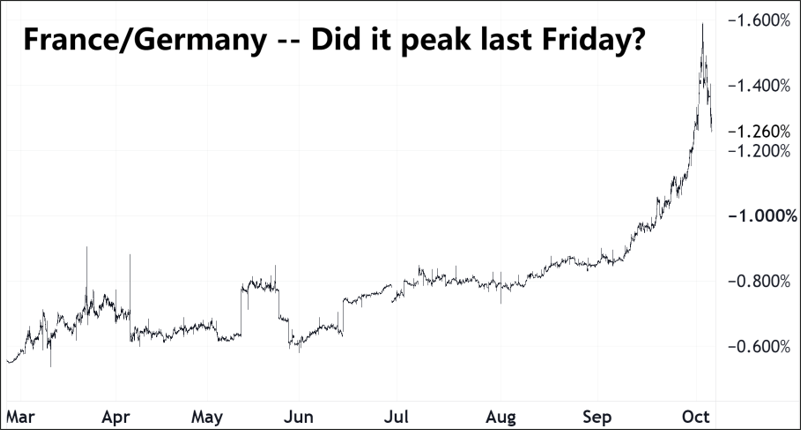
As dollar long positioning and momentum are stretched and we saw a bit of a blowoff top in French spreads on Friday—it is a tricky setup here.
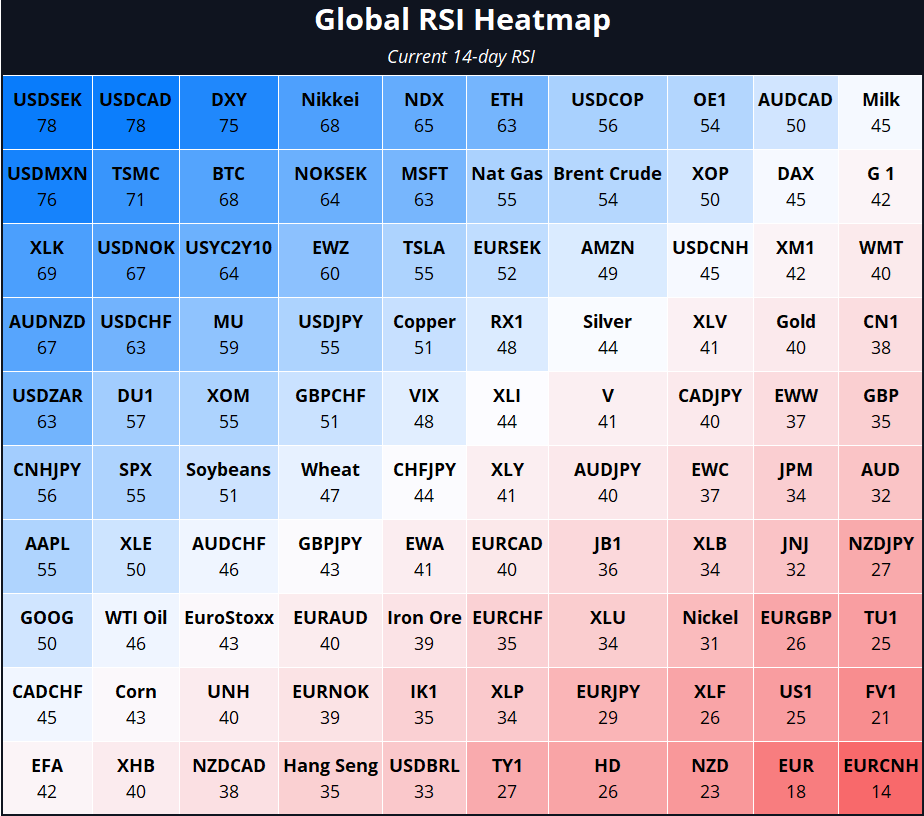
Looking at our positioning metrics (see yesterday’s am/FX), the current RSI map, the lack of catalysts on the calendar this week, and the price action—dollar longs have a bit to worry about. Our RSI map covers 100 major products across asset classes and it’s highly unusual for USD pairs to land top left and bottom right like this:
The frustrating aspect of the bond vigilante trades like we saw last week vs. France is that they are sometimes arbitrarily timed and often short lived. The France thing kind of came out of nowhere and receded for no reason. The bond vigilante attack on the dollar in 2025 was similar but lasted about a month, not a week. The attack on the UK in 2022 was more persistent and required government intervention. The reality is that there is a structural deficit story in many, many countries and the market cares when it cares. My bet is that the market will continue to care about France but it’s never a bad strategy to be nimble like I was last week and get out when there are screams of terror and vol is high, not when everyone else is trying to get out and vol is plummeting back to earth.
I don’t want to be short USD, in fact 1.1270/00 should be the sell zone for EURUSD. If you are bearish EURUSD, this is a great place to enter with a stop above 1.1350. But for now, I think this is the sort of setup where you will often see painful consolidation. The sort of setup where owning too many USD calls gets expensive as things go nowhere for a while and vol bleeds lower. So, I am perfectly happy flat dollar for now, waiting for some inspiration to either rejoin the short euro trade, or go short USD somewhere else (maybe USDCAD or USDMXN?).
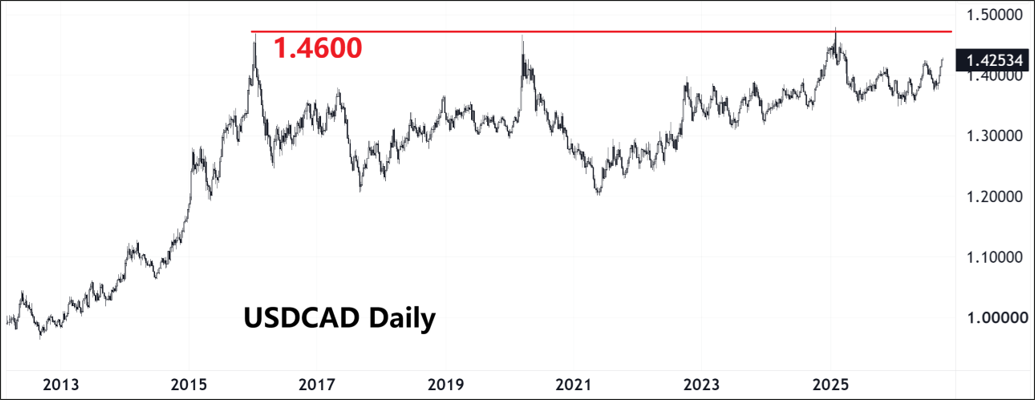
FWIW, we are not there yet, but note 1.4600 has been a huge resistance area for USDCAD over the past 10 years.
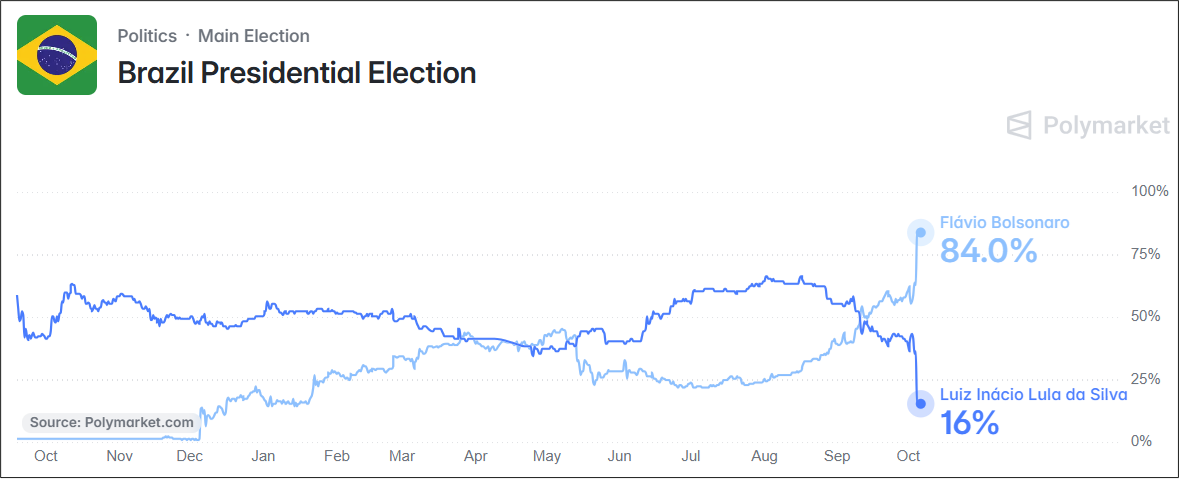
The Brazilian election looks like it’s basically over:
But 1-month volatility still looks like this.
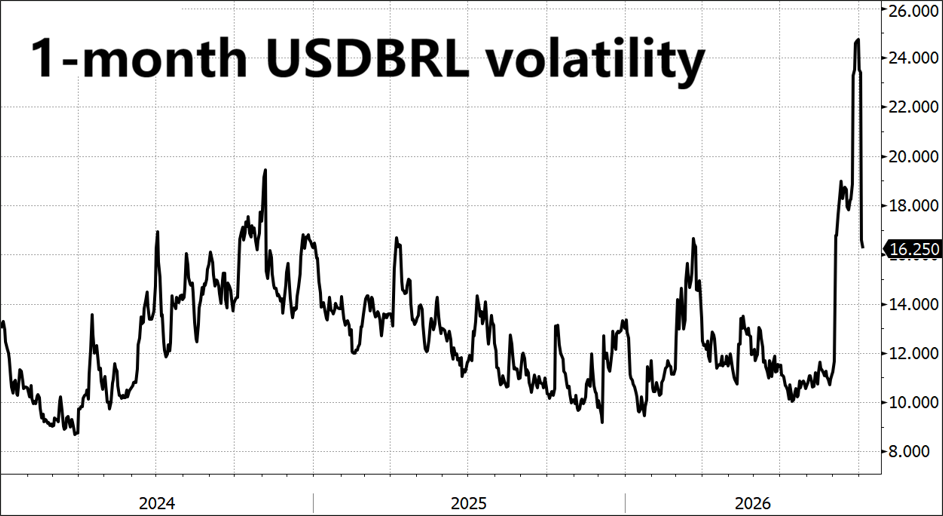
Vol is lower, but still very high relative to pre-election baseline. I think FX markets have pretty much fully priced a Bolsonaro win at this point and therefore selling the vol looks attractive. Here’s what I like:
Sell 1-month 4.92/5.02 strangle and buy 4.77 / 5.17 to limit the downside. You receive around 1.65% and max loss is 3.0% which means you are risking 1.35% to make 1.65%. If USDBRL lands 4.92 / 5.02 you make the entire 1.65% and then you give more and more back as USDBRL settles further outside that range. The trade is a limited downside way to sell the high vol if you think that USDBRL has already found its new happy place.
Which I do.
I have written about this a few times, including the most recent Friday Speedrun and in my new book Trade Outside the Box, and we are seeing the same story play out again here in stocks. Bad breadth at the highs is not bearish. You can slice and dice it along many lines and I did so in Friday Speedrun and here’s another very simple one. A signal fires when the S&P 500 closes within 3% of its all-time high while the 10-day average of NYSE new highs minus new lows (NWHLNYHL) is negative. Signals must be at least 120 trading days apart. Then, I test two strategies: Buy small caps (IWM) or sell S&P 500.
The long IWM trade makes money and the S&P short loses money on 10-day and 20-day time horizons. The win rate for IWM is 58% and 67% while the win rate on the S&P short is 42% and 33%.
When you see headlines about bad breadth, you are better off buying small caps, not getting bearish.
Media coverage almost always implies, without evidence, that bad breadth is bearish. Yet here’s the path of SPX after bad breadth signals. While I realize there are other ways to measure bad breadth, almost all studies I have ever conducted show bad breadth to be neutral or bullish going forward.
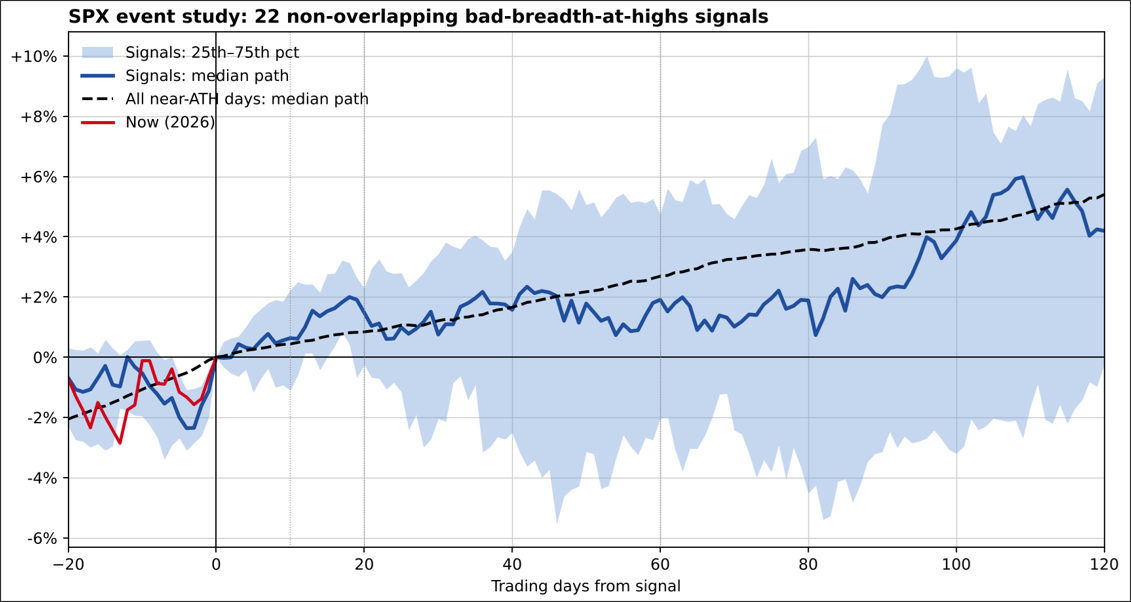
And here’s a graphic from Trade Outside the Box that helps make the point in a less robust way:
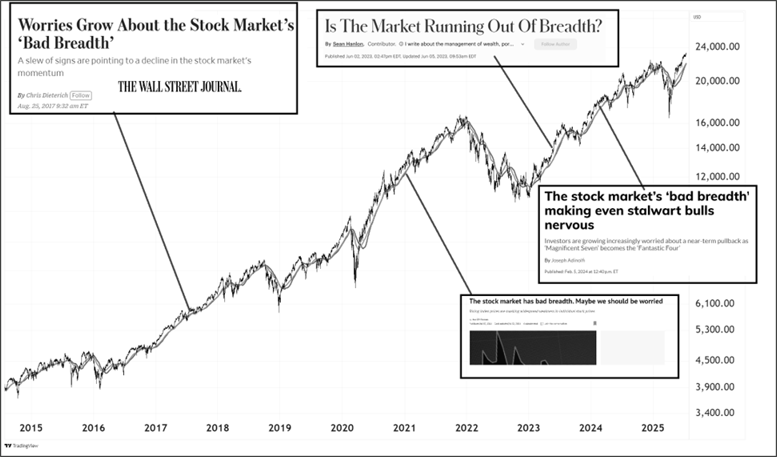
You can put “bad breadth is bearish” in the same category as:
“Time to get bearish stocks because yields are rising.”
A sort of almost unbelievably large move in Brazil. Plus: Short CADJPY.

NZD has a bunch of bullish kickers: Election, seasonality, and inflation
