Nothing is certain but Debt and Taxes.
Hello. It’s Friday. Thanks for signing up. I’m Brent Donnelly.
The About Page for Friday Speedrun is here.

Nothing is certain but Debt and Taxes.

Hello. It’s Friday. Thanks for signing up. I’m Brent Donnelly.
The About Page for Friday Speedrun is here.
Here’s what you need to know about markets and macro this week
The country is living through a uniquely strange moment. At the top, money compounds faster than the rich can spend it. Fortunes swell. Extravagant celebrations, vanity projects, and gilded ballrooms.
At the bottom, nothing adds up. Food, rent, and everything else costs more than ever as inflation runs faster than wages. An unpopular trade war and fiat currency debasement push prices inexorably higher. The workers fall behind, and the official account of the economy does not match what households see and feel. More and more individuals work without working for anyone. Paid by the piece, by the job, by the delivery, with no guarantees for tomorrow.
Gambling is everywhere. Hope for the hopeless.
Is the man at the top in his right mind? Your answer better toe the party line. Political and economic violence has become less shocking. More ominously, some of it is greeted not with horror, but with quiet approval from people who have decided the system no longer serves them.
Technology drives the anxiety. A new generation of machinery promises enormous gains in productivity but threatens the livelihood of skilled workers who assumed their expertise offered some form of protection from obsolescence. The equipment sellers tell us automation is inevitable. Investors reward companies that replace expensive workers with more efficient machines. Automation is inevitable because everyone is automating; everyone is automating because automation is inevitable.
The prophecy fulfills itself.
If you resist the change, you are an enemy of progress. You’re a Luddite. Don’t ask questions, lest you be branded a radical: Why do owners of capital reap the profits while labor bears the pain? Who deserves the gains from skyrocketing productivity? What happens to decades of accumulated skill when a machine makes the skill less valuable? The state’s answer is clear. The machines must be built and they must be protected. It is a matter of national security.
Abroad, economic policy and national security have merged. Trade restrictions meant to punish foreign rivals hobble domestic manufacturers, but to back away is impossible. Retreat means weakness. The country juggles conflicts on multiple fronts as it tries to control a changing world order. The cost is enormous.
Public debt rises. Gold surges.
Men in the street and academics wonder: Can paper money be trusted? Has government borrowing gone too far? How long can the financial system absorb the rising debt obligations created by war and relentless government borrowing?
Welcome to Britain in 1811.
The fancy ballrooms, lavish parties, and vanity projects belong to the Prince Regent. The skilled workers are the first Luddites. The miracle technology is automated textile machinery. The equipment vendors are machine makers and mill owners selling automation as destiny. The trade war is the Orders in Council. The arguments over the leader’s sanity were about George III and the Regency.
The soaring price of gold feeds the bullion controversy, a ferocious argument over paper money. Machine-breaking spreads across the Midlands as workers attack the technology they believe is destroying their livelihoods. Within months, Parliament will make frame-breaking a capital crime. A year later, Prime Minister Spencer Perceval will be shot dead in the lobby of the House of Commons, and in parts of industrial Britain, people will celebrate. The government will send more troops into its own northern counties to put down the machine-breakers than Wellington took to the Peninsula.
The most interesting part of the 1811 vs. 2026 comparison is that those who predicted catastrophe in 1811, and those who predicted abundance were both right.
After 1811, Britain entered a period of extraordinary industrial expansion and global power. The machines really were the future. Productivity surged. Wealth grew. Britain became more powerful than anyone in 1811 could have possibly imagined. But a generation of workers absorbed the cost of getting there.
The tech optimists were right about aggregate wealth, and the workers were right about distributional pain.
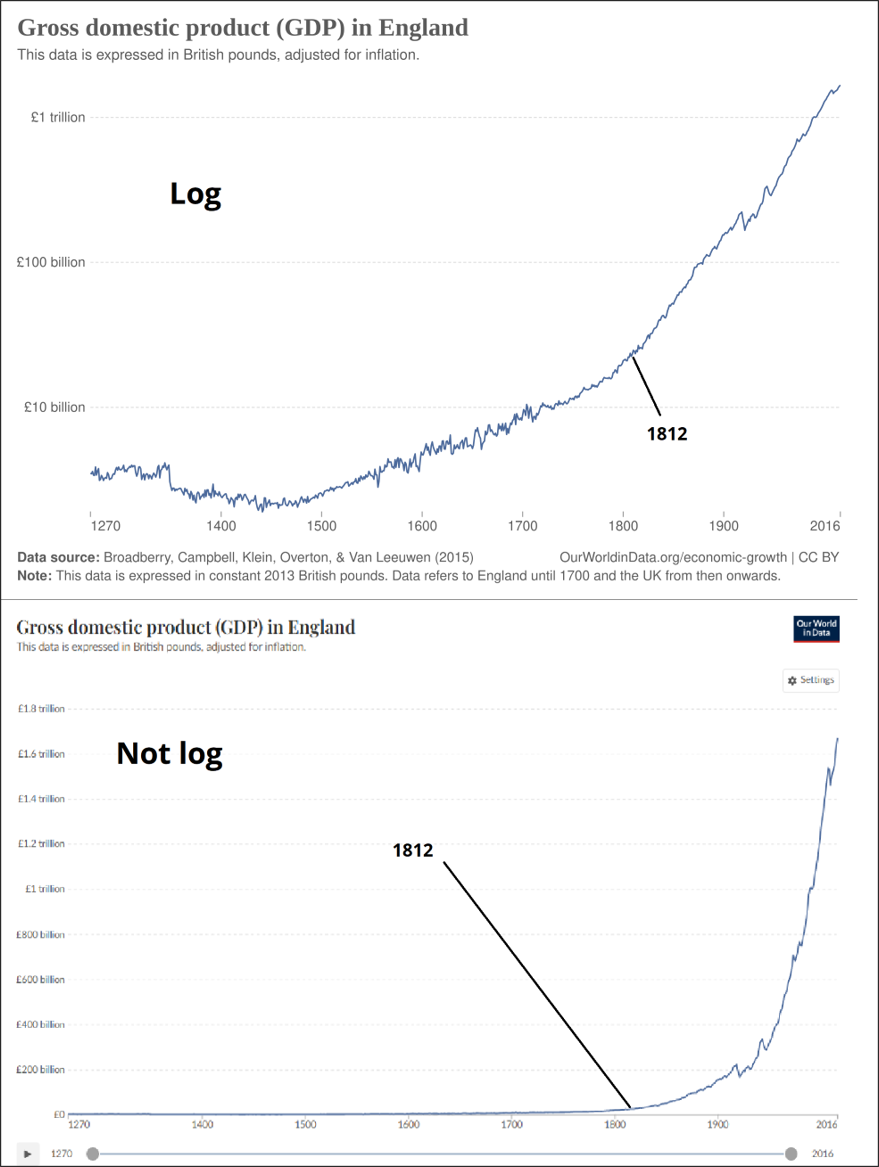
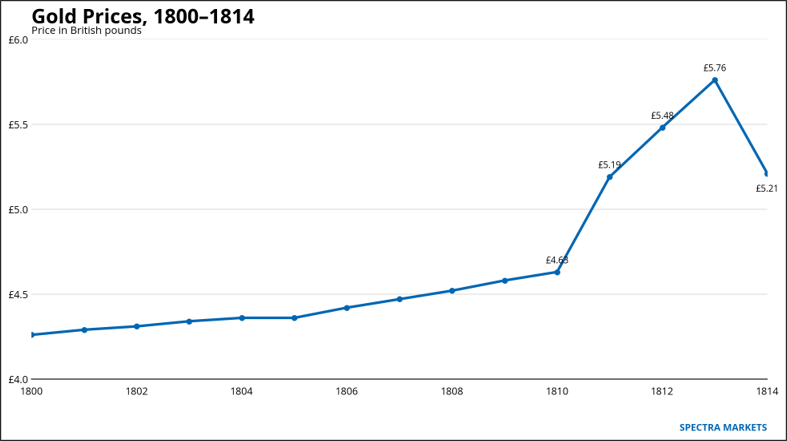
“Money, of whatever sort, is, like everything else, lowered in its value in proportion as it becomes abundant or plenty.”
Read much more here: Knowledge Against Paper: Forgery, State Violence, and Radical Cultural Resistance in the Romantic Period.
Ok, so for real this time…
I took Warsh’s speech today as a rehash of the points he made at the June FOMC. The market disagreed and took it as hawkish. The NFP and CPI prints to come will determine how the 50/50 odds for September FOMC play out. He was hawkish in June, dovish in July, hawkish in August. I suppose pattern recognition tells you what September looks like? :]
This week was a continuation of the structural theme that has dominated macro for the past three years. Deficits are huge, inflation is above target, there is no credible way out, and markets don’t really care. While it is fashionable to cry out about debt and deficits whenever yields approach a cycle high, two things to consider here.
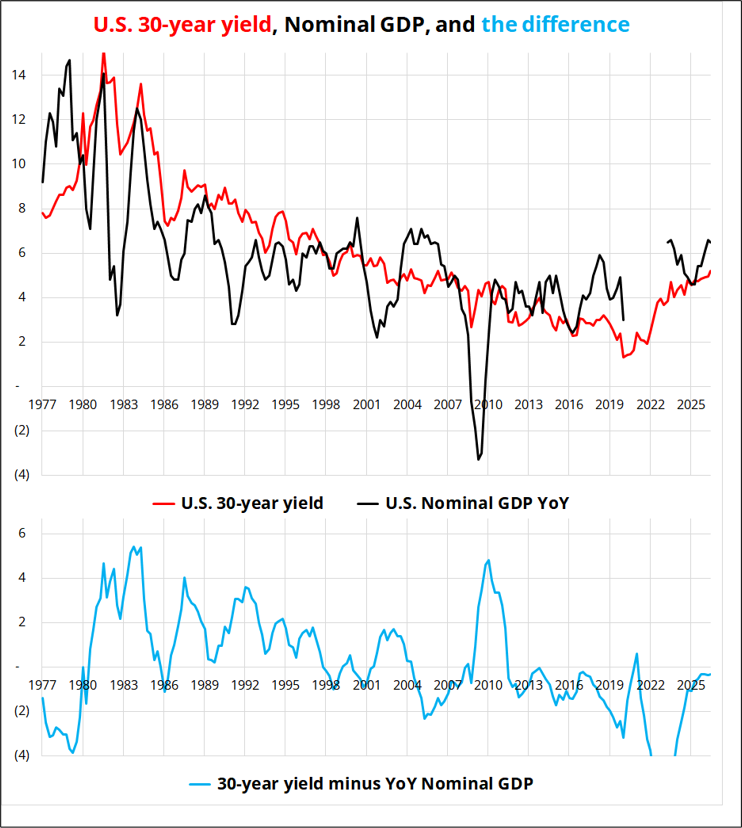
You could look at that chart and say that given central bank and U.S. Treasury credibility are now lower than they were pre-COVID, one might expect to see 30-year yields significantly above nominal growth. Instead, they’re still below (6% growth, 5.3% yields, approx.)
Bessent’s announcement of increased long end buys got people quite excited as it alerted everyone to the thing that everyone has known for the past 50 years: U.S. debt levels are unsustainable. Bessent is copying Yellen’s Do the Twist strategy and again, I think you can make a pretty okay argument that it’s growth driving yields in the U.S., not fiscal. While it’s harder to make that argument in some other countries, overall I feel like the current level of debt panic narrative far exceeds the actual scariness of the current situation. Bond market volatility is moribund. U.S. 10-year yields are at the same level they were trading three years ago. That’s not what a fiscal crisis smells like. Yes, it’s a bad time to be long bonds. But everything in markets seems well under control to me—and that’s saying something given how little credibility policymakers have right now.
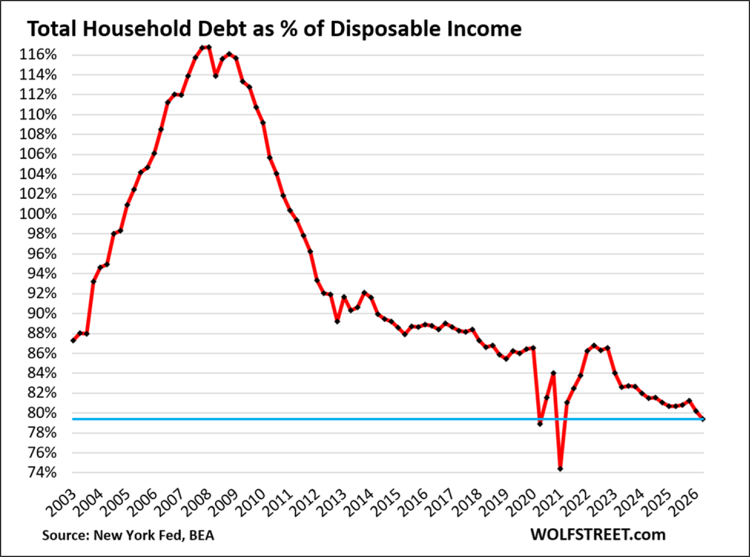
Part of the reason the debt story is a slow burner is that most of the new government debt is simply old private debt that has been socialized. See here, for example:
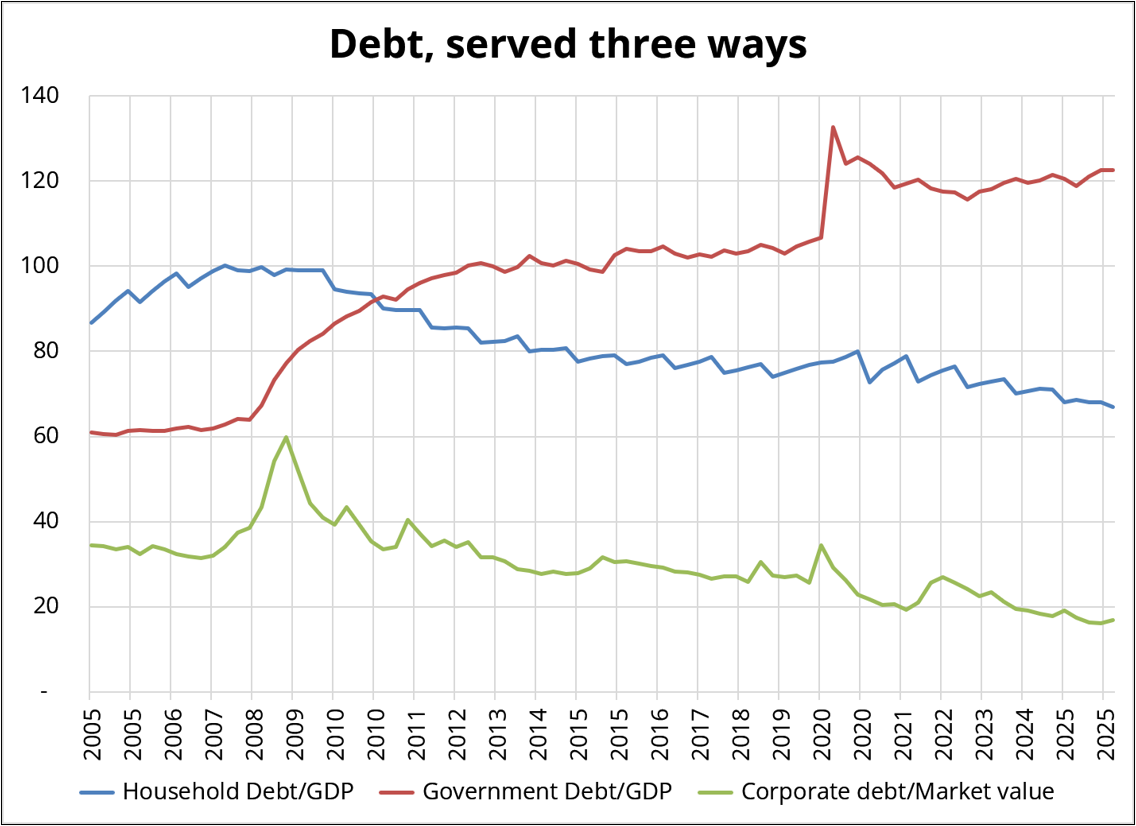
And that means debt servicing costs are low for households:
And a balance sheet has two sides. We don’t worry that much about Apple’s rising debt because their assets and revenues are rising much more quickly than their debt. Here’s the U.S. balance sheet.
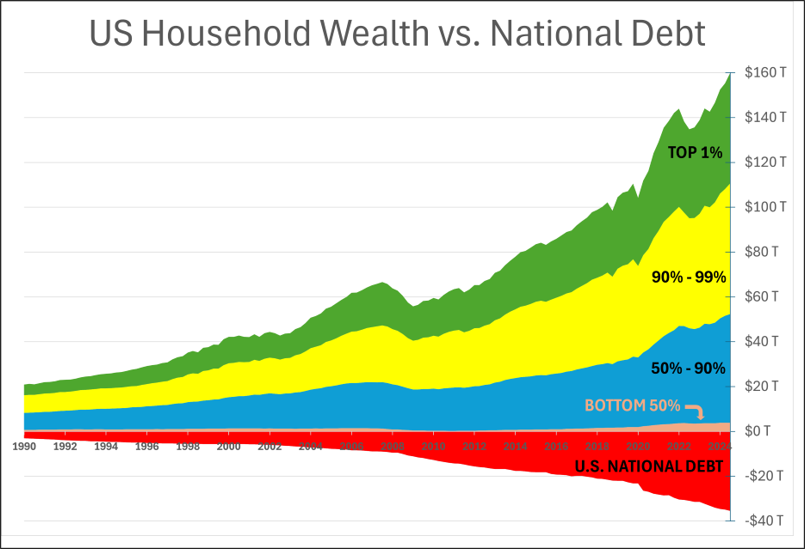
The debt numbers are huge. The asset numbers are huger. This perspective (and the lack of bond market vol) are why I find it very hard to get excited or scared about the latest debt and deficit angst. Unproductive and corrupt big government spending on unproductive baloney is morally reprehensible but the fuse on the debt bomb is miles long.
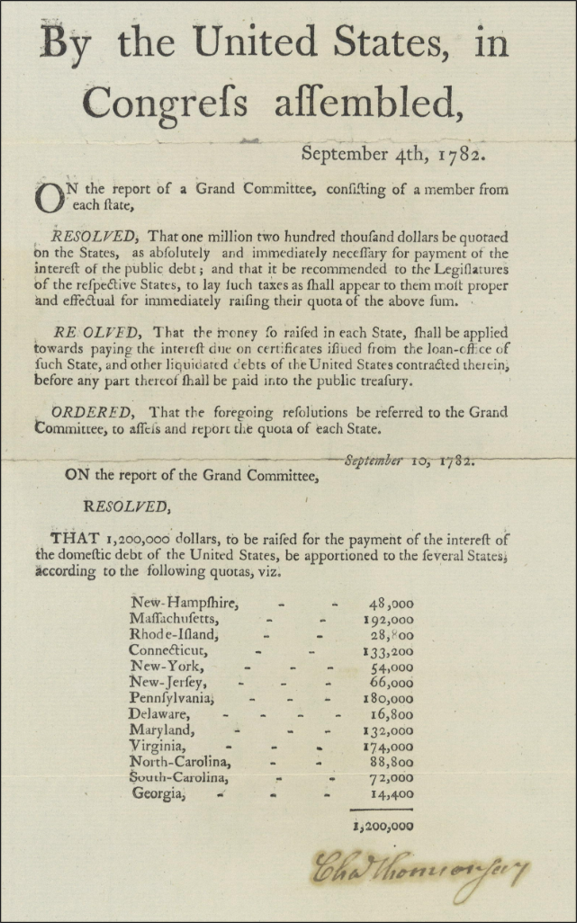
1782: U.S. interest expense crosses $1 million
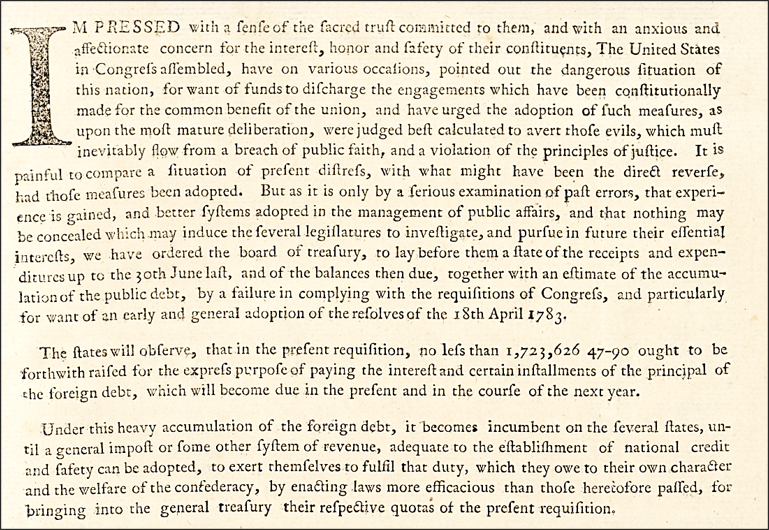
Statement in Congress, October 17, 1786 expressing concern about the debt (text below image, so you can actually read it):
Library of Congress
“IMPRESSED with a sense of the sacred trust committed to them, and with an anxious and affectionate concern for the interest, honor and safety of their constituents, The United States in Congress assembled, have on various occasions, pointed out the dangerous situation of this nation, for want of funds to discharge the engagements which have been constitutionally made for the common benefit of the union, and have urged the adoption of such measures, as inevitably flow from a breach of public faith, and a violation of the principles of justice. It is painful to compare a situation of present distress, with what might have been the direct reverse, had those measures been adopted. But as it is only by a serious examination of past errors, that experience is gained, and better systems adopted in the management of public affairs, and that nothing may be concealed which may induce the several legislatures to investigate, and pursue in future their essential interests, we have ordered the board of treasury, to lay before them a state of the receipts and expenditures up to the 30th June last, and of the balances then due, together with an estimate of the accumulation of the public debt, by a failure in complying with the requisition of Congress, and particularly for want of an early and general adoption of the resolves of the 18th April 1783. The states will observe, that in the present requisition, no less than 1,723,626 ought to be forthwith raised for the express purpose of paying the interest and certain installments of the principal of the foreign debt.”
1862: U.S. debt crosses $1 billion
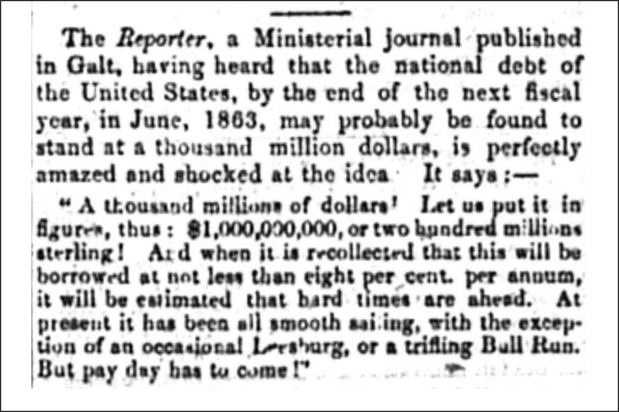
St. John’s Courier, March 1, 1862
“Perfectly amazed and shocked by the idea … A thousand millions of dollars! Let us put it in figures, thus: $1,000,000,000, or two hundred millions sterling!”
It would seem that GBP/USD was 5.00 in 1862.
1942: U.S. debt crosses $100 billion
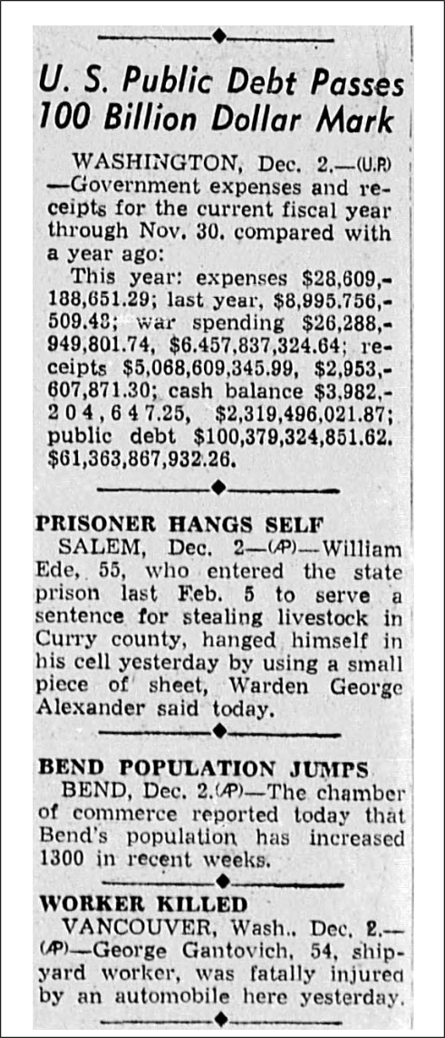
Oregon Register, December 2, 1942
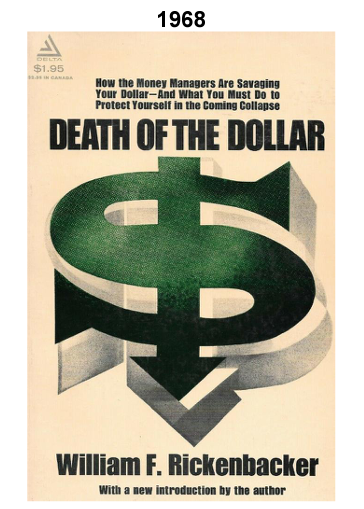
1971
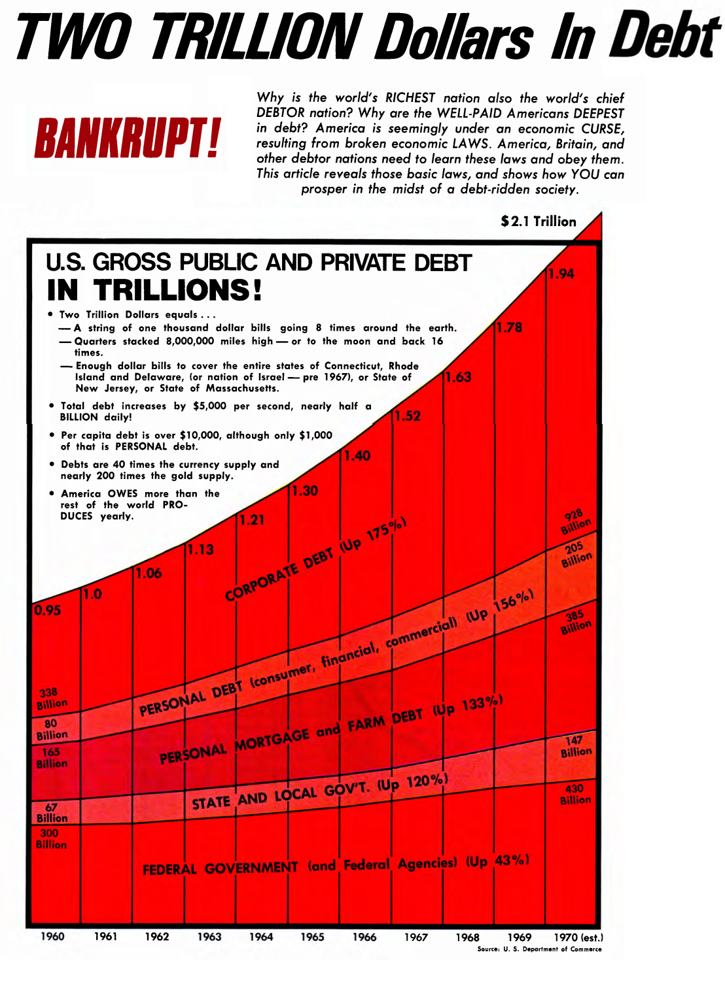
1977
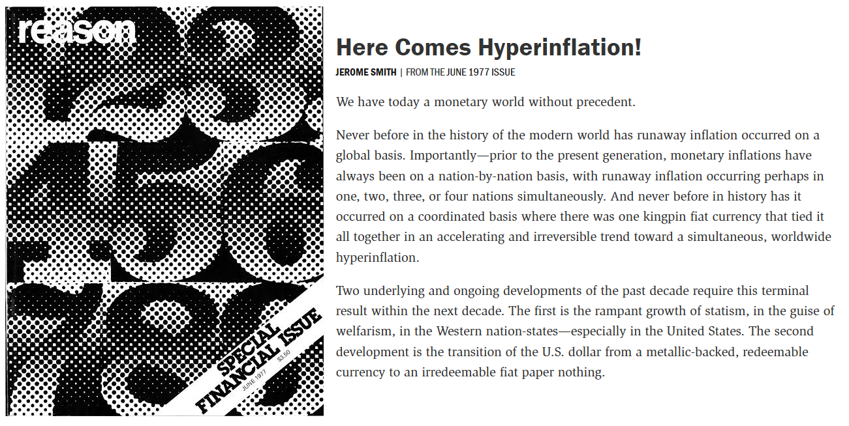
The last paragraph of that article sounds like it was written today.
1981: U.S. debt crosses $1 trillion
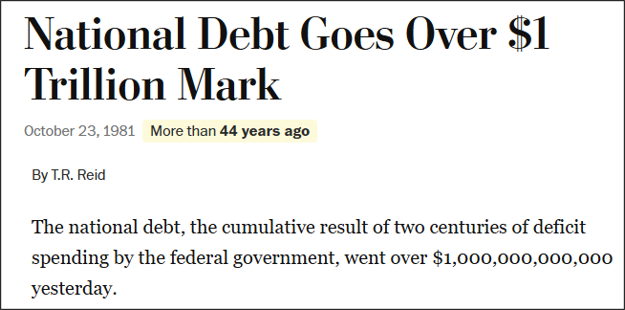

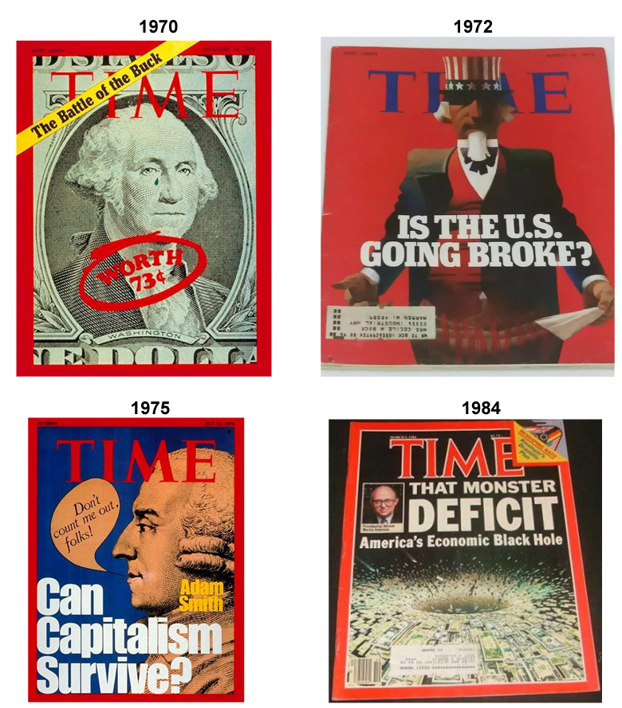
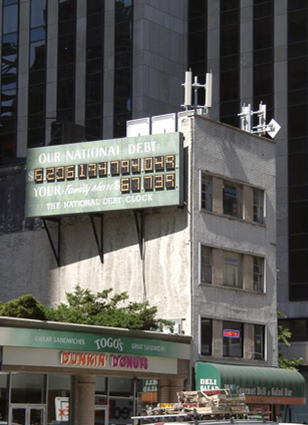
1989: National Debt Clock installed in Times Square
1995
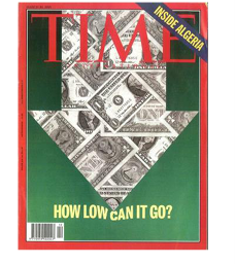
2004
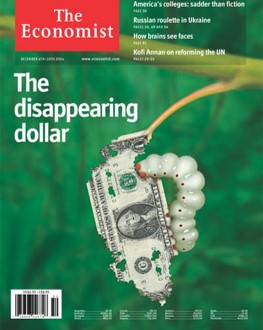
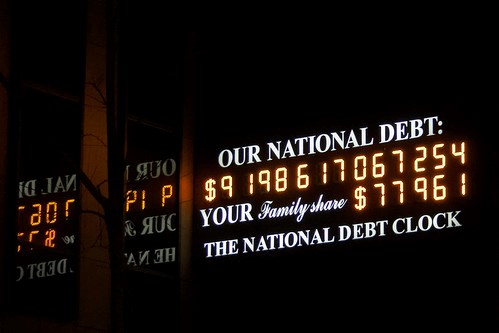
Dude, you might need more numbers on there soon. Tick tock.
2007
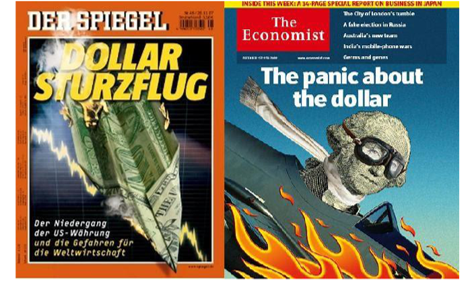
2008: U.S. debt crosses $10 trillion
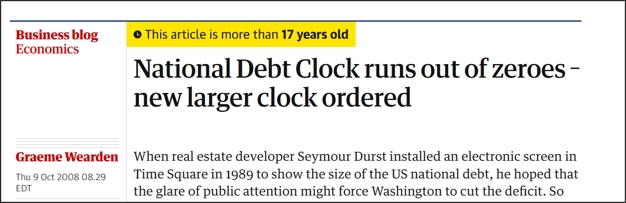
LOLLLLLLLLLLLLLLLLLL
2008
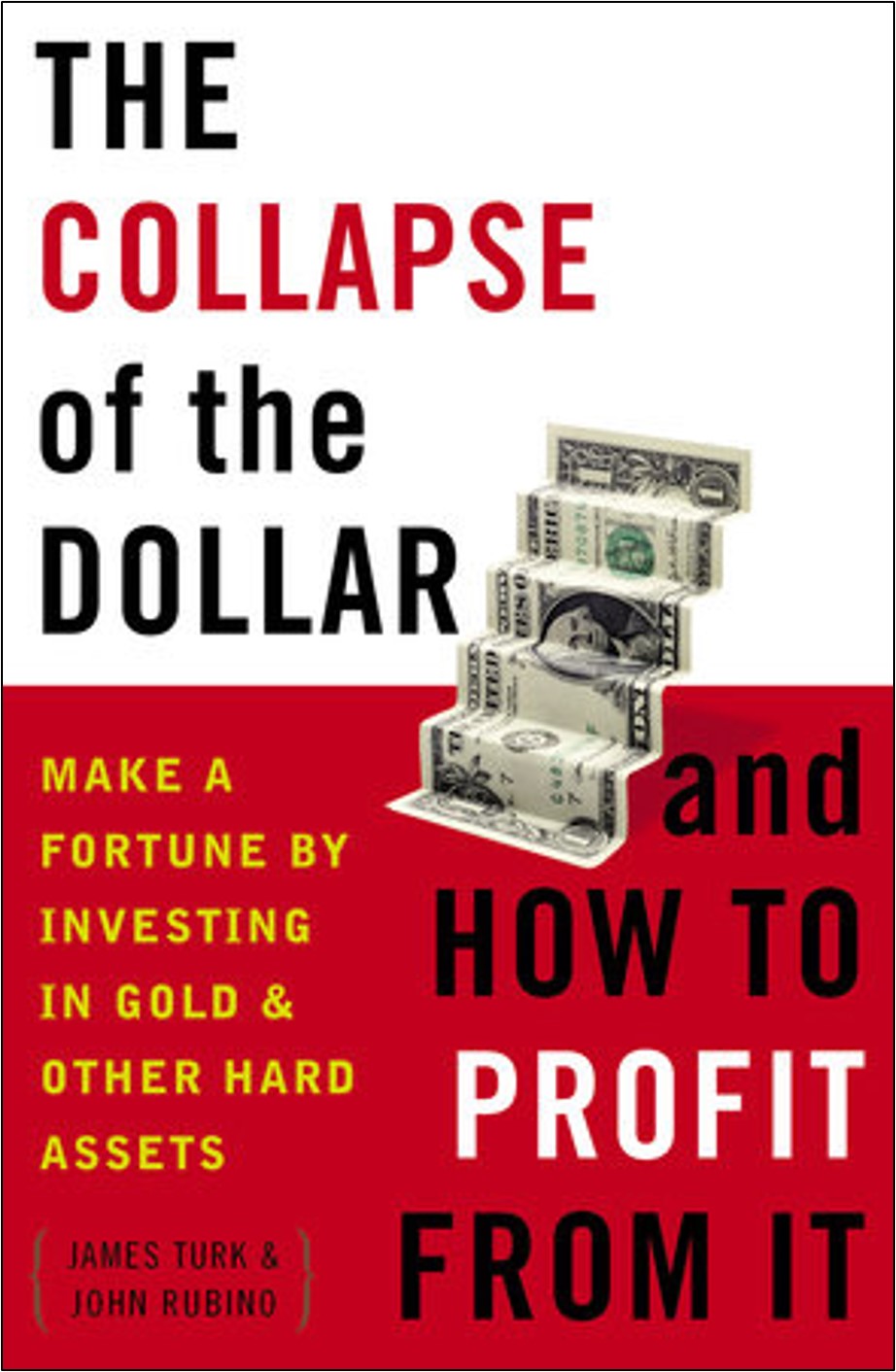
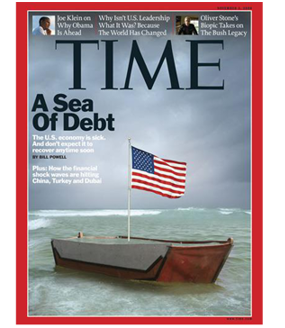
2011
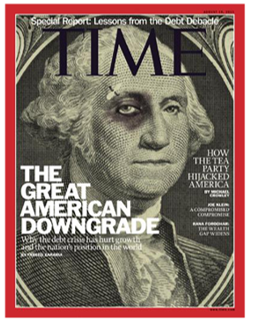
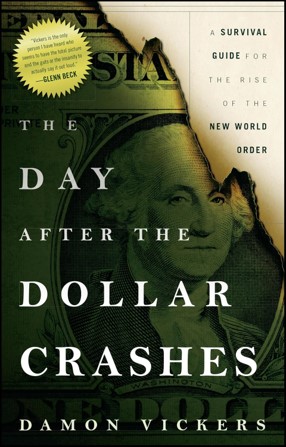
2014
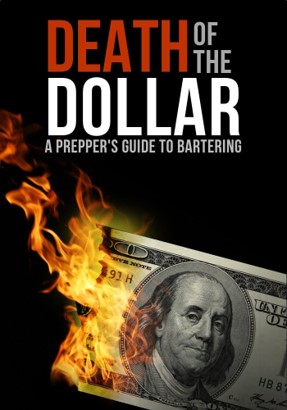
Wut?
2017: U.S. debt crosses $20 trillion
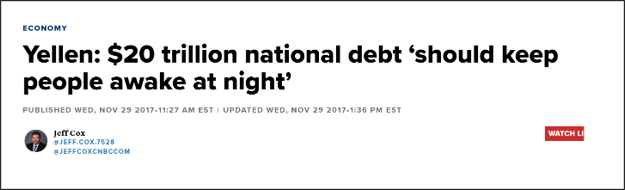
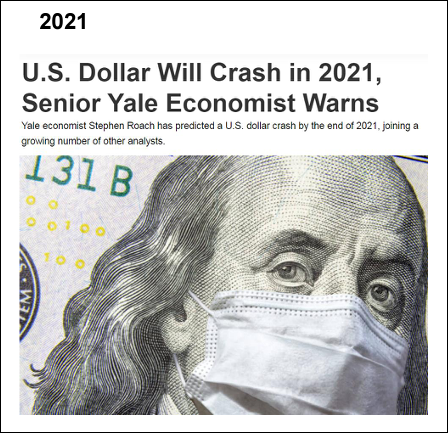
2022: U.S. debt crosses $30 trillion
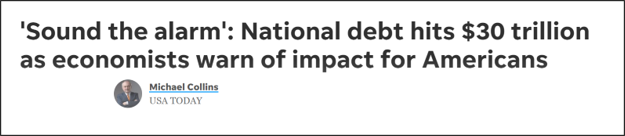
2023
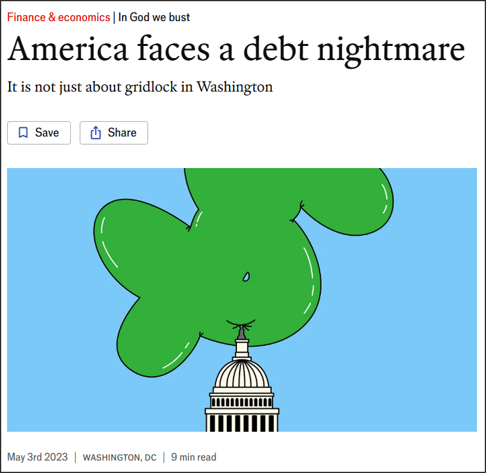
2024
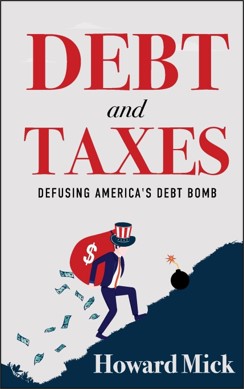
2025
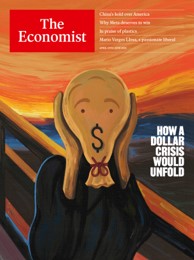
2026
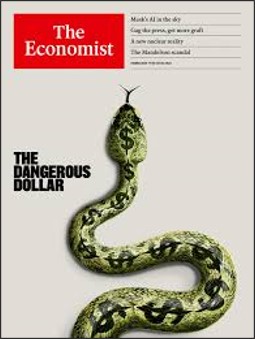
2026: U.S. debt crosses $40 trillion
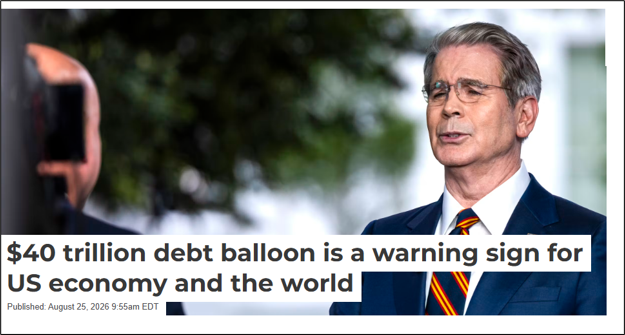
Sure, there could be a non-linear tipping point, but that has been a terrible bet for 150 years. People can only cleverly quote the same bit of Hemingway so many times before it starts to sound silly. Maybe, contrary to Papa’s words, in reality: the U.S. is going bankrupt gradually… And then gradually.
Policymakers have decided that it’s better to fade away than burn out. So, they will continually manage the kicking of the can and use financial repression and means necessary to keep the slow burn from going pyro. Voters will never elect an austerian, so as Lyn Alden says: Nothing stops this train. Just remember the train is going, like, four mph*.
*6.4 km/h
I am not saying debt doesn’t matter. I hate debt and wasteful spending and foreverwars and corruption and fraud and interest payments to foreign debt holders just as much as you do. But keep in mind that the U.S. debt story is a long-run, structural thing that flares up here and there but is almost always easily managed by the authorities. They have no choice. The only way this thing goes full Hindenburg is if we see persistent, out-of-control inflation. We have seen persistently above target inflation for the past 64 months, but inflation was really only out of control there for a year or so. It seems fairly under control right now.
There has been a structural debt problem in the United States since 1782 and there will be a structural debt problem in the United States when I die in 2076.
The debt is unsustainable. Fiscal reckoning is three, or less than five, or maybe ten years away.
Same as it ever was.
I’m going mad with the historical references today. I will try to focus better going forward.
Fun fact: I went to Hemingway’s house in Key West. There are many cats there descended from the 6-toed cat he was given as a gift in 1930. The cat was named Snow White and about half of the current cats on the property have extra toes because they descend from Snow White. If you’re into writing, the home is a super cool thing to visit. Key West is pretty weird, though!
https://www.hemingwayhome.com/our-cats
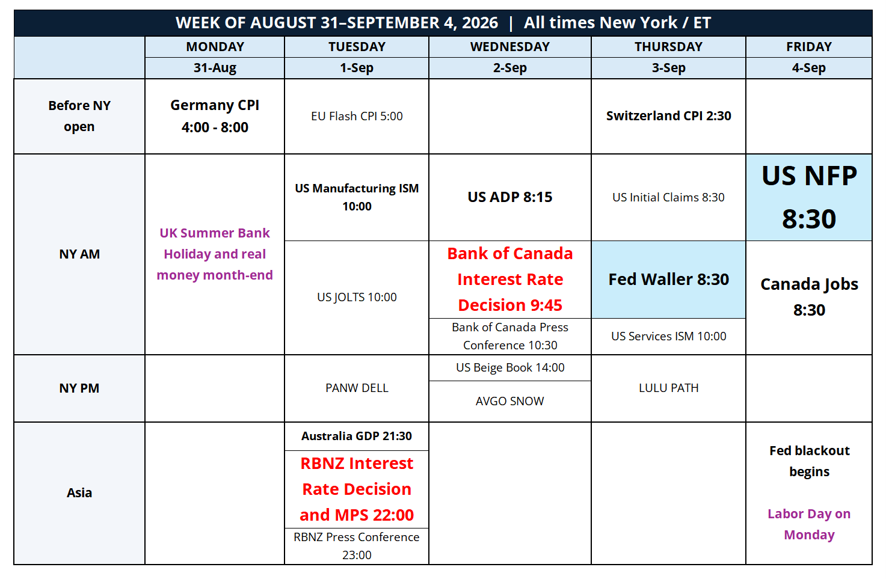
Anyhoo. Here is next week’s calendar. Waller stands out because he was a megadove when the data was soft, then turned max hawkish after losing the Chair nomination (just as the data was about to roll over). Will he stick with his hawkish view in the face of rolling data? Or will he double down?
The Situational Awareness low remains in place and the SaaSpocalypse has been delayed or perhaps cancelled. The storm around SaaS has subsided as the market has logically concluded that no large organization is going to deploy a bunch of autonomous agents to replace their software. The whole premise was out of control and it’s a good example of how markets can be grossly inefficient due to fear and greed. Fear, in this case.
We remain in the high deficits, high nominal growth, okay inflation world, and nothing Warsh has said at Jackson Hole changes any of that. The biggest risk to equities is not liquidity, but positioning and seasonals as the market is fully bulled up right into the weakest seasonal period for stocks.
That said, it’s the back half of September that is bearish, so bulls have a couple more weeks to run.
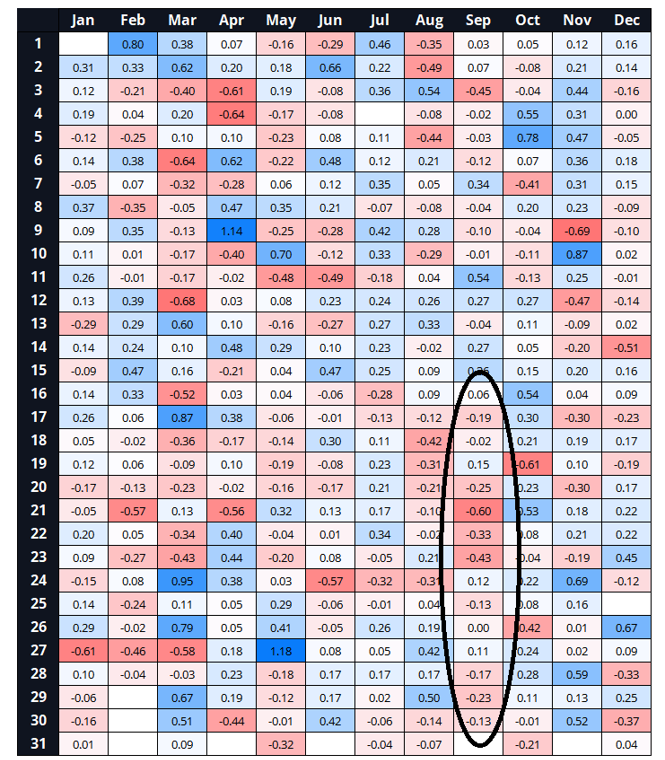
Still, the seasonality game is about averages and approximate windows, not pin the tail on the donkey. If you are not familiar with seasonality, or why it continues to work out of sample, year after year, this is a writeup:
https://www.spectramarkets.com/amfx/seasonality-is-real/
For real-time analysis and seasonal signals and all sorts of trading advice, macro ideas, specific trade structures, and more… Subscribe to the flagship publication. Sign up for am/FX right here:
https://www.spectramarkets.com/subscribe/

Here is this week’s 14-word stock market summary:
Bulls are getting to the end of the road. Time to lock in profits.
You would think from the narrative machine out there that we are in a bond crisis. In real life, here is a chart of 10-year yields.
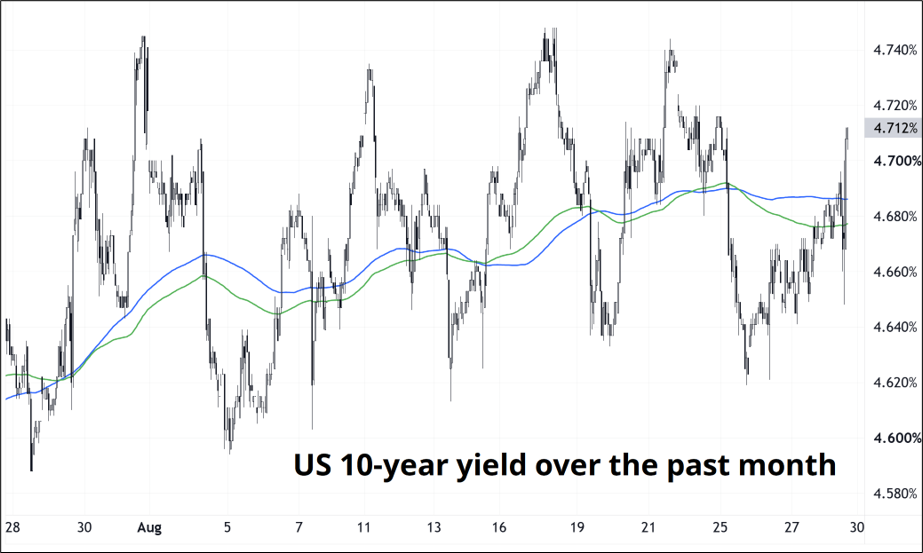
And yes, 30-year yields are going up. But they are exactly where they were when they peaked three years ago. And volatility is in a slow, grinding move lower and lower and lower. Again, not a crisis.
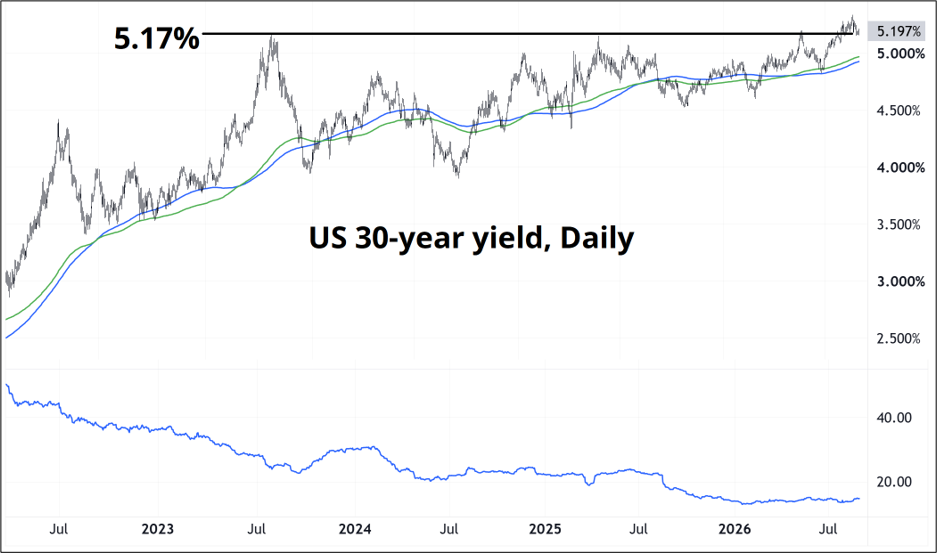
The bottom panel shows realized volatility in the 30-year.
FX is the most fun when there is a clear dollar theme. Some people believe that Bessent’s announcement on the long end is bearish USD because if yields are capped, the dollar becomes the release valve. But yields are not capped. The government has shown a willingness to intervene, yes. But to cap yields? No. The process of finding a ceiling in bond yields will be long and arduous, especially as Bessent’s market credibility is low and falling.
So people spend a week or so selling USD, but the reality is that there is no strong reason to own or hate the U.S. currency. Rate differentials and global equity performance are see-sawing and the USD is positive carry against some currencies like CHF and JPY and CNH but negative carry vs. BRL, MXN, etc.
The most popular trade this week was long AUD as my inbox and chats exploded with bullish AUD recommendations after the domestic banks started to call for RBA hikes post-CPI. There is a flow story, too, as month-end and early September see a lot of AUD buying for real money hedging and Aussie dividends. AUD, like gold, is hot right now, but correcting a bit post-Warsh.
My new book is out:
TRADE OUTSIDE THE BOX: Advanced Thinking for Professional Traders. You can buy it on Amazon right here. Here’s the one-pager.

The book is written for experienced traders. If you are new to the game, I would suggest you start with Alpha Trader. If you have been trading or investing for more than five years, this book is for you (and you don’t need to have read Alpha Trader to enjoy it).
I finally got bullish bitcoin at 64,800 after months of waiting, and my goal target was to get out around 78k/80k by late September. Instead, it went in three days and so I am out already lol. Now, everything crypto (especially the DATs) are mega overbought and so my bet is we see a correction before the next leg higher. The idea that Bessent copying Yellen’s old tricks is a watershed event for the debasement trade is questionable. It’s more like that was a news item that happened and gold and bitcoin were ready to rally anyway. Now, the rallies have happened and I think caution is best for a bit.
The debasement trade has gone multi-SD bananas after the long bond buy announcement, but the starting conditions are probably more important than the news itself. Gold had been basing for months, gold puts were bid vs. calls, bitcoin shorts were large, crypto was left for dead, etc. Bulls were licking their lips but could not buy a bucket for months until Bessent’s move.
Given that electric starting point, one might not be able to safely compare the current moves to past moves, but I am going to do it anyway, just to see. Creating a vol-adjusted basket of gold, silver, BTC, and ETH and indexing to January 1, 2018, here’s the running P&L of the debasement trade. Note that I originally included DXY in this because that was my first thought, then I realized that the USD is 10% higher over this time frame, so it’s not exactly a useful component of the debasement trade.
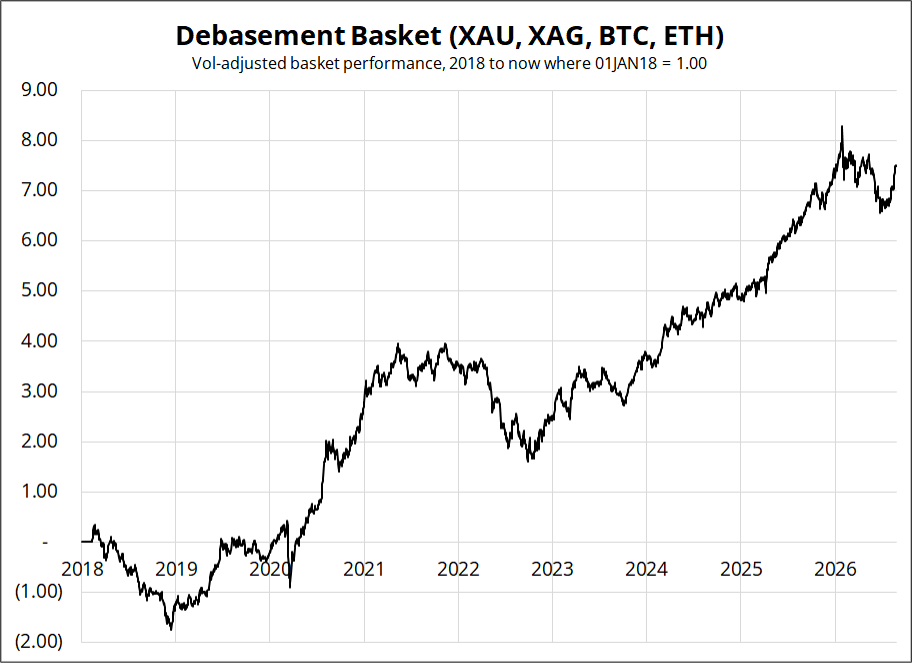
And here is a smaller version of that chart, where I added DXY inverted. This is so you can see how the dollar has not been nearly as good of a debasement trade. All fiat currencies are being debased by global monetary and fiscal policy, not just the USD.
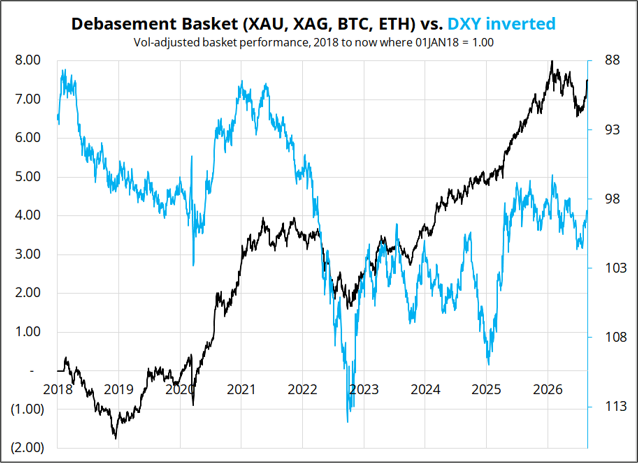
Sometimes it’s a USD story but sometimes it’s a Japan or U.K. or another story. Anyway, let’s look back at times when the debasement trade has been this overbought.
Was it bearish?
Yes. It was. The sample size of “average RSI over 80” is super small. There are just five instances, and this week was one of them; so there are four to look back upon.
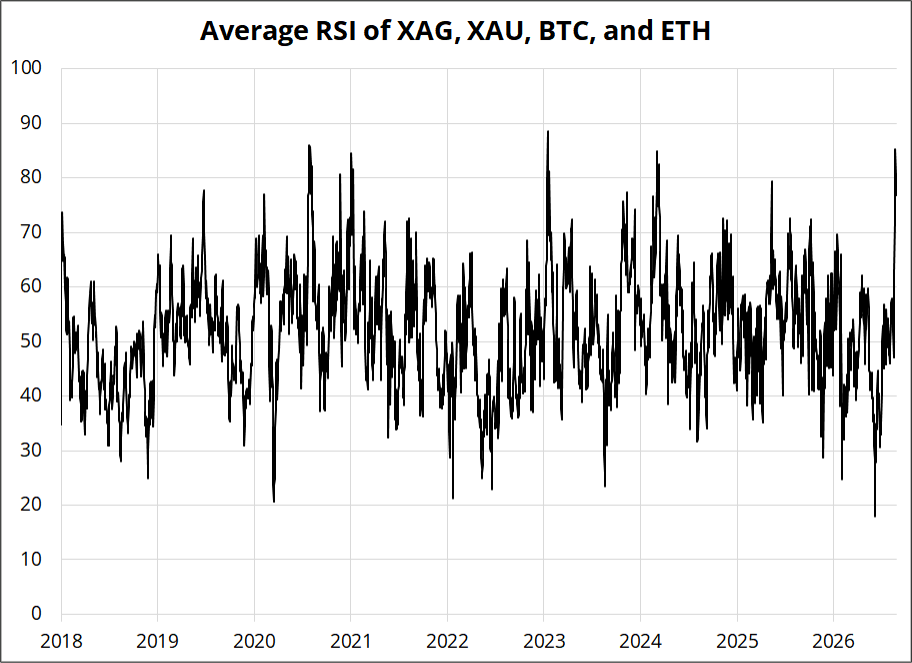
Here is the 20-day forward performance for the four assets when their average RSI is >80. Using only the first signal and ignoring all overlapping signals. That’s why there are only four.
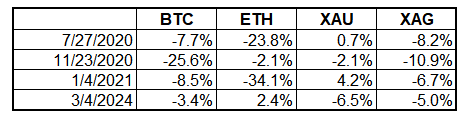
Again, I realize the sample size is small, but when I am filtering for mega extremes in overbought and oversold, the sample sizes are going to be small by definition. I am highlighting the most extreme past occurrences and pointing out that this one is similar. A useful takeaway from this is that you can see gold is not like the others. When crypto and silver are leading the charge, and they pull back, gold does okay.
Here is that same debasement index chart, with the times that the average RSI of the four inputs was above 80.
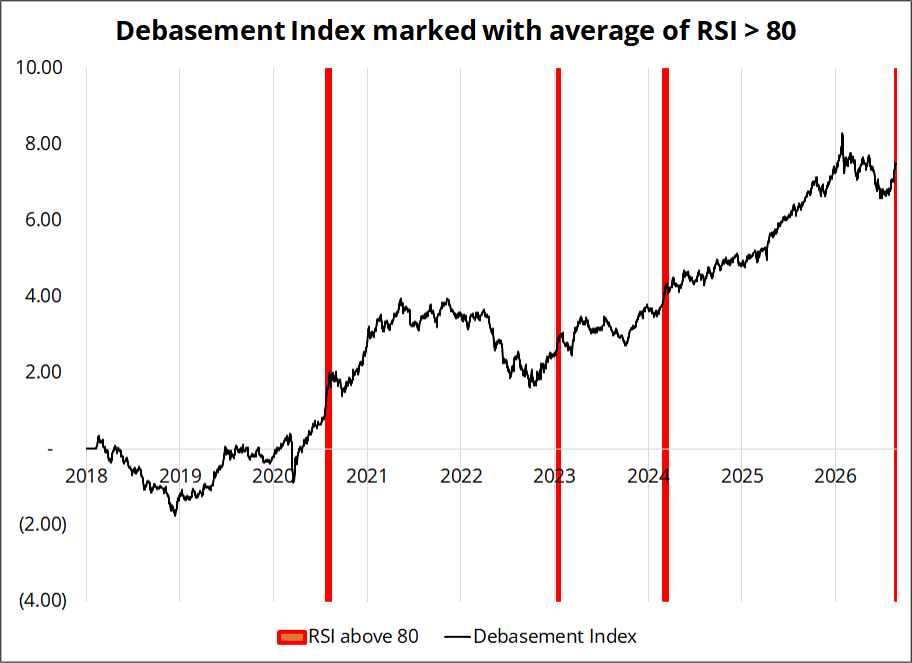
So my view is crypto corrects and you buy the dip in BTC, like: 72k area. I published this correction view earlier in the week and tried to short BMNR and PURR but got stopped out before they turned lower. I am wrong about 48% of the time, but my wins pay way more than my losses.
Same view in gold and silver as I have in crypto. They are overbought, they will dip and you buy the dip. There is no rush here.
That’s it for this week.
Get rich or have fun trying.
TRADE OUTSIDE THE BOX: Advanced Thinking for Professional Traders is out! You can buy it on Amazon right here.
*************
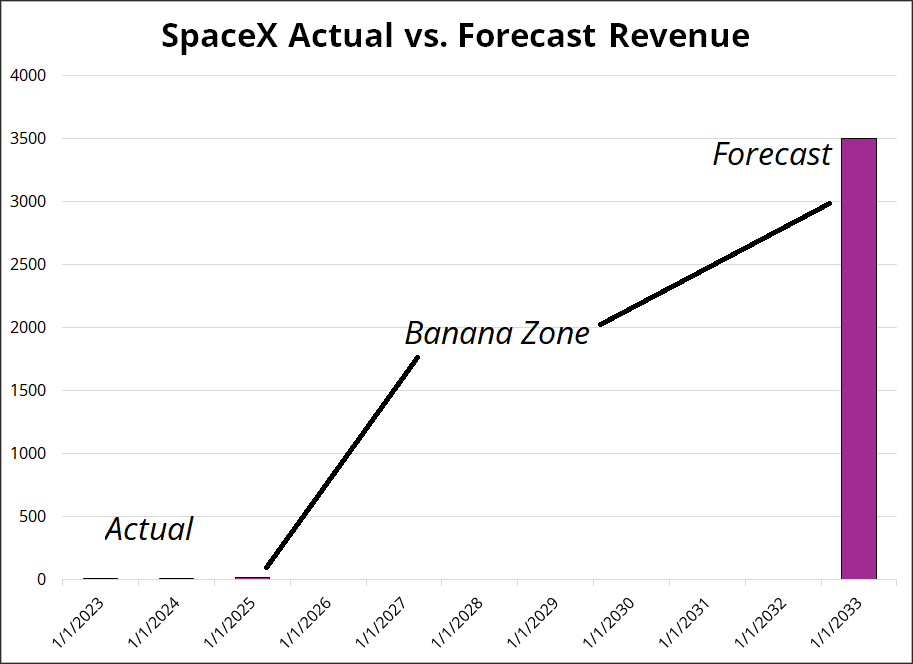
Elon Musk tried to outdo Anthropic’s insane revenue forecast this week.
https://finance.yahoo.com/markets/stocks/articles/elon-musk-touts-3-5-053735345.html
Here’s my chart, for perspective.
*************
*************
*************

*************

*************
Thanks for reading the Friday Speedrun! Sign up for free to receive our global macro wrap-up every week.